Which organ system is primarily responsible for storing minerals?
-
A
The skeletal system
-
B
The endocrine system
-
C
The lymphatic system
-
D
The cardiovascular system
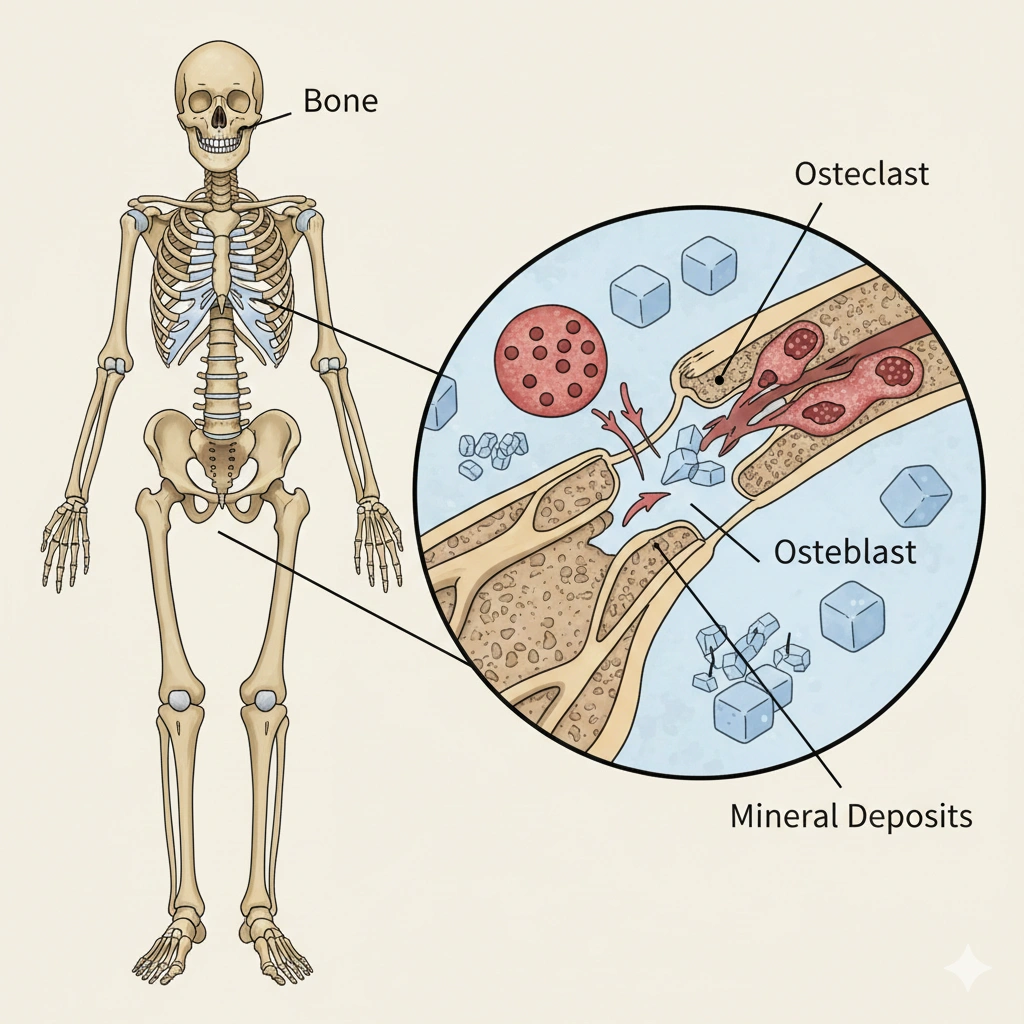
The skeletal system is primarily responsible for storing minerals.
The bones of the skeleton act as a reservoir for essential minerals like calcium and phosphorus. These minerals are stored in the bone matrix and can be released into the bloodstream as needed for various bodily functions, such as muscle contraction and nerve signaling.
A. The skeletal system
This is the correct answer. The skeletal system stores minerals, primarily calcium and phosphorus, in the bones. These minerals are critical for bone strength and overall metabolic processes. The bones also release these minerals into the bloodstream when needed.
B. The endocrine system
The endocrine system is responsible for producing hormones that regulate various functions in the body, including metabolism, growth, and reproduction. While hormones like parathyroid hormone influence mineral balance, the endocrine system is not directly responsible for storing minerals.
C. The lymphatic system
The lymphatic system is primarily involved in immune function and the transport of lymph, a fluid that helps defend the body against infections. It does not store minerals.
D. The cardiovascular system
The cardiovascular system, which includes the heart and blood vessels, is responsible for circulating blood throughout the body. While it plays a role in transporting minerals, it is not involved in storing them. The skeletal system handles mineral storage.
Conclusion:
The skeletal system is responsible for storing minerals, particularly calcium and phosphorus, which are essential for bone strength and various physiological functions. The other organ systems, such as the endocrine, lymphatic, and cardiovascular systems, play different roles in the body and are not primarily responsible for mineral storage.

Topic Flashcards
Click to FlipWhich organ system acts as the primary storage site for minerals like calcium and phosphorus?
Skeletal system — bones store ~99% of calcium and ~85% of phosphorus; they release minerals into blood when needed.
Why are bones considered the main mineral reservoir in the body?
Bone matrix contains hydroxyapatite (calcium phosphate crystals); this reservoir supports blood mineral homeostasis via osteoclastic/osteoblastic activity.
What mineral makes up the majority of bone tissue and is stored in the skeletal system?
Calcium — ~99% of total body calcium is stored in bones; released by parathyroid hormone when blood levels drop.
How does the skeletal system help regulate blood calcium levels?
Bones store and release calcium — osteoclasts break down bone to release Ca²⁺ into blood; osteoblasts deposit it back when levels are high.
Does the endocrine system store minerals or regulate their levels?
Regulates:- hormones like parathyroid hormone (PTH), calcitonin, and vitamin D control bone mineral release/absorption, but storage occurs in bones.