Which statement about white blood cells is true?
-
A
B cells are responsible for antibody production.
-
B
White blood cells are made in the white/yellow cartilage before they enter the bloodstream.
-
C
Platelets, a special class of white blood cell, function to clot blood and stop bleeding.
-
D
The majority of white blood cells only activate during the age of puberty, which explains why children and the elderly are particularly susceptible to disease.
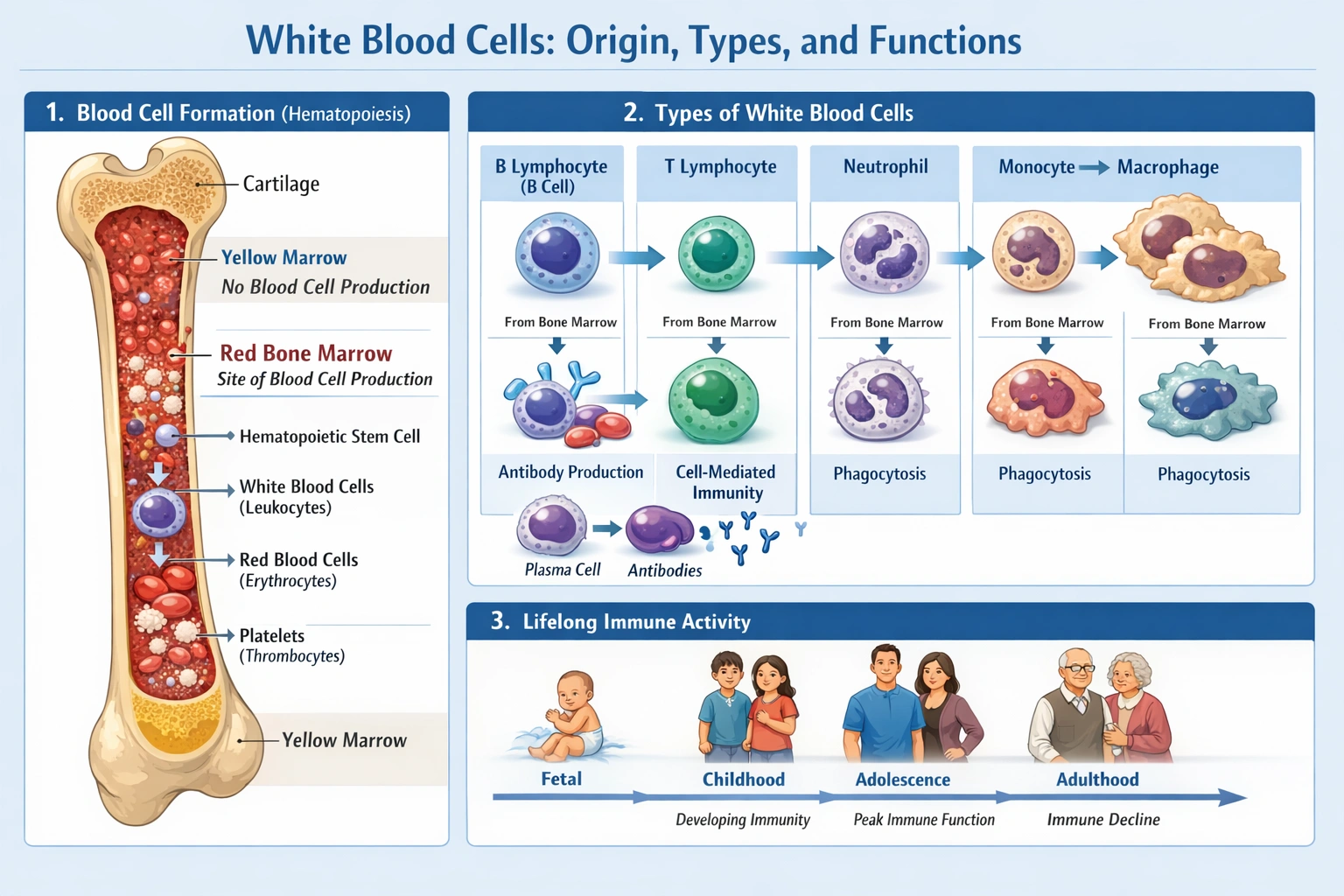
B cells are responsible for antibody production.
cells, a lymphocyte subtype of white blood cells, mature in the bone marrow and differentiate into plasma cells upon encountering specific antigens; these plasma cells synthesize and secrete antibodies that neutralize pathogens and tag them for destruction by other immune components.
A) B cells are responsible for antibody production
B cells originate from hematopoietic stem cells in red bone marrow and undergo maturation to express unique B cell receptors. Upon antigen recognition and activation often with T cell assistance they proliferate and differentiate into antibody-secreting plasma cells and memory B cells. This adaptive immune function is fundamental to humoral immunity and long-term immunological memory.
B) White blood cells are made in the white/yellow cartilage before they enter the bloodstream
White blood cells develop primarily in red bone marrow through hematopoiesis, not in cartilage. Cartilage (hyaline, elastic, or fibrocartilage) serves structural and cushioning roles in joints and skeletal development but lacks hematopoietic tissue. Yellow marrow consists mainly of adipose tissue and does not produce blood cells under normal conditions.
C) Platelets, a special class of white blood cell, function to clot blood and stop bleeding
Platelets are anucleate cell fragments derived from megakaryocytes in bone marrow and belong to the thrombocyte lineage, not leukocytes. White blood cells (leukocytes) include neutrophils, lymphocytes, monocytes, eosinophils, and basophils all nucleated cells involved in immune defense. Platelets participate in hemostasis through aggregation and clot formation but are categorically distinct from white blood cells.
D) The majority of white blood cells only activate during the age of puberty, which explains why children and the elderly are particularly susceptible to disease
White blood cells function actively throughout life from fetal development onward. Neonates possess functional innate immunity and gradually develop adaptive immunity after birth. Children experience higher infection rates due to immune system immaturity and limited antigen exposure, while the elderly face immunosenescence age-related decline in immune function not absence of white blood cell activity.
Conclusion:
White blood cells constitute the cellular arm of the immune system with continuous activity across the lifespan. B cells specifically mediate adaptive humoral immunity through precise antibody production against pathogens. Other options misrepresent hematopoietic sites, confuse platelets with leukocytes, or inaccurately describe developmental timing of immune function.
