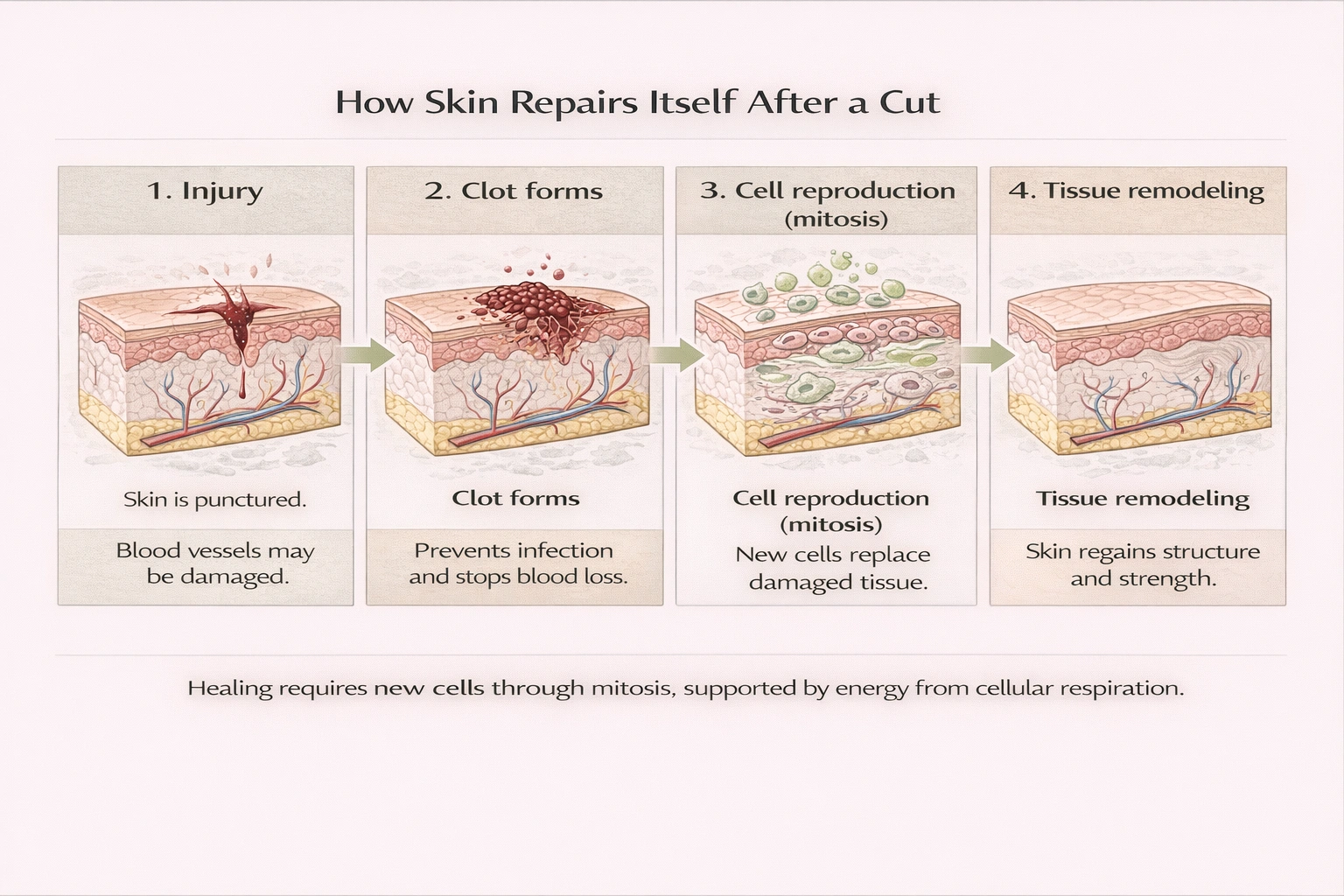
A child falls down and punctures his skin. What biological process must occur to repair the damaged skin?
-
A
Glycolysis
-
B
Cell respiration
-
C
Gluconeogenesis
-
D
Cell reproduction
The repair of damaged tissue fundamentally requires the generation of new cells to replace those that were lost or injured, which is achieved through cell reproduction (mitosis).
Healing a skin wound involves the activation and proliferation of specific cell types like keratinocytes (in the epidermis) and fibroblasts (in the dermis). These cells must reproduce through mitosis to migrate into the wound site, fill the gap, and synthesize new extracellular matrix components. Angiogenesis (formation of new blood vessels) also involves endothelial cell reproduction.
A) Glycolysis
Glycolysis is the metabolic pathway that breaks down glucose to produce ATP and pyruvate. It provides energy for all cellular activities, including those in highly active repair cells. While increased glycolysis may support the healing process, glycolysis itself is an energy-producing process that supports repair, not the reparative process itself.
B) Cell respiration
Cellular respiration (including glycolysis, Krebs cycle, and oxidative phosphorylation) is the major pathway for ATP production. Like glycolysis, it supplies the chemical energy (ATP) required to fuel the intense biosynthetic activities of healing. It is a supporting process, providing energy currency, but not the actual mechanism of tissue regeneration.
C) Gluconeogenesis
Gluconeogenesis is the synthesis of glucose from non-carbohydrate precursors like lactate and amino acids. It occurs primarily in the liver to maintain blood glucose levels during fasting or stress. While wound healing increases metabolic demand, the body typically meets this need through normal dietary intake and glycogen breakdown, not primarily through gluconeogenesis. This process is not directly involved in the cellular mechanisms of wound closure.
D) Cell reproduction
The physical repair of damaged skin absolutely requires cell reproduction via mitosis. Stem cells and progenitor cells must proliferate to increase in number. These new cells migrate into the wound, synthesize new tissue, and restore the epidermal barrier and structural integrity. The production of new cellular material is the core biological process of physical repair.
Conclusion:
Healing a wound is an anabolic, reconstructive process. While energy metabolism (glycolysis and respiration) provides the essential fuel, and gluconeogenesis maintains glucose supply, the fundamental biological process required to generate new tissue is cell reproduction. This generates the new cells necessary to replace lost tissue and close the wound.
Topic Flashcards
Click to FlipWhat biological process is essential for repairing damaged skin?
Cell reproduction through mitosis.
Which cells divide to regenerate the epidermis after a skin injury?
Keratinocytes.
What type of cell division produces new skin cells during healing?
Mitosis.
Why is cell reproduction necessary for wound healing?
To replace damaged or lost cells with new ones.
Which dermal cells reproduce to form connective tissue during skin repair?
Fibroblasts.