BIOLOGY HESI A2 PRACTICE QUESTIONS
These Biology HESI A2 practice questions focus on targeted concept review and exam-style problem solving. The questions are crafted to reflect the style, phrasing, and logic of the real HESI A2 exam, allowing you to practice key biological topics one concept at a time while receiving instant rationales for deeper learning.
Topics Covered
Cell Biology
Genetics
Energy Processes
Classification of Organisms
Evolution
Human Biology
00:00
Which is an example of an autotroph?
A.
Algae
B. Fungi
C. Elk
D. Lion
Rationale
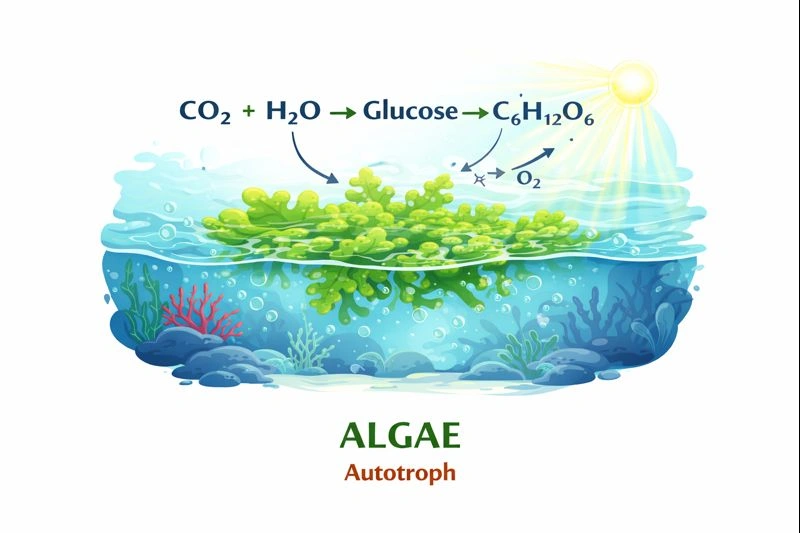
Algae is an example of an autotroph.
Autotrophs are organisms that can manufacture their own food from inorganic substances using an external energy source, usually sunlight. They do not rely on consuming other organisms for organic nutrients. Instead, they convert carbon dioxide and water into glucose through photosynthesis, forming the base of most food chains.
A) Algae
This is the correct answer. Algae contain chlorophyll (especially chlorophyll a), which enables them to carry out oxygenic photosynthesis. Using sunlight as an energy source, algae convert carbon dioxide and water into glucose and oxygen. Because they produce their own organic food from inorganic raw materials, algae fully meet the definition of autotrophs. They are primary producers in aquatic ecosystems.
B) Fungi
Fungi are heterotrophs. They do not photosynthesize and lack chlorophyll. Instead, fungi obtain nutrients by absorbing organic material from their environment. They may act as decomposers (breaking down dead matter) or parasites, but they always depend on pre-existing organic compounds for energy.
C) Elk
Elk are herbivores and therefore consumers. Although they eat plants, they cannot make their own food through photosynthesis. They rely entirely on consuming plant matter to obtain energy, which makes them heterotrophs rather than autotrophs.
D) Lion
Lions are carnivores and apex predators. They obtain energy by consuming other animals and are completely dependent on other organisms for food. This places them firmly in the heterotroph category.
Conclusion
Autotrophs are organisms that synthesize their own food using sunlight or chemical energy. Among the options given, only algae can produce their own organic nutrients through photosynthesis. Therefore, the correct answer is A) Algae.
Which structure is found in protists but not in monerans (prokaryotes)?
A.
Golgi apparatus
B. Chromosome
C. Cytoplasm
D. Cell membrane
Rationale
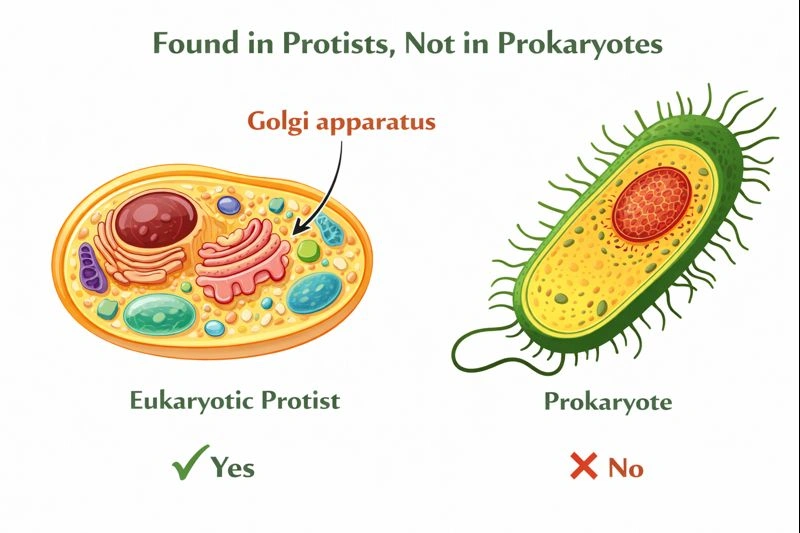
The Golgi apparatus is found in protists but not in monerans (prokaryotes).
Protists belong to the domain Eukarya, meaning their cells have a true nucleus and membrane-bound organelles. Monerans (prokaryotes), which include bacteria and archaea, lack membrane-bound organelles entirely. Therefore, any structure surrounded by a membrane and involved in intracellular processing will distinguish protists from monerans.
A) Golgi apparatus
This is the correct answer. The Golgi apparatus is a membrane-bound organelle responsible for modifying, sorting, and packaging proteins and lipids for transport within or out of the cell. All eukaryotic cells, including protists, possess a Golgi apparatus. Prokaryotic cells do not have any membrane-bound organelles, so they completely lack a Golgi apparatus. Its presence is a clear indicator of a eukaryotic cell.
B) Chromosome
This option is incorrect. Both protists and monerans possess chromosomes. The difference lies in their organization, not their existence. Prokaryotes have a single circular chromosome located in the nucleoid region, while protists have multiple linear chromosomes enclosed within a nucleus. Since chromosomes are present in both groups, this structure does not distinguish protists from monerans.
C) Cytoplasm
This option is incorrect. Cytoplasm is a universal feature of all living cells. Both protists and monerans contain cytoplasm, where metabolic reactions occur. Because it is shared by both groups, it cannot be used to differentiate between them.
D) Cell membrane
This option is incorrect. All cells, whether prokaryotic or eukaryotic, have a cell membrane composed of a phospholipid bilayer. The cell membrane regulates what enters and leaves the cell, making it essential for life. Since both protists and monerans possess cell membranes, this structure is not unique to protists.
Conclusion
Protists are eukaryotes and therefore contain membrane-bound organelles, while monerans are prokaryotes and do not. The Golgi apparatus is a membrane-bound organelle present in protists but absent in monerans. For this reason, the correct answer is A) Golgi apparatus
What happens in an intrachromosomal translocation?
A.
A segment breaks off a chromosome and reattaches at a different point
B. A chromosome section or sections are attached in reverse or upside-down order
C. Part or all of a chromosome is added or removed
D. An entire section of a chromosome is duplicated and reattached
Rationale
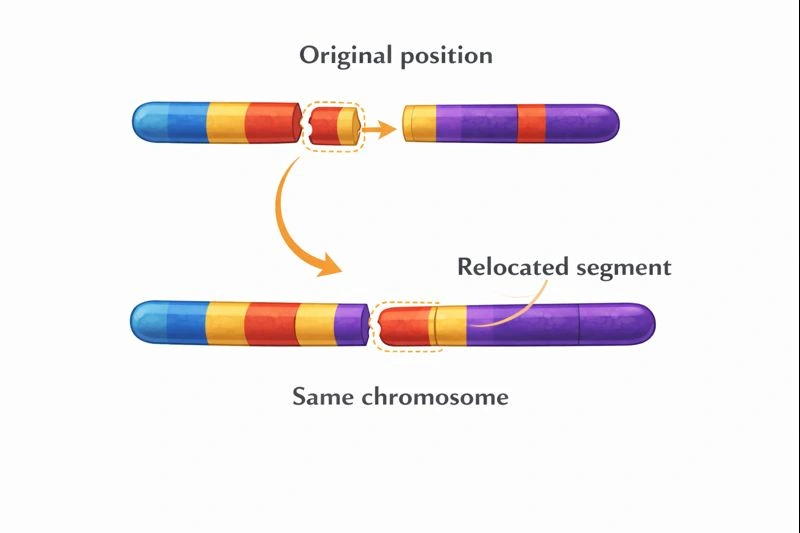
An intrachromosomal translocation occurs when a segment of a chromosome breaks off and reattaches at a different location on the same chromosome.
In this type of chromosomal rearrangement, genetic material is relocated within a single chromosome rather than being exchanged between two different chromosomes. The total amount of genetic material remains the same; only the position of genes changes. This can alter gene regulation or disrupt genes at the breakpoints, potentially leading to abnormal traits or disease.
A) A segment breaks off and reattaches at a different point on the same chromosome
This is the correct answer. An intrachromosomal translocation involves movement of a chromosome segment to a new position within the same chromosome. There is no gain or loss of DNA overall, but the relocation can change gene order and affect how genes are expressed. This distinguishes it from interchromosomal translocations, where segments move between different chromosomes.
B) A section of the chromosome is attached in reverse order
This describes an inversion, not a translocation. In an inversion, a chromosome segment breaks off, flips 180 degrees, and reattaches in the same place but in reverse orientation. The location remains the same; only the direction changes.
C) Part of a chromosome is added or removed
This describes duplication (added genetic material) or deletion (loss of genetic material). These mutations change the total amount of DNA and are not classified as translocations.
D) A section is duplicated and reattached
This is a duplication event. Here, an extra copy of a chromosome segment is produced and inserted, increasing the amount of genetic material rather than simply relocating it.
Conclusion
Intrachromosomal translocation is defined by the movement of a chromosome segment to a new position on the same chromosome without changing the total amount of DNA. Therefore, the correct answer is A) A segment breaks off and reattaches at a different point on the same chromosome.
The scientific name Felis catus indicates the housecat's _______ and _______.
A.
kingdom; family
B. order; subspecies
C. phylum; class
D. genus; species
Rationale
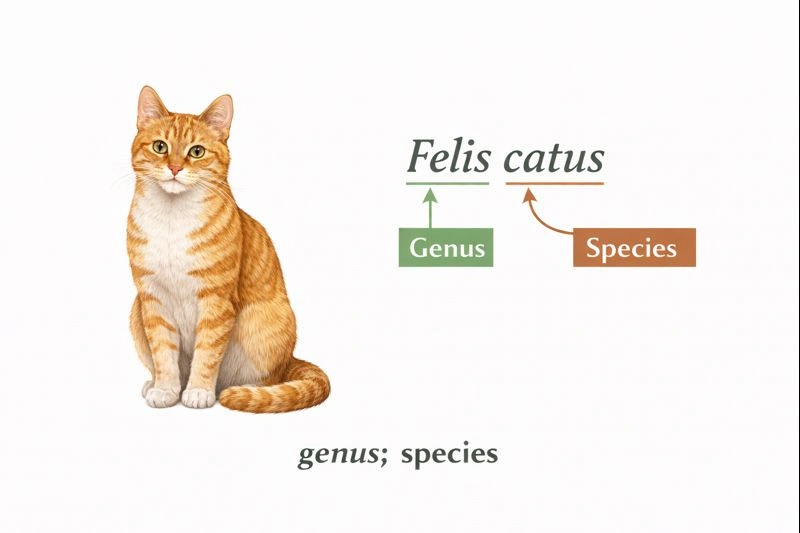
The scientific name Felis catus indicates the house cat's genus and species.
In biology, organisms are named using binomial nomenclature, a standardized system developed to ensure that every species has a unique, universally recognized name. This system always uses two words: the first identifies the genus, and the second identifies the species. In Felis catus, each part of the name directly corresponds to one of these taxonomic levels.
A) Kingdom; family
Kingdom and family are taxonomic ranks, but they are not represented in a scientific (binomial) name. For example, the house cat belongs to the kingdom Animalia and the family Felidae, but neither of these ranks appears in the two-word scientific name. Binomial nomenclature does not encode kingdom or family, so this option is incorrect.
B) Order; subspecies
Order is a much higher taxonomic rank (for cats, Carnivora), and subspecies would require a third name, creating a trinomial designation (for example, Genus species subspecies). Since Felis catus contains only two words, it cannot represent order and subspecies. This option is incorrect.
C) Phylum; class
Phylum (Chordata) and class (Mammalia) are also higher-level taxonomic categories. These ranks describe very broad groupings and are never included in a binomial scientific name. Therefore, this option does not match the structure of Felis catus.
D) Genus; species
This is the correct answer. In binomial nomenclature: 1. The first word, Felis, is the genus name and is always capitalized. 2. The second word, catus, is the species (specific epithet) and is written in lowercase. Together, the genus and species uniquely identify the organism. Felis groups the house cat with closely related cats, while catus distinguishes the domestic cat from other members of the genus.
Conclusion
A scientific name always consists of two parts: genus followed by species. Since Felis catus follows this exact format, it indicates the house cat's genus and species. Therefore, the correct answer is D) genus; species.
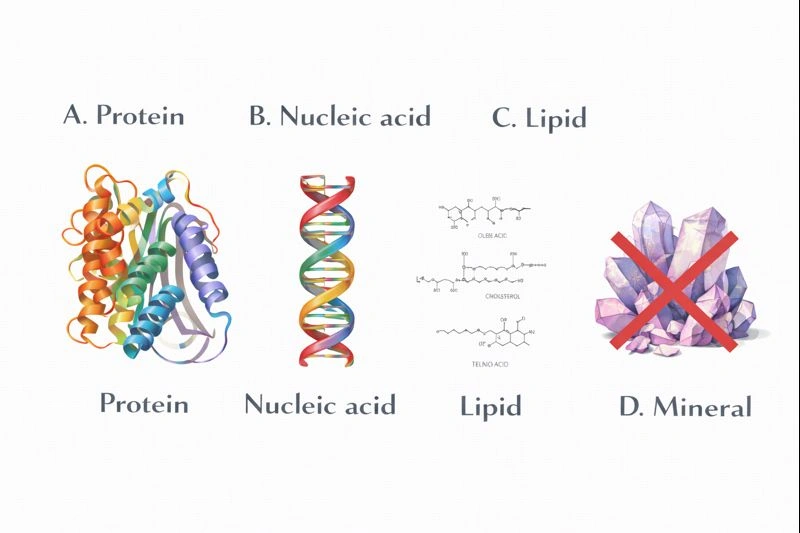
Which is not an organic macromolecule?
A.
Protein
B. Nucleic acid
C. Lipid
D. Mineral
Rationale
The substance that is not an organic macromolecule is a mineral.
Organic macromolecules are large, carbon-based molecules essential to life. They all contain carbon atoms bonded to other carbon atoms, forming a carbon skeleton. Minerals do not meet this criterion and are therefore not considered organic macromolecules.
A) Protein
Proteins are organic macromolecules made of long chains of amino acids. Each amino acid contains carbon, hydrogen, oxygen, and nitrogen, and sometimes sulfur. Proteins have a carbon backbone and are involved in structure, enzymes, transport, signaling, and immune function. Because they are carbon-based and large, proteins are organic macromolecules.
B) Nucleic acid
Nucleic acids, such as DNA and RNA, are organic macromolecules composed of nucleotides. Each nucleotide contains a sugar (ribose or deoxyribose), a nitrogenous base, and a phosphate group. The sugar component provides a carbon-based backbone, making nucleic acids organic macromolecules responsible for storing and transmitting genetic information.
C) Lipid
Lipids are organic molecules primarily composed of carbon, hydrogen, and oxygen. Although they are not true polymers, they are still classified as organic macromolecules because of their large size and carbon-rich structure. Examples include fats, oils, waxes, phospholipids, and steroids.
D) Mineral
This is the correct answer. Minerals are inorganic substances that do not contain carbon-carbon bonds. Examples include calcium, iron, sodium, and phosphate salts. They are elements or simple compounds required for physiological functions but lack the carbon skeleton that defines organic macromolecules.
Conclusion
Organic macromolecules are large, carbon-based molecules such as proteins, nucleic acids, and lipids. Minerals are inorganic and lack a carbon framework. Therefore, the correct answer is D) Mineral.
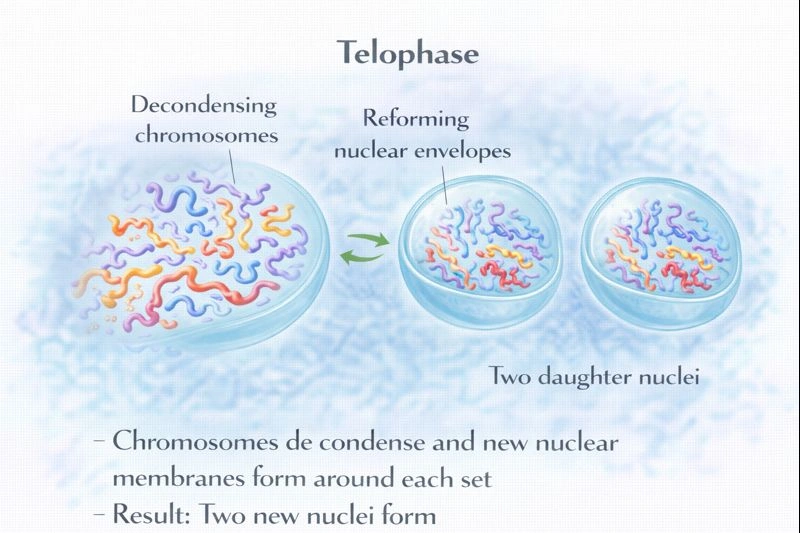
In which phase of mitosis do new nuclear membranes form around sets of chromosomes?
A.
Prophase
B. Anaphase
C. Telophase
D. Interphase
Rationale
Telophase is the phase of mitosis in which new nuclear membranes form around sets of chromosomes.
During mitosis, the nucleus temporarily breaks down so chromosomes can be separated into two identical groups. Once chromosome separation is complete, the cell must re-establish nuclei around each set of genetic material. This restoration of the nucleus occurs during telophase, marking the transition toward the completion of cell division.
A) Prophase
Prophase is the stage in which mitosis begins. During this phase, chromosomes condense and become visible, and the nuclear envelope breaks down rather than forms. Because the nucleus is disassembling at this point, prophase cannot be the correct answer.
B) Anaphase
In anaphase, sister chromatids separate and are pulled to opposite poles of the cell by spindle fibers. The nuclear membrane is still absent during this stage, and its reformation has not yet started. Therefore, anaphase is not the correct phase.
C) Telophase
This is the correct answer. During telophase, the chromosomes reach opposite ends of the cell and begin to decondense back into chromatin. At the same time, new nuclear membranes reassemble around each set of chromosomes, forming two distinct nuclei. This prepares the cell for the final step of division, cytokinesis.
D) Interphase
Interphase is not a stage of mitosis. It occurs between cell divisions and includes the G1, S, and G2 phases. During interphase, the nuclear membrane is already intact and functioning, so no new nuclear membranes are formed at this time.
Conclusion
The formation of new nuclear membranes around separated chromosome sets occurs during telophase. Therefore, the correct answer is C) Telophase.
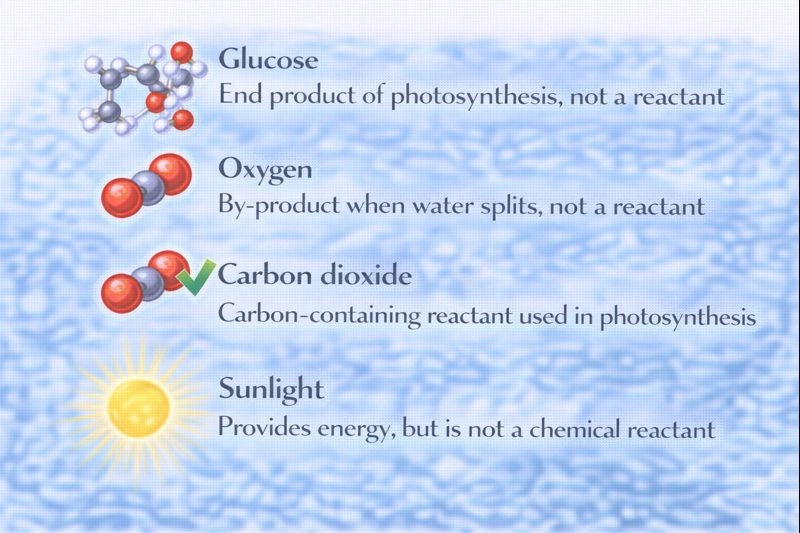
Which is a reactant in photosynthesis?
A.
Glucose
B. Oxygen
C. Carbon dioxide
D. Sunlight
Rationale
Carbon dioxide is a reactant in photosynthesis.
Photosynthesis is the process by which plants, algae, and some bacteria synthesize glucose using inorganic substances and energy from light. The chemical reactants are the substances that are taken in and chemically transformed during the reaction. In photosynthesis, carbon dioxide provides the carbon atoms that are built into glucose.
A) Glucose
Glucose is not a reactant. It is the main end product of photosynthesis. During the Calvin cycle, carbon atoms from carbon dioxide are assembled into glucose molecules, which store chemical energy for the organism. Because glucose is produced rather than consumed, this option is incorrect.
B) Oxygen
Oxygen is also not a reactant. It is released as a by-product during the light-dependent reactions when water molecules are split (photolysis) in photosystem II. Since oxygen exits the system instead of entering it, it is not considered a reactant.
C) Carbon dioxide
This is the correct answer. Carbon dioxide is taken in from the atmosphere through the stomata of leaves. It enters the chloroplast stroma, where it is fixed during the Calvin cycle. The carbon atoms from CO2 are incorporated into organic molecules, ultimately forming glucose. Because it is chemically consumed and transformed, carbon dioxide is a true reactant in photosynthesis.
D) Sunlight
Sunlight provides the energy that drives photosynthesis, but it is not a chemical substance and does not appear as a molecule in the balanced chemical equation. Reactants are matter, not energy, so sunlight is not classified as a reactant.
Conclusion
Photosynthesis requires carbon dioxide, water, and light energy to produce glucose and oxygen. Among the options given, carbon dioxide is the chemical substance that is taken in and used to build glucose. Therefore, the correct answer is C) Carbon dioxide.
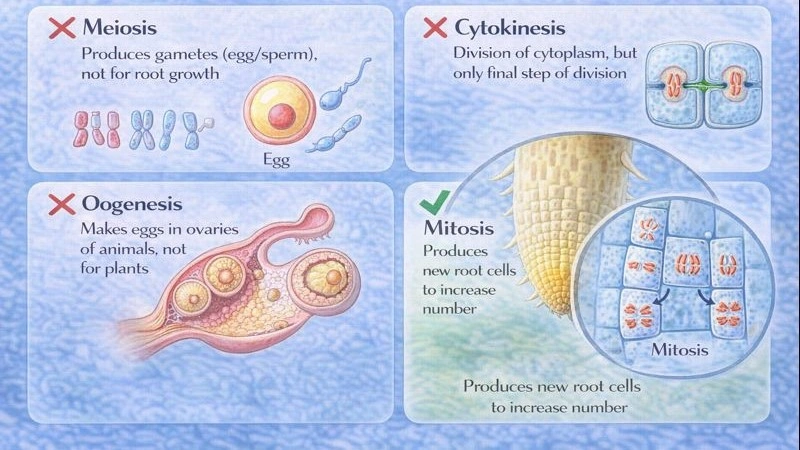
What process do cells in the tip of a plant's root undergo to increase in number?
A.
Meiosis
B. Cytokinesis
C. Oogenesis
D. Mitosis
Rationale
Cells in the tip of a plant's root increase in number through mitosis.
The tip of a plant's root contains a region called the apical meristem. This region is responsible for primary growth, meaning an increase in length. To achieve this, cells must divide repeatedly to produce new, genetically identical cells. The type of cell division that produces identical somatic cells for growth and repair is mitosis.
A) Meiosis
Meiosis is a specialized type of cell division that produces gametes (sex cells) with half the normal chromosome number. In plants, meiosis occurs in reproductive structures to form pollen and ovules, not in root tips. Root tip cells are somatic cells, so meiosis does not contribute to their increase in number.
B) Cytokinesis
Cytokinesis is the physical division of the cytoplasm that occurs after nuclear division. While cytokinesis is an important step in completing cell division, it does not by itself explain how cell number increases. It is a component of mitosis, not the overarching process responsible for organized growth in root meristems.
C) Oogenesis
Oogenesis is the process of egg formation in animals. It does not occur in plants and has no role in plant root growth. This option is biologically unrelated to the question.
D) Mitosis
This is the correct answer. Mitosis is the process by which a single somatic cell divides to produce two genetically identical daughter cells, each with the same chromosome number as the parent cell. In the apical meristem of a root tip, cells undergo continuous mitotic divisions. These divisions increase the total number of cells, allowing the root to elongate and develop new tissues.
Conclusion
Growth in plant root tips depends on repeated division of somatic cells in the apical meristem. This increase in cell number is achieved through mitosis. Therefore, the correct answer is D) Mitosis.
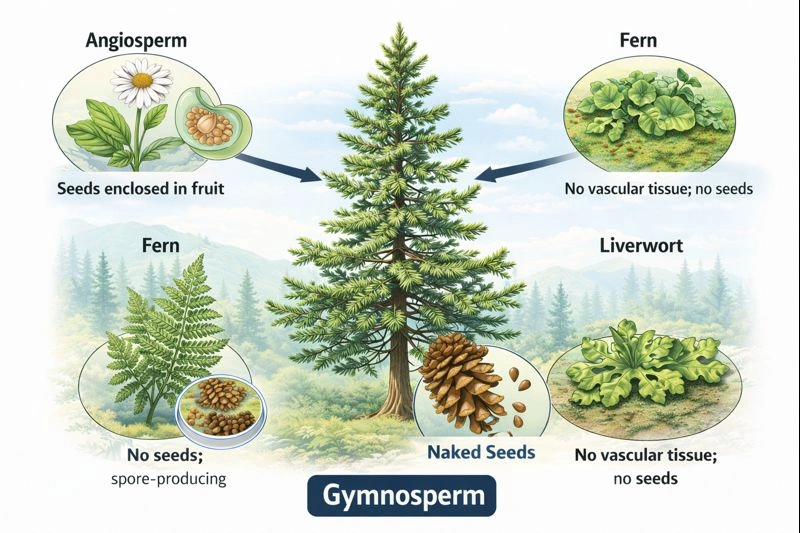
Plant with needle-like leaves & naked seeds?
A.
Angiosperm
B. Gymnosperm
C. Fern
D. Liverwort
Rationale
The plant with needle-like leaves and naked seeds is a gymnosperm.
Gymnosperms are a group of vascular plants characterized by seeds that are not enclosed within a fruit and leaves that are often needle-like or scale-like. These adaptations help reduce water loss and allow the plants to survive in cold or dry environments. Conifers, such as pine, spruce, and fir trees, are the most familiar examples of gymnosperms and clearly display both of these traits.
A) Angiosperm
Angiosperms are flowering plants. Their seeds are enclosed within an ovary that develops into a fruit. Most angiosperms have broad, flat leaves rather than needle-like leaves. Because angiosperms do not have naked seeds, this option does not fit the description.
B) Gymnosperm
This is the correct answer. Gymnosperms produce naked seeds that are typically found on the scales of cones rather than enclosed in fruits. Many gymnosperms, especially conifers, have needle-like leaves that reduce surface area and water loss. Both characteristics in the question are defining features of gymnosperms.
C) Fern
Ferns are vascular plants, but they reproduce using spores instead of seeds. They do not produce naked seeds or needle-like leaves. Therefore, they do not match the description.
D) Liverwort
Liverworts are non-vascular plants (bryophytes). They lack true roots, stems, leaves, and seeds. They reproduce by spores and do not have needle-like leaves or naked seeds.
Conclusion
Needle-like leaves combined with naked seeds are hallmark characteristics of gymnosperms. Therefore, the correct answer is B) Gymnosperm.
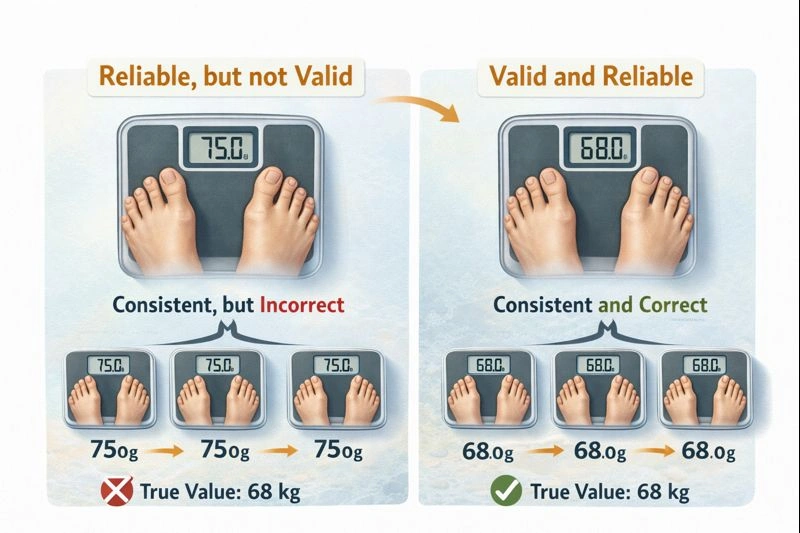
Scale reads 75 kg (true = 68 kg) 20 times. Description?
A.
Valid, not reliable
B. Reliable, not valid
C. Both
D. Neither
Rationale
The scale is reliable but not valid.
In measurement science, reliability and validity describe two different qualities of an instrument. Reliability refers to consistency: whether repeated measurements under the same conditions give the same result. Validity refers to accuracy: whether the measurement reflects the true value. In this case, the scale gives the same reading of 75 kg every time, but the true mass is 68 kg. This indicates consistency without accuracy.
A) Valid, not reliable
This would describe an instrument that gives values close to the true measurement but does so inconsistently. For example, readings might vary widely but average near 68 kg. That is not what is happening here, because the scale gives the same value every time. Therefore, this option is incorrect.
B) Reliable, not valid
This is the correct description. The scale is reliable because it produces the same measurement (75 kg) consistently across all 20 trials. However, it is not valid because that measurement is not close to the true value of 68 kg. The scale has a systematic error or calibration problem that causes it to overestimate mass.
C) Both
For an instrument to be both reliable and valid, it must be consistent and accurate. While the scale is consistent, it is not accurate. Therefore, it cannot be both.
D) Neither
This would apply to an instrument that gives inconsistent readings and is also inaccurate. Since the scale clearly gives consistent readings, this option does not apply.
Conclusion
Because the scale gives the same incorrect reading repeatedly, it demonstrates high reliability but low validity. Therefore, the correct answer is B) Reliable, not valid.
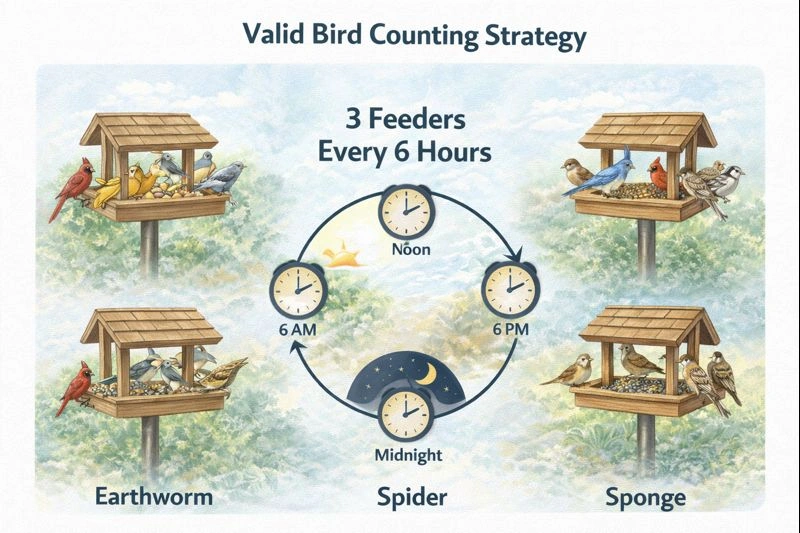
Most valid bird counting strategy?
A.
One feeder every 6 h
B. Three feeders noon & 6 pm
C. One feeder noon & 6 pm
D. Three feeders every 6 h
Rationale
The most valid bird counting strategy is counting birds at three feeders every six hours.
Validity in ecological sampling depends on how well the method represents the true population. This requires minimizing both spatial bias (sampling only one location) and temporal bias (sampling only at limited times of day). A strategy that spreads observations across multiple locations and multiple time intervals provides the most accurate picture of bird abundance and activity.
A) One feeder every 6 hours
This approach improves temporal coverage because birds are counted at different times of day. However, using only one feeder creates strong spatial bias. Birds that do not visit that specific feeder, or species displaced by dominant birds there, will be undercounted. As a result, the sample is not representative of the broader bird population.
B) Three feeders at noon and 6 pm
Using three feeders improves spatial coverage and reduces location bias. However, limiting counts to only noon and 6 pm introduces major temporal bias. Many bird species are most active at dawn and early morning, while others feed later in the evening. Restricting sampling to two times misses these activity peaks and reduces validity.
C) One feeder at noon and 6 pm
This option combines the weaknesses of both limited space and limited time. One feeder restricts spatial representation, and two sampling times restrict temporal representation. This strategy provides the least valid estimate of bird numbers.
D) Three feeders every 6 hours
This is the correct answer. Multiple feeders reduce spatial bias by sampling different areas and bird assemblages. Counting every six hours captures variation in bird activity across the daily cycle, including morning, afternoon, evening, and night. By replicating observations in both space and time, this strategy produces the most valid and reliable estimate of bird presence and abundance.
Conclusion
A valid population count requires broad coverage across locations and times. Counting birds at three feeders every six hours best minimizes sampling bias and provides the most accurate representation of the bird population.
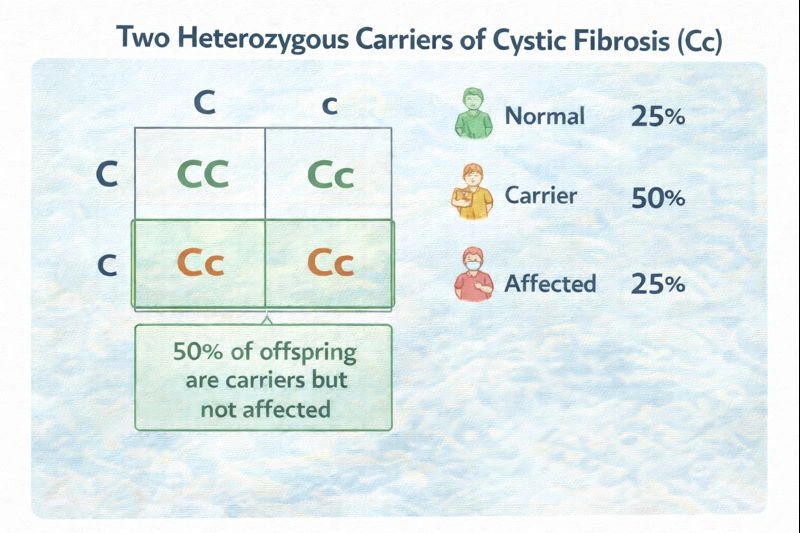
Two heterozygous carriers (Cc) of cystic fibrosis. Percent of offspring who are carriers but not affected?
A.
0%
B. 25%
C. 50%
D. 100%
Rationale
The percent of offspring who are carriers but not affected is 50%.
Cystic fibrosis is an autosomal recessive disorder. This means an individual must inherit two recessive alleles (cc) to be affected. Individuals with one dominant allele and one recessive allele (Cc) are carriers; they do not show symptoms but can pass the disease allele to their offspring.
When both parents are heterozygous carriers (Cc × Cc), their possible genetic combinations can be predicted using a Punnett square. This cross produces four equally likely genotypes: CC, Cc, Cc, and cc. Each outcome represents 25% of the offspring.
A. 0 %
This is incorrect. A cross between two carriers always produces some heterozygous offspring, so the percentage cannot be zero.
B. 25 %
This represents the proportion of offspring who are homozygous recessive (cc) and therefore affected by cystic fibrosis, not carriers.
C. 50 %
This is correct. Two of the four possible offspring genotypes are heterozygous (Cc). These individuals carry one copy of the recessive allele but do not express the disease, making up 50% of the offspring.
D. 100 %
This is incorrect. Only half of the offspring are carriers. The remaining offspring are either unaffected non-carriers (CC) or affected (cc).
Conclusion: In a Cc × Cc cross for an autosomal recessive condition like cystic fibrosis, 50% of the offspring are expected to be carriers who are not affected.
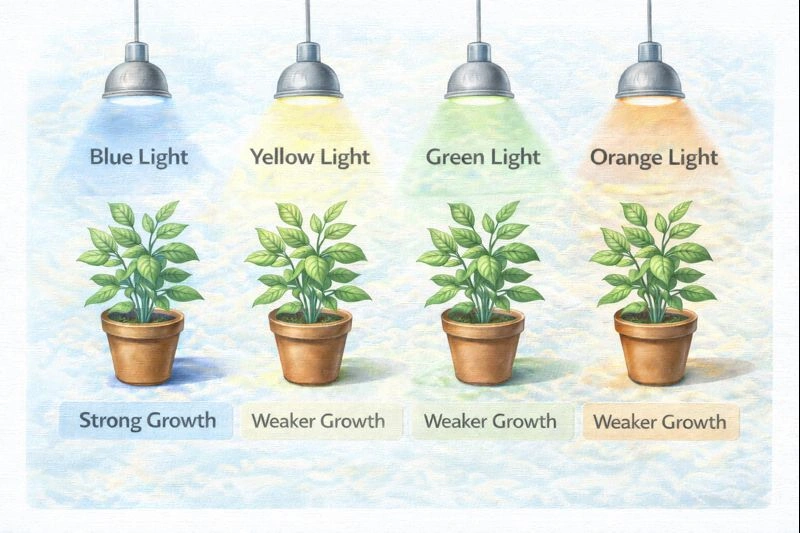
Which light color is most effective for growing green plants indoors?
A.
Blue
B. Yellow
C. Green
D. Orange
Rationale
The most effective light color for growing green plants indoors is blue light.
Plants depend on light energy for photosynthesis, and the effectiveness of a light color depends on how well plant pigments absorb it. Chlorophyll, the primary photosynthetic pigment in green plants, absorbs light most strongly in the blue and red regions of the visible spectrum. When only one color is considered, blue light is especially important because it strongly drives photosynthesis and supports healthy vegetative growth, including leaf development and compact plant structure.
A. Blue
This is the correct answer. Blue light is strongly absorbed by chlorophyll a and chlorophyll b. It plays a major role in photosynthesis and also regulates key growth processes such as stomatal opening and leaf expansion. Blue light helps plants grow sturdy stems and healthy leaves, making it very effective for indoor plant growth, especially during early and vegetative stages.
B. Yellow
Yellow light is not very effective for photosynthesis. Chlorophyll absorbs very little light in the yellow portion of the spectrum, so much of this light is reflected rather than used. As a result, yellow light contributes minimally to plant growth.
C. Green
Green light is the least absorbed by chlorophyll and is mostly reflected, which is why plants appear green to our eyes. Although small amounts of green light can penetrate deeper into leaf tissues and be used indirectly, it is not efficient as a primary light source for photosynthesis.
D. Orange
Orange light is closer to red light and is absorbed better than green or yellow light, but it is still less effective than blue light when used alone. Red and orange light mainly support flowering and stem elongation rather than strong vegetative growth.
Conclusion: Chlorophyll absorbs blue light very efficiently, making it highly effective for photosynthesis and healthy plant growth. Therefore, among the choices given, blue light is the best option for growing green plants indoors.
Which specific genetic characteristic is unique to an individual human being?
A.
Number of chromosomes
B. Shape of DNA
C. Sequence of nucleotides
D. Size of base pairs
Rationale
The specific genetic characteristic that is unique to an individual human being is the sequence of nucleotides.
Every human shares the same basic genetic framework, but what distinguishes one person from another at the genetic level is the exact order of the nitrogenous bases in DNA. These differences in sequence create genetic variation among individuals and are the basis for traits, inherited differences, and forensic identification.
A. Number of chromosomes
Humans almost universally have 46 chromosomes arranged in 23 pairs. This chromosome number defines the species, not the individual. While chromosomal abnormalities can occur, they are exceptions and do not provide a unique identifier for each person.
B. Shape of DNA
DNA has a double-helix structure in all humans and in most living organisms. This structural shape is a constant chemical property of DNA and does not vary from one individual to another.
C. Sequence of nucleotides
This is the correct answer. The precise order of the four nucleotide bases—adenine (A), thymine (T), cytosine (C), and guanine (G)—along the DNA molecule varies between individuals. Even though humans share more than 99.9% of their DNA, the remaining variation is enough to make each person genetically unique (except for identical twins). These sequence differences are what allow DNA profiling, inheritance of traits, and individual biological variation.
D. Size of base pairs
The size and spacing of base pairs are fixed by molecular structure. An A–T pair and a G–C pair have consistent dimensions in all DNA molecules, regardless of the individual. This property does not vary between people.
Conclusion
Human genetic individuality is determined by the unique sequence of nucleotides in DNA. Structural features like chromosome number, DNA shape, and base-pair size are shared by all humans and do not confer individual uniqueness. Therefore, the correct answer is C.

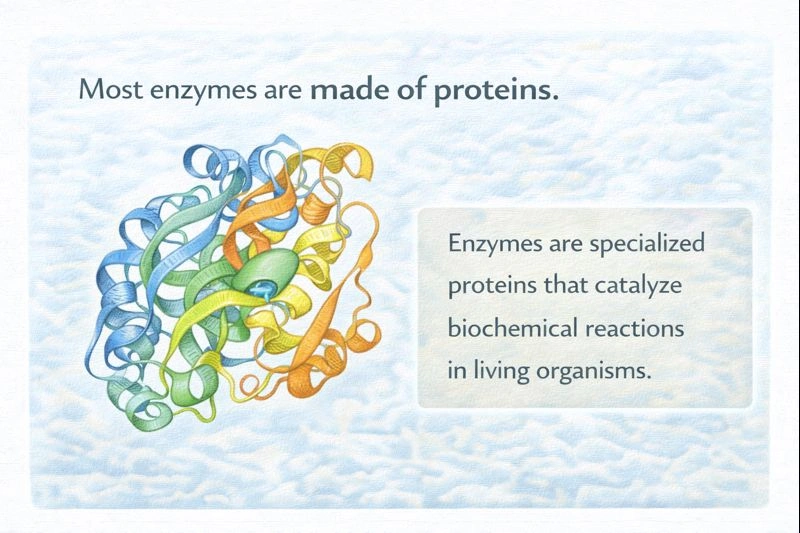
Which is true of enzymes?
A.
They are made from lipids.
B. They are made from proteins.
C. They form double chains of DNA.
D. They bind with catalysts.
Rationale
Enzymes are made from proteins.
Enzymes are biological catalysts that speed up chemical reactions in living organisms. Their function depends on their complex three-dimensional structure, which allows them to bind specific substrates and lower activation energy. This structure is a defining property of proteins.
A. They are made from lipids
Lipids include fats, oils, waxes, and phospholipids. While lipids are essential for energy storage, membranes, and signaling, they do not fold into the precise three-dimensional shapes required for catalytic activity. Lipids do not form active sites and therefore cannot function as enzymes.
B. They are made from proteins
This is the correct answer. Most enzymes are proteins composed of long chains of amino acids folded into specific shapes. The folding creates an active site where substrates bind and reactions occur. The chemical properties of amino acid side chains enable enzymes to stabilize transition states, break bonds, and form new ones. Although a small number of RNA molecules (ribozymes) can act as enzymes, proteins represent the standard and overwhelmingly dominant class of enzymes in biology.
C. They form double chains of DNA
This describes the structure of DNA, not enzymes. DNA is a nucleic acid with a double-helix structure and functions primarily in information storage. Enzymes may interact with DNA, but they are not DNA themselves.
D. They bind with catalysts
This statement is incorrect because enzymes are the catalysts. Enzymes bind to substrates, not to other catalysts. The enzyme–substrate interaction is central to how enzymatic reactions occur.
Conclusion
Enzymes function as biological catalysts because they are proteins with specific shapes that enable chemical reactions to proceed efficiently. Therefore, the correct answer is B. They are made from proteins.
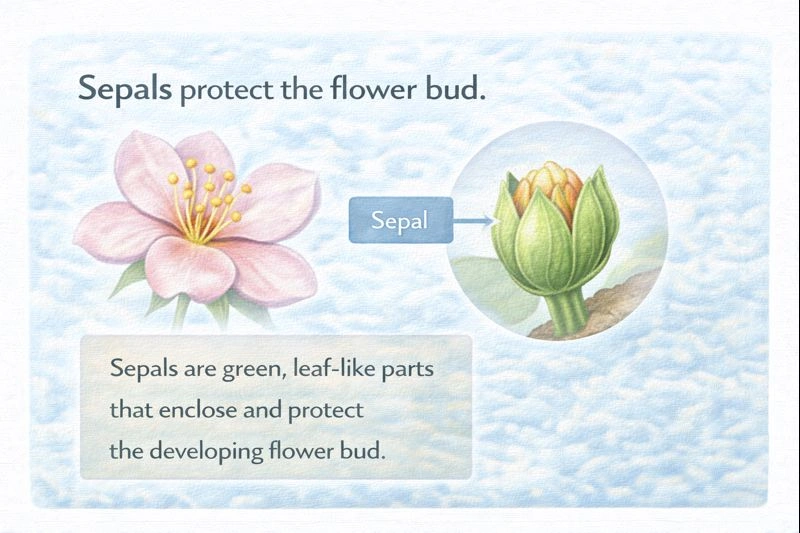
Which part of a flowering plant protects the flower bud?
A.
Stamen
B. Stigma
C. Style
D. Sepal
Rationale
The sepal is the part of a flowering plant that protects the flower bud.
In flowering plants, each floral structure has a specific role in reproduction or protection. Before a flower opens, the developing tissues are delicate and vulnerable to physical damage, dehydration, and environmental stress. The structure responsible for enclosing and protecting the flower at this early stage is the sepal.
A. Stamen
The stamen is the male reproductive part of the flower. It is composed of the anther, which produces pollen, and the filament, which supports the anther. The stamen functions in reproduction by producing male gametes, not in protecting the flower bud. Therefore, it is not the correct answer.
B. Stigma
The stigma is the top part of the pistil (female reproductive organ). Its role is to receive pollen during pollination. It is often sticky or specially shaped to trap pollen grains. The stigma only becomes functional after the flower opens and does not protect the bud.
C. Style
The style is the narrow stalk that connects the stigma to the ovary within the pistil. It provides a pathway for the pollen tube to grow toward the ovule after pollination. Like the stigma, it is involved in reproduction rather than protection.
D. Sepal
The sepal is the correct answer. Sepals are the outermost floral structures and are usually green and leaf-like. Together, they form the calyx. Their primary function is to surround and protect the developing flower bud before it opens. By enclosing the bud, sepals shield the internal reproductive organs from injury and environmental damage.
Conclusion
The structure that protects a flowering plant's bud during its early development is the sepal. Therefore, the correct answer is D. Sepal.
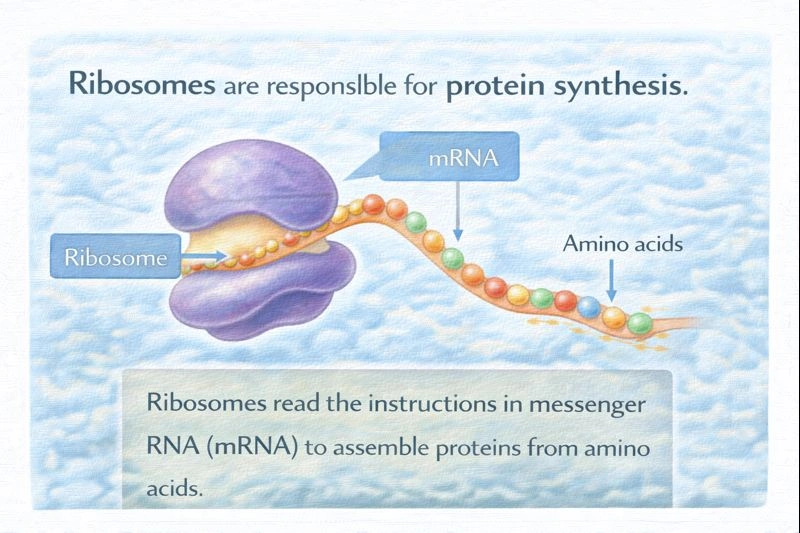
Which organelle is responsible for protein synthesis?
A.
Mitochondrion
B. Vacuole
C. Cell membrane
D. Ribosome
Rationale
The ribosome is the organelle responsible for protein synthesis.
Protein synthesis is the process by which cells build proteins based on the instructions carried by messenger RNA (mRNA). This process, called translation, occurs on ribosomes, which are specialized cellular structures designed to assemble amino acids into proteins in the correct sequence.
A. Mitochondrion
The mitochondrion is primarily responsible for energy production through cellular respiration, generating ATP for the cell. Although mitochondria contain their own small ribosomes and can synthesize a limited number of proteins needed for mitochondrial function, they are not the main site of protein synthesis for the cell as a whole. Most cellular proteins are not made in mitochondria.
B. Vacuole
The vacuole is a membrane-bound organelle involved in storage, waste removal, and maintaining internal pressure in plant cells. It may store water, ions, pigments, or waste products, but it does not participate in protein synthesis.
C. Cell membrane
The cell membrane controls the movement of substances into and out of the cell and plays a role in communication and signaling. While proteins are embedded in the membrane, the membrane itself does not manufacture proteins. Protein production occurs elsewhere and the finished proteins may later be transported to the membrane.
D. Ribosome
The ribosome is the correct answer. Ribosomes are the cellular structures that carry out protein synthesis. They bind to mRNA and use transfer RNA (tRNA) to bring amino acids together, forming polypeptide chains according to the genetic code. Ribosomes can be found freely in the cytoplasm or attached to the rough endoplasmic reticulum, but in both cases their function is the same: making proteins.
Conclusion
Protein synthesis occurs at ribosomes, where genetic instructions are translated into functional proteins. Therefore, the correct answer is D. Ribosome.
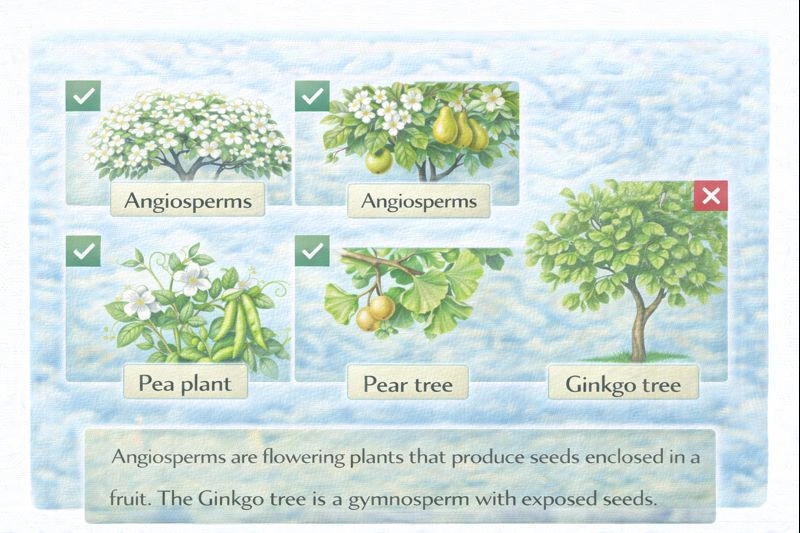
Which one is not an angiosperm?
A.
Dogwood
B. Pea plant
C. Pear tree
D. Ginkgo tree
Rationale
The ginkgo tree is not an angiosperm.
Angiosperms are flowering plants that produce seeds enclosed within a fruit. Any plant that lacks true flowers and does not enclose its seeds in an ovary is not an angiosperm. Among the options given, only one plant fits this description.
A. Dogwood
Dogwood is a flowering plant. It produces flowers that develop into fruits containing enclosed seeds. This characteristic places dogwood firmly within the angiosperms.
B. Pea plant
The pea plant is a classic angiosperm. It produces flowers and forms seeds enclosed within a pod, which is a fruit derived from the ovary of the flower. This is a defining feature of angiosperms.
C. Pear tree
Pear trees are flowering plants that produce fruits (pears). The seeds are enclosed within the fruit, which develops from the flower's ovary. This makes pear trees angiosperms.
D. Ginkgo tree
The ginkgo tree is a gymnosperm, not an angiosperm. It does not produce flowers or fruits. Instead, it produces naked seeds that are not enclosed in an ovary. Although the seed has a fleshy outer layer, this structure is not a true fruit. Ginkgo trees are often described as living fossils and represent one of the oldest surviving seed plant lineages.
Conclusion
Angiosperms are defined by the presence of flowers and seeds enclosed in fruits. The ginkgo tree lacks these features and is a gymnosperm. Therefore, the correct answer is D.
Students' measurements 5.14, 5.16, 5.17 g (true = 5.3 g). Description?
A.
Accurate
B. Precise
C. Both
D. Neither
Rationale
The students' measurements are best described as precise.
Precision refers to how close repeated measurements are to one another, while accuracy refers to how close measurements are to the true or accepted value. In this case, the three measurements (5.14 g, 5.16 g, and 5.17 g) are very close to each other, showing strong consistency, but they are not close to the true value of 5.30 g.
A. Accurate
This option is incorrect. Accuracy depends on how close the measurements are to the true value. All three measurements are about 0.13–0.16 g lower than the true mass of 5.30 g, indicating that the measurements are not accurate.
B. Precise
This is the correct answer. Precision is demonstrated by the small spread between measurements. The difference between the lowest and highest values is only 0.03 g, showing that the measurements are highly consistent with one another, even though they are offset from the true value.
C. Both
This option is incorrect because the measurements are not accurate. Being both accurate and precise would require the values to be close to each other and close to 5.30 g, which they are not.
D. Neither
This option is incorrect because the measurements are clearly precise. They are tightly clustered and reproducible, even though they are biased away from the true value.
Conclusion
The measurements show high consistency but are not close to the true mass. Therefore, the correct description is that the measurements are precise but not accurate, making B the correct answer.

What is the purpose of phloem in plant tissue?
A.
To transport sugar and nutrients
B. To assist in photosynthesis
C. To transport water from the roots
D. To move gases into and out of the plant
Rationale
Phloem transports sugars and nutrients throughout the plant.
Phloem is a specialized vascular tissue in plants that distributes the products of photosynthesis from where they are made to where they are needed. This transport system is essential for growth, storage, and overall plant metabolism.
A. To transport sugar and nutrients
Phloem carries photosynthates—primarily sucrose, along with amino acids, hormones, and other organic nutrients—from sources (such as mature leaves) to sinks (such as roots, fruits, seeds, and growing tissues). This movement, called translocation, is explained by the pressure flow hypothesis, making this option correct.
B. To assist in photosynthesis
Photosynthesis takes place in chloroplasts within leaf mesophyll cells. While phloem transports the sugars produced by photosynthesis, it does not participate in the photosynthetic reactions themselves, so this option is incorrect.
C. To transport water from the roots
Water and dissolved minerals are transported upward from roots to leaves by xylem, not phloem. Xylem consists mainly of dead, lignified cells adapted for water conduction, making this option incorrect.
D. To move gases into and out of the plant
Gas exchange occurs through stomata in leaves and lenticels in stems. Phloem does not play a role in the diffusion of gases, so this option is incorrect.
Conclusion
Phloem is responsible for transporting sugars and other organic nutrients throughout the plant. Therefore, the correct answer is A.

HESI A2 Exams
Chemistry Quizzes
3 Practice Tests
Chemistry Quizzes
3 Practice Tests
Anatomy Quizzes
3 Practice Tests
Anatomy Quizzes
3 Practice Tests
Reading Quizzes
4 Practice Tests
Reading Quizzes
4 Practice Tests
Grammar Quizzes
3 Practice Tests
Grammar Quizzes
3 Practice Tests
Vocabulary Quizzes
3 Practice Tests
Vocabulary Quizzes
3 Practice Tests
Physics Quizzes
3 Practice Tests
Physics Quizzes
3 Practice Tests
HESI Quizzes
3 Practice Tests
HESI Quizzes
3 Practice Tests