HESI A2 BIOLOGY PRACTICE TEST FREE
This free HESI A2 Biology practice test allows you to experience real exam-style biology questions at no cost. It is ideal for testing your baseline knowledge before starting intensive study. The questions simulate the format and difficulty of the HESI A2 exam and provide explanations to guide your improvement.
Topics Covered
Cell Biology
Genetics
Energy Processes
Evolution
Human Biology
00:00
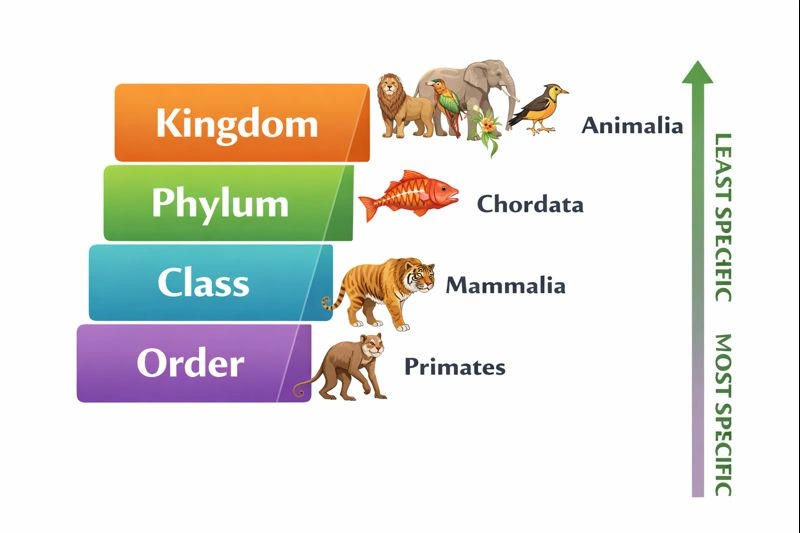
Which gives the order of four taxonomic categories from least to most specific?
A.
Kingdom, phylum, class, order
B. Kingdom, phylum, order, class
C. Kingdom, order, phylum, class
D. Kingdom, class, order, phylum
Rationale
Kingdom, phylum, class, order gives the correct sequence of four taxonomic categories from least to most specific.
Biological classification follows a fixed hierarchical system that organizes living organisms from very broad groups to increasingly specific ones. Each level is nested within the one before it. When ordering categories from least specific (broadest) to most specific (narrower), the ranks must follow this established hierarchy.
A) Kingdom, phylum, class, order
This is the correct answer. Kingdom is the broadest of the listed categories and includes a very wide range of organisms, such as Animalia or Plantae. Phylum is a subdivision within a kingdom and groups organisms based on major structural similarities, such as Chordata. Class is more specific and exists within a phylum, grouping organisms like Mammalia. Order is even more specific, grouping related families within a class, such as Primates. This sequence follows the standard taxonomic hierarchy correctly from least to most specific.
B) Kingdom, phylum, order, class
This option is incorrect because it reverses class and order. Class is broader than order, so order cannot come before class when moving from least to most specific.
C) Kingdom, order, phylum, class
This option is incorrect because it places order before phylum and class. Order is much more specific than phylum, so this sequence breaks the hierarchical structure.
D) Kingdom, class, order, phylum
This option is incorrect because phylum is broader than both class and order. Placing phylum last contradicts the required progression from broad to specific.
Conclusion
Taxonomic classification proceeds from broad to specific in the order: Kingdom -> Phylum -> Class -> Order -> Family -> Genus -> Species. Therefore, the correct answer is A) Kingdom, phylum, class, order.
How is transpiration water loss different from simple evaporation?
A.
It takes place over the ocean
B. It is not part of the water cycle
C. It is caused solely by heat
D. It involves plant activity
Rationale
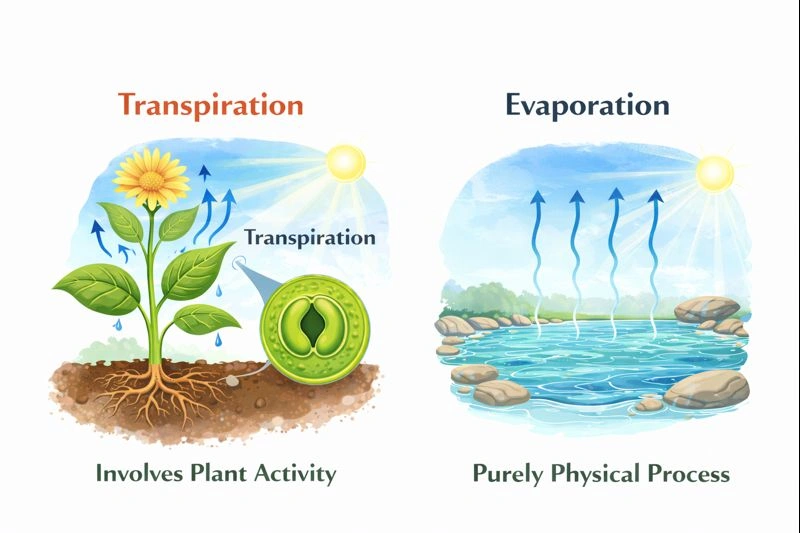
Transpiration water loss is different from simple evaporation because it involves plant activity.
Transpiration is a biological process that occurs only in plants, whereas evaporation is a purely physical process that can occur anywhere water is exposed to the environment. The key difference lies in the involvement of living plant structures and physiological regulation.
A) It takes place over the ocean
This option is incorrect. Evaporation commonly occurs over oceans, lakes, rivers, and moist surfaces. Transpiration, however, occurs on land within plants. While location differs, this does not explain the fundamental distinction between the two processes. The question asks how transpiration is different, not where it happens.
B) It is not part of the water cycle
This option is incorrect. Transpiration is a major component of the water cycle. Water absorbed by plant roots moves up through the xylem and is released into the atmosphere as water vapor through stomata in leaves. This process contributes significantly to atmospheric moisture and precipitation patterns.
C) It is caused solely by heat
This option is incorrect. While heat and solar energy influence transpiration by increasing evaporation from leaf surfaces, transpiration is not driven solely by temperature. It is also regulated by plant-controlled factors such as stomatal opening and closing, leaf surface area, humidity, and internal water pressure. Evaporation, in contrast, depends only on physical factors like heat, wind, and surface area.
D) It involves plant activity
This is the correct answer. Transpiration requires active participation by plants. Water moves through living tissues and exits the plant through stomata, which open and close in response to environmental conditions and plant needs. This makes transpiration a biologically regulated process. Simple evaporation does not involve living organisms and occurs without biological control.
Conclusion
The defining difference between transpiration and evaporation is that transpiration is biologically mediated by plants, while evaporation is a purely physical process. Therefore, the correct answer is D) It involves plant activity.
Beeswax is an example of what kind of molecule?
A.
Lipid
B. Carbohydrate
C. Protein
D. Nucleic acid
Rationale
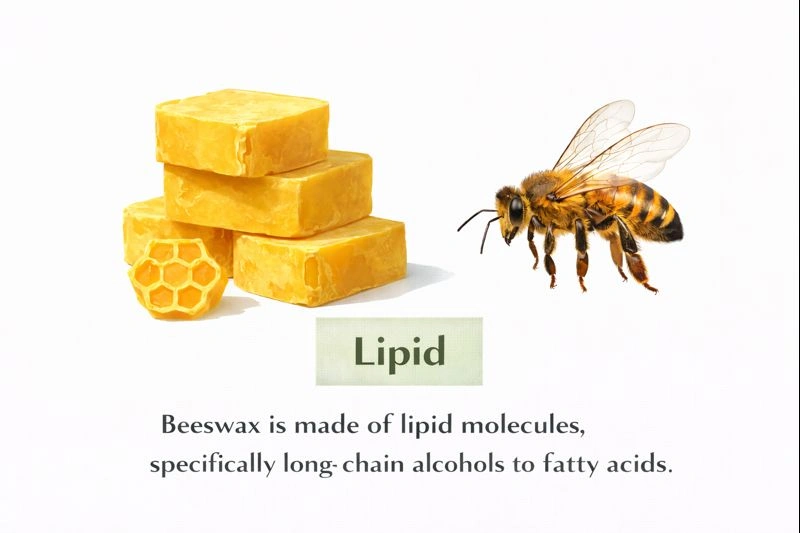
Beeswax is an example of a lipid.
Beeswax is classified based on its chemical structure and composition. In biology and chemistry, lipids are defined as hydrophobic molecules composed mainly of carbon, hydrogen, and oxygen, and this category includes fats, oils, waxes, and steroids. Beeswax fits squarely into this definition because of how it is built and how it behaves chemically.
A) Lipid
This is the correct answer. Beeswax is chemically a wax, which is a specific subclass of lipids. It is made primarily of esters formed from long-chain fatty acids bonded to long-chain alcohols. These molecules are nonpolar, water-insoluble, and rich in carbon and hydrogen, which are hallmark features of lipids. Waxes like beeswax serve protective and structural roles, such as waterproofing and structural support in honeycombs.
B) Carbohydrate
Carbohydrates are composed of sugar monomers such as glucose and typically follow a general formula close to (CH2O)n. Beeswax does not contain monosaccharides, disaccharides, or polysaccharides, nor does it have glycosidic bonds. Therefore, it is not a carbohydrate.
C) Protein
Proteins are polymers of amino acids linked by peptide bonds and contain nitrogen (and sometimes sulfur). Beeswax contains no amino acids, no peptide bonds, and no nitrogen. As a result, it cannot be classified as a protein.
D) Nucleic acid
Nucleic acids such as DNA and RNA are composed of nucleotides containing a sugar, phosphate group, and nitrogenous base. Beeswax lacks all of these components and has no role in genetic information storage or transfer, making this option incorrect.
Conclusion
Because beeswax consists of long-chain fatty acids and alcohols forming wax esters, it is chemically classified as a lipid. Therefore, the correct answer is A) Lipid.
Which option names a final step in protein synthesis?
A.
DNA unzips
B. Amino acids bond
C. Transfer RNA bonds to messenger RNA
D. Messenger RNA moves to ribosomes
Rationale
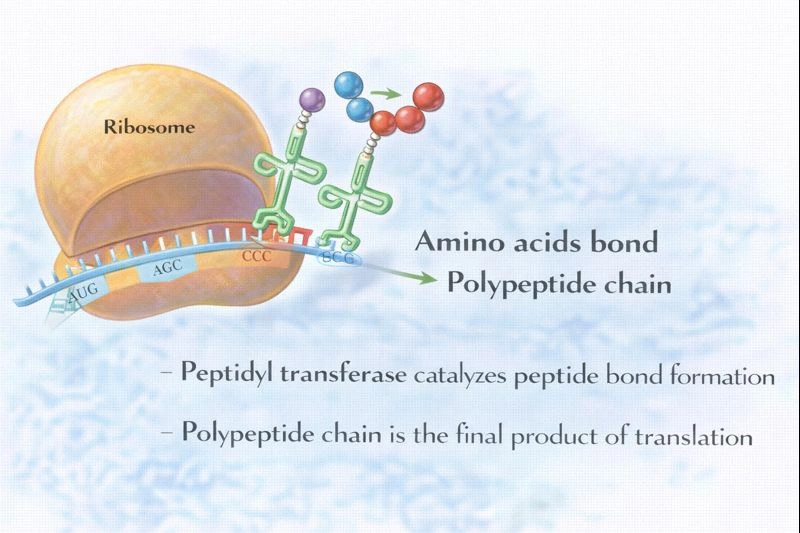
Amino acids bond is the final step in protein synthesis.
Protein synthesis occurs in two major stages: transcription and translation. Transcription produces messenger RNA (mRNA) from DNA, while translation uses the information in mRNA to assemble a protein. The final and defining step of protein synthesis happens during translation, when individual amino acids are chemically linked together to form a polypeptide chain. This bond formation is what actually creates the protein molecule.
A) DNA unzips
This step occurs during transcription, not protein synthesis's final stage. When DNA unzips, the two strands separate so that one strand can serve as a template for mRNA formation. This happens in the nucleus (in eukaryotes) and is an early event, long before a protein is assembled.
B) Amino acids bond
This is the correct answer. During translation, amino acids are joined together by peptide bonds to form a polypeptide chain. This reaction is catalyzed by the ribosome, specifically by the ribosomal RNA acting as an enzyme (peptidyl transferase). Once amino acids bond in the correct sequence dictated by mRNA, a complete protein (or polypeptide) is produced. This bond formation represents the final constructive step of protein synthesis.
C) Transfer RNA bonds to messenger RNA
This step occurs during translation but is not the final step. Transfer RNA (tRNA) molecules bind to complementary codons on the mRNA to deliver the correct amino acids. While this is essential for accuracy, it is a delivery step rather than the actual synthesis of the protein.
D) Messenger RNA moves to ribosomes
This step occurs after transcription and before translation begins. mRNA must travel from the nucleus to the ribosome (or directly interact with ribosomes in prokaryotes) so that translation can start. This is an early step, not the final one.
Conclusion
Protein synthesis is completed when amino acids are chemically linked together to form a polypeptide chain. This bonding of amino acids is the final step in building a protein. Therefore, the correct answer is B) Amino acids bond.
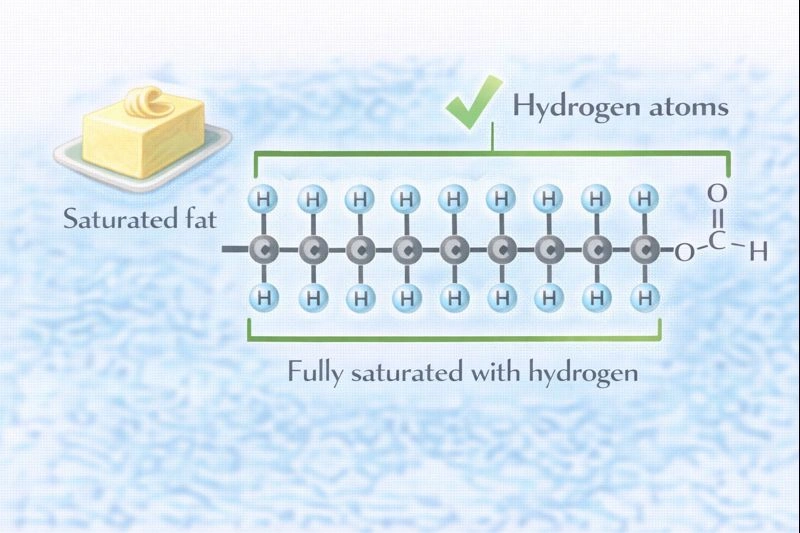
What are saturated fats saturated with?
A.
Hydrogen atoms
B. Carbon atoms
C. Oxygen atoms
D. Nitrogen atoms
Rationale
Hydrogen atoms are what saturated fats are saturated with.
Saturated fats are fatty acids in which all available bonding positions on the carbon chain are filled with hydrogen atoms. Because there are no carbon-carbon double bonds, the chain is said to be 'saturated' with hydrogen. This chemical structure explains why saturated fats are typically solid at room temperature and more chemically stable than unsaturated fats.
A) Hydrogen atoms
This is the correct answer. In saturated fatty acids, each carbon atom in the hydrocarbon chain is bonded to the maximum possible number of hydrogen atoms. There are only single bonds between carbon atoms, meaning no additional hydrogen can be added without breaking the molecule. This complete hydrogenation is what defines a fat as saturated.
B) Carbon atoms
All fatty acids, whether saturated or unsaturated, have a carbon backbone. The term 'saturated' does not refer to carbon content but to how many hydrogen atoms are attached to that carbon chain. Therefore, this option is incorrect.
C) Oxygen atoms
Oxygen atoms are present only in the functional carboxyl group (-COOH) of fatty acids and do not vary between saturated and unsaturated fats. Oxygen content has nothing to do with whether a fat is saturated, so this option is incorrect.
D) Nitrogen atoms
Triglycerides and fatty acids do not contain nitrogen. Nitrogen is found in molecules such as proteins and nucleic acids, not in fats. Saturation never refers to nitrogen, making this option incorrect.
Conclusion
Saturated fats are defined by having carbon chains fully bonded with hydrogen atoms and no double bonds. Therefore, the correct answer is A) Hydrogen atoms.
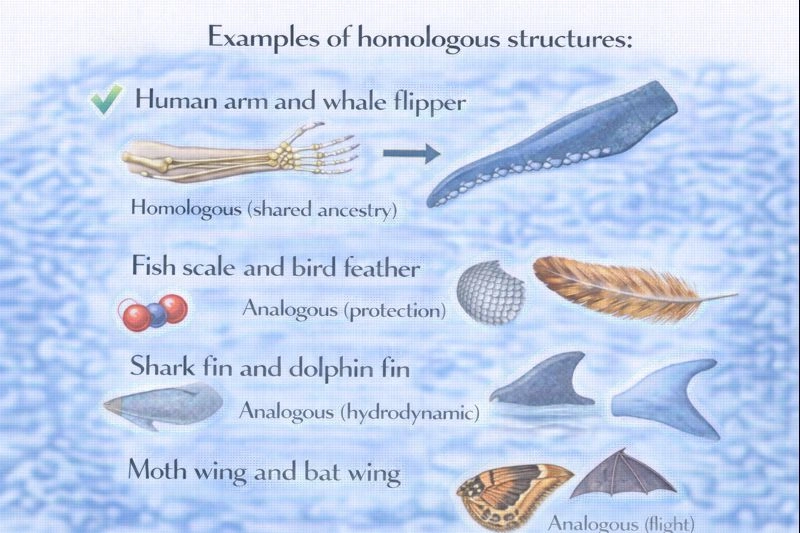
Which are examples of homologous structures?
A.
Human arm and whale flipper
B. Fish scale and bird feather
C. Shark fin and dolphin fin
D. Moth wing and bat wing
Rationale
Human arm and whale flipper are examples of homologous structures.
Homologous structures are anatomical features found in different species that share a common evolutionary origin, even if they perform different functions. The key criteria for homology are similar underlying structure and shared ancestry, not necessarily identical function.
A) Human arm and whale flipper
This is the correct answer. Both the human arm and the whale flipper are derived from the same basic tetrapod limb structure inherited from a common mammalian ancestor. Internally, they share the same arrangement of bones: humerus, radius, ulna, carpals, metacarpals, and phalanges. Over evolutionary time, these structures were modified for different functions--manipulation and tool use in humans, and swimming in whales--but the fundamental skeletal pattern remains the same. This shared structural blueprint is the defining feature of homologous structures.
B) Fish scale and bird feather
These are not homologous. While both provide protection and covering, they have different evolutionary origins and developmental pathways. Fish scales arise from dermal structures, whereas bird feathers are complex epidermal outgrowths derived from reptilian scales. Similar function alone does not indicate homology.
C) Shark fin and dolphin fin
These structures are analogous, not homologous. Both serve the same function (swimming and stabilization in water), but they evolved independently in different lineages. Shark fins are supported by cartilage, while dolphin flippers are supported by bones arranged in a mammalian limb pattern. This is an example of convergent evolution, not shared ancestry.
D) Moth wing and bat wing
These are also analogous structures. Both are used for flight, but their structures and origins are fundamentally different. Moth wings are extensions of the exoskeleton made of chitin, while bat wings are modified mammalian forelimbs with bones and skin membranes. Similar function does not equal homology.
Conclusion
Homologous structures are identified by shared ancestry and similar internal structure, even when their functions differ. The human arm and whale flipper clearly meet these criteria, making A) Human arm and whale flipper the correct answer.
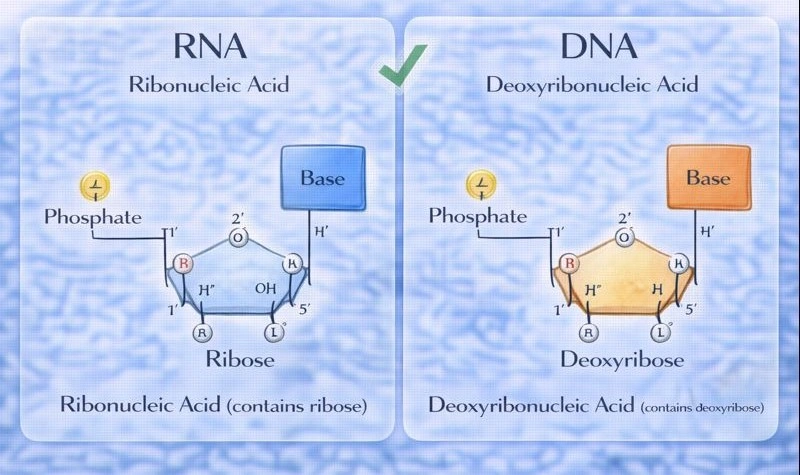
How do RNA and DNA derive their names?
A.
From the sugar each contains
B. From the structure of their nucleotides
C. From the information they transfer
D. From their formative processes
Rationale
RNA and DNA derive their names from the sugar each contains.
The names RNA and DNA are based on the specific type of pentose sugar found in their nucleotide structure. Although both molecules are nucleic acids and share many structural features, the difference in their sugar component is significant enough to define their names and distinguish their chemical identity.
A) From the sugar each contains
This is the correct answer. DNA stands for deoxyribonucleic acid, which means it contains the sugar deoxyribose. Deoxyribose differs from ribose by lacking one oxygen atom at the 2' carbon position. RNA stands for ribonucleic acid, which contains the sugar ribose, a pentose sugar with a hydroxyl (-OH) group at the 2' carbon. This small structural difference in the sugar has major biological consequences. DNA is more chemically stable, making it suitable for long-term storage of genetic information, while RNA is more reactive and well suited for temporary roles such as protein synthesis and regulation.
B) From the structure of their nucleotides
Both DNA and RNA nucleotides share a common overall structure consisting of a phosphate group, a pentose sugar, and a nitrogenous base. While there are some differences in the bases used, the defining feature used in naming is specifically the sugar, not the general nucleotide structure. Therefore, this option is incorrect.
C) From the information they transfer
Both DNA and RNA are involved in genetic information storage and transfer. DNA stores genetic instructions, and RNA helps express those instructions through transcription and translation. Since both molecules handle genetic information, this function does not explain the difference in their names.
D) From their formative processes
The processes that form DNA and RNA, such as replication and transcription, are mechanistically related and do not determine the names of the molecules. The naming convention is based on chemical composition, not how the molecules are synthesized.
Conclusion
The defining feature used to name DNA and RNA is the type of sugar in their backbone: deoxyribose in DNA and ribose in RNA. Therefore, the correct answer is A) From the sugar each contains.
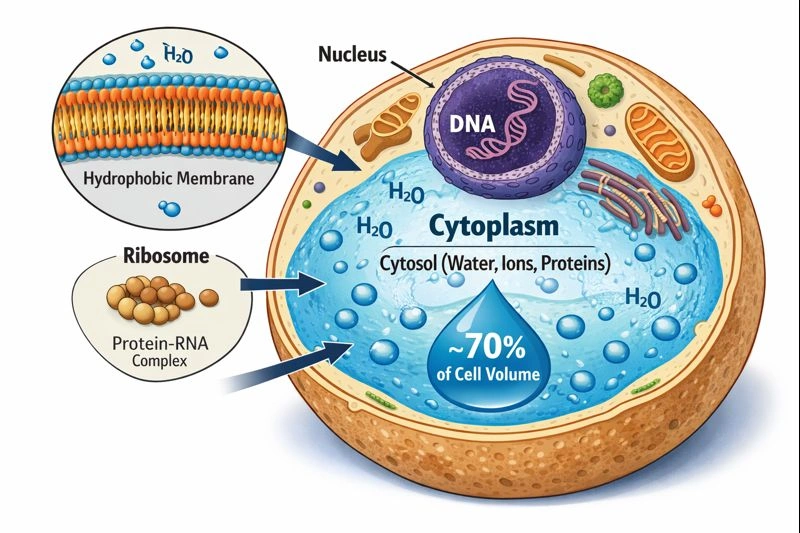
Which part of an animal cell contains the most water?
A.
Nucleus
B. Cell membrane
C. Ribosome
D. Cytoplasm
Rationale
The part of an animal cell that contains the most water is the cytoplasm.
Water is the primary component of living cells, and it is unevenly distributed among cellular structures. The cytoplasm, specifically the cytosol portion, makes up the majority of the cell's volume and serves as the main aqueous environment where metabolic reactions occur. Because of this, it contains far more water than any other cellular component.
A) Nucleus
The nucleus does contain water, as it is filled with nucleoplasm, which is an aqueous solution of enzymes, nucleotides, and proteins. However, the nucleus typically occupies only about 5-10% of the total cell volume. While important for genetic regulation, it is not the main reservoir of cellular water.
B) Cell membrane
The cell membrane is composed primarily of a phospholipid bilayer with hydrophobic fatty acid tails. This structure actively repels water rather than storing it. Although water can pass through membrane channels, the membrane itself contains very little water.
C) Ribosome
Ribosomes are complexes made of ribosomal RNA and proteins. They are small, dense structures whose function is protein synthesis. They do not store water and contribute negligibly to the total water content of the cell.
D) Cytoplasm
This is the correct answer. The cytoplasm consists largely of cytosol, a water-based fluid containing dissolved ions, metabolites, enzymes, and structural proteins. The cytosol alone accounts for roughly 70% of the cell's total volume and is the site of many biochemical reactions. As a result, it holds the greatest proportion of water in the cell.
Conclusion
Because the cytoplasm (specifically the cytosol) occupies most of the cell's volume and is predominantly water, it contains the most water in an animal cell. Therefore, the correct answer is D) Cytoplasm.
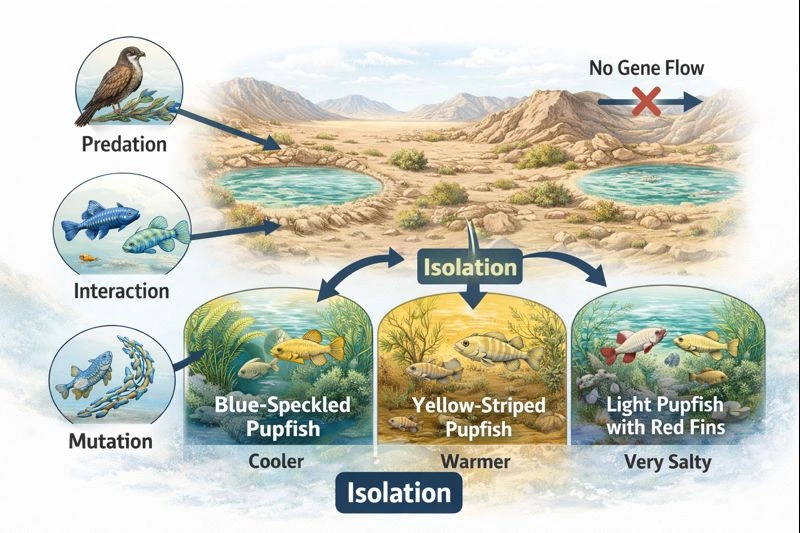
Pupfish differences--most likely reason?
A.
Predation
B. Interaction
C. Saltation
D. Isolation
Rationale
The differences observed among pupfish populations are most likely due to isolation.
Pupfish often live in small, separated desert pools that are geographically isolated from one another. When populations are cut off with no gene flow between them, they evolve independently. Over time, this isolation allows genetic differences to accumulate through mutation, natural selection, and genetic drift, leading to noticeable physical and behavioral differences among populations.
A) Predation
Predation can influence natural selection by favoring traits that help organisms avoid predators. However, predation alone does not explain why pupfish populations in separate desert pools diverge from one another. Predators may differ slightly between habitats, but without isolation, gene flow would reduce major population differences.
B) Interaction
This option is too general. Interactions can include competition, mating, or symbiosis, but it does not specifically explain why populations in separate pools become genetically and physically different. Interaction does not prevent gene flow and therefore is not the primary driver of divergence in this case.
C) Saltation
Saltation refers to sudden, large-scale evolutionary change caused by major mutations. This is rare and not the typical explanation for gradual differences seen among pupfish populations. Most evolutionary change in these populations occurs gradually over many generations, not through sudden jumps.
D) Isolation
This is the correct answer. Desert pools act as isolated habitats with no movement of individuals between them. This geographic isolation prevents interbreeding, allowing each population to evolve independently. Over time, this leads to divergence through allopatric speciation and local adaptation to each pool's unique conditions.
Conclusion
Geographic isolation prevents gene flow and allows populations to evolve independently, making isolation the most likely reason for differences among pupfish populations. Therefore, the correct answer is D) Isolation.
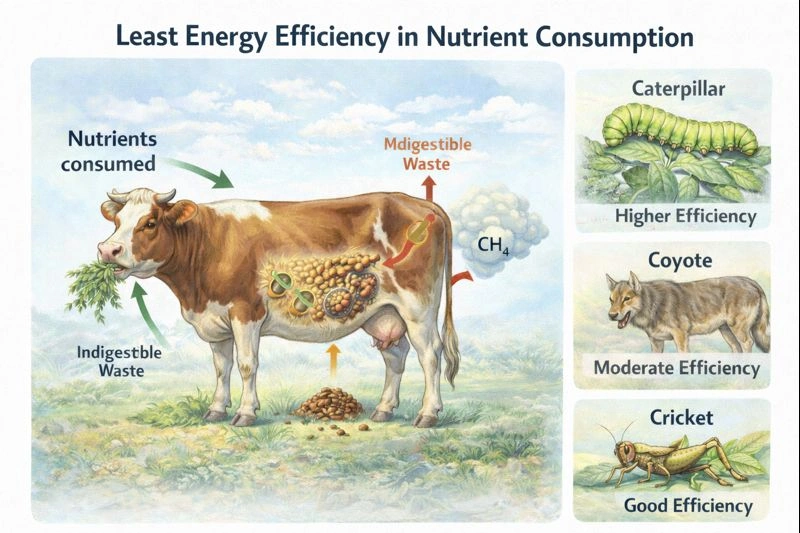
Which consumer has least energy efficiency in nutrient consumption?
A.
Cow
B. Caterpillar
C. Coyote
D. Cricket
Rationale
The consumer with the least energy efficiency in nutrient consumption is the cow.
Energy efficiency in nutrient consumption refers to net production efficiency, which is the proportion of ingested energy that is converted into new biomass. This efficiency varies widely among consumers depending on diet type, digestive strategy, body size, and metabolic losses such as heat and waste.
A) Cow
This is the correct answer. Cows are large herbivorous mammals and ruminants that feed primarily on cellulose-rich plant material. Cellulose is difficult to digest and must be broken down by symbiotic microorganisms in the rumen through fermentation. This process results in major energy losses in several ways: 1. A large amount of energy is lost as heat during microbial fermentation. 2. Significant energy is lost as methane gas, which is released during digestion. 3. Much of the ingested plant material is indigestible and is excreted as waste. Because of these factors, cows convert only a very small percentage of the energy they consume into body mass. Their net production efficiency is typically very low, often around 3-5%, making them the least energy-efficient consumers among the options.
B) Caterpillar
Caterpillars are insect herbivores with relatively simple digestive systems. Although they also consume plant material, they are much more efficient than large mammalian herbivores. Caterpillars convert a higher proportion of the energy they eat into growth, often achieving net production efficiencies of 15% or more. Therefore, they are far more efficient than cows.
C) Coyote
Coyotes are carnivores that feed on other animals. Animal tissue is energy-dense and highly digestible, so assimilation efficiency is high. Although coyotes expend energy on hunting and activity, their overall net production efficiency is still higher than that of large herbivores like cows. Thus, they do not have the lowest efficiency.
D) Cricket
Crickets are small insect consumers, often herbivorous or omnivorous. Like many insects, they have relatively high net production efficiencies, commonly in the range of 10-20%. Their small size and lower metabolic costs allow them to convert a larger fraction of consumed energy into biomass compared to large mammals.
Conclusion
Due to the high energetic cost of digesting cellulose, large losses as heat and methane, and extensive waste production, cows convert the smallest proportion of consumed energy into new biomass. Therefore, the consumer with the least energy efficiency in nutrient consumption is A) Cow.
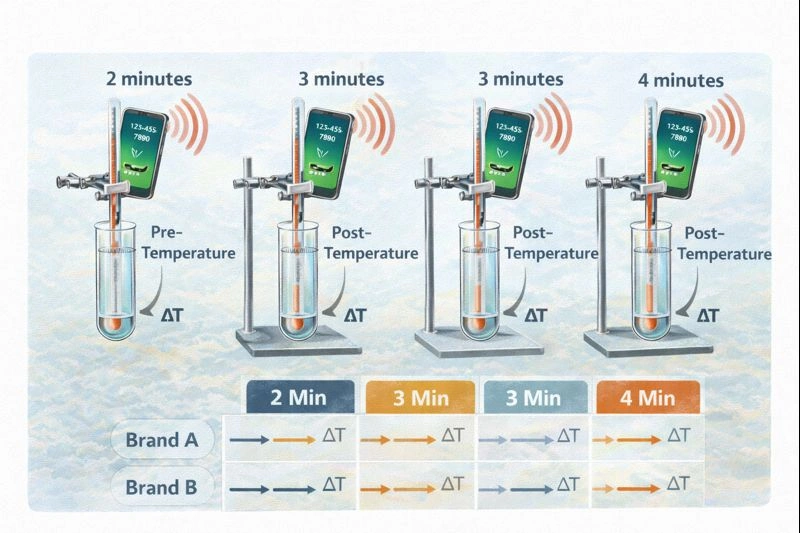
Best design to test cell phone radiation heating water?
A.
One phone, 2 min, single tube
B. One phone, multiple times
C. Three brands, 2 min each
D. Three brands, multiple durations
Rationale
The best design to test whether cell phone radiation heats water is using three different brands and multiple durations.
To test a cause-and-effect relationship, the experiment should reduce bias, improve reliability, and check for a dose-response pattern. In this case, a dose-response pattern means that if cell phone energy is heating the water, then longer exposure times should usually produce a larger temperature increase. Using multiple phone brands also helps ensure the result is not just a quirk of one device.
A. One phone, 2 minutes, single tube
This design is weak because it has no replication and no comparison across phones. With only one trial, you cannot tell whether any temperature change is due to the phone or due to random factors like room temperature, thermometer error, or the water already warming naturally. It also tests only one exposure time, so it cannot show whether heating increases with longer exposure.
B. One phone, multiple times
This improves reliability because repeated trials reduce the chance that your result is just random error. However, it still only represents one phone. Even if heating is observed, you cannot generalize the finding to cell phones overall because it may be specific to that model. Also, unless you vary the duration, you still cannot test whether longer exposure produces more heating.
C. Three brands, 2 minutes each
This improves the design by including different phones, so you reduce the risk that the effect is specific to one device. However, all phones are tested for only one time duration. That means you can compare brands, but you cannot test the key idea of whether longer exposure leads to more heating. Without different durations, you cannot establish a clear pattern linking exposure time to temperature change.
D. Three brands, multiple durations
This is the correct answer. It is the strongest design because it controls for phone-to-phone variation and tests for a dose-response relationship. If heating is truly caused by phone energy, then exposure time should matter, and temperature change should generally increase as duration increases. Measuring temperature before and after each interval gives a clear, quantifiable change in temperature for each trial.
Conclusion: The most valid experiment uses multiple phone brands and multiple exposure times to reduce device bias and test whether longer exposure produces greater heating. Therefore, the correct answer is D.
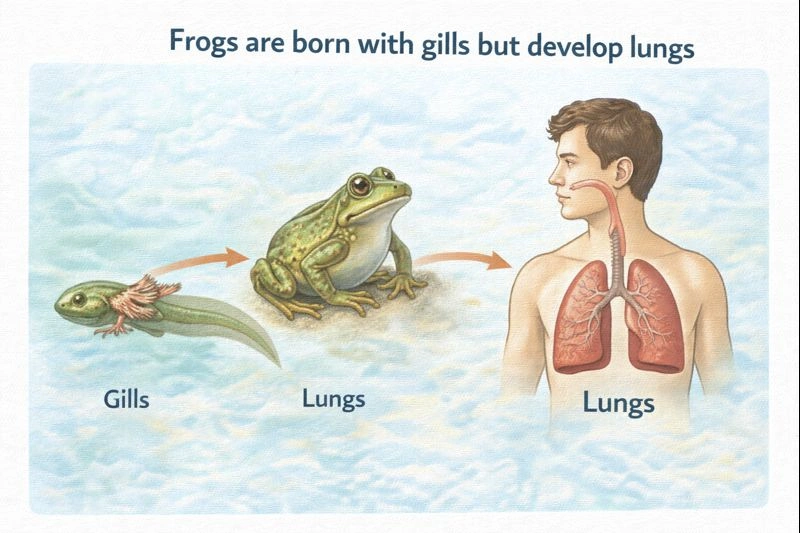
How does the respiratory system of a frog differ from that of a human?
A.
Frogs breathe through pores in their skin.
B. Frogs are born with lungs but revert to gills.
C. Frogs are born with gills but develop lungs.
D. Frogs breathe exclusively through their gills.
Rationale
Frogs are born with gills but develop lungs.
Frogs and humans differ in their respiratory systems primarily because frogs undergo a distinct developmental change (metamorphosis), whereas humans do not. Frogs are amphibians, meaning their life cycle includes both aquatic and terrestrial stages, and their respiratory structures change to match these environments. Humans are mammals and rely on lungs for respiration throughout their entire lives.
A. Frogs breathe through pores in their skin
This statement is inaccurate. Adult frogs do perform cutaneous respiration, which means they exchange gases through their moist skin, but this does not occur through "pores" in the way the option suggests. The skin acts as a respiratory surface, not a specialized porous structure. Additionally, this feature is not the main developmental difference being tested, since the key contrast with humans is the presence of gills during early life.
B. Frogs are born with lungs but revert to gills
This is biologically incorrect. Frogs do not revert from lungs to gills. Their development proceeds in the opposite direction. Tadpoles begin life as aquatic organisms with gills, and during metamorphosis, the gills are lost as lungs develop. Vertebrate development does not include reverting to earlier respiratory structures.
C. Frogs are born with gills but develop lungs
This is correct. Frogs hatch as tadpoles and respire using gills, which are adapted for extracting oxygen from water. As metamorphosis occurs, the tadpole's body reorganizes: the gills are resorbed, lungs form, and the frog becomes capable of breathing air. Humans, by contrast, develop lungs before birth and never possess functional gills at any stage of life.
D. Frogs breathe exclusively through their gills
This is incorrect. While tadpoles rely on gills, adult frogs do not have gills. Adult frogs use a combination of lungs, skin, and the lining of the mouth (buccal respiration) for gas exchange. Therefore, breathing exclusively through gills does not describe frogs across their life cycle.
Conclusion: The defining difference between frog and human respiratory systems is that frogs begin life with gills and later develop lungs through metamorphosis, whereas humans rely solely on lungs from birth onward. Therefore, the correct answer is C.
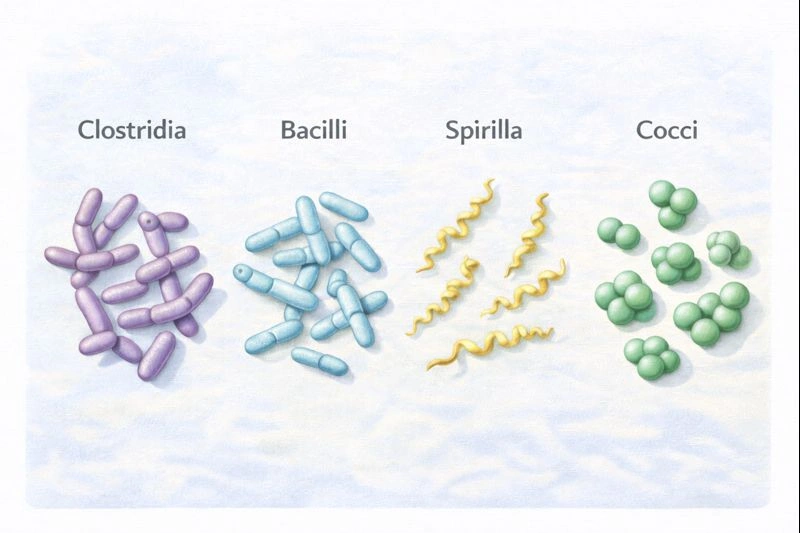
Which bacteria are spherical in shape?
A.
Clostridia
B. Bacilli
C. Spirilla
D. Cocci
Rationale
Spherical bacteria are called cocci.
Bacteria are commonly classified by their shape, and one of the basic morphological categories is spherical. The term used for spherical bacteria comes from the Greek word meaning "berry," reflecting their round appearance.
A. Clostridia
Clostridia are rod-shaped bacteria. Members of the genus Clostridium are elongated (bacillus-shaped), often form endospores, and are not spherical in form.
B. Bacilli
Bacilli are rod-shaped bacteria. The word "bacillus" literally refers to a rod, so this group is defined by a cylindrical shape rather than a round one.
C. Spirilla
Spirilla are spiral or helical bacteria. They have a twisted or corkscrew-like shape and are clearly different from spherical forms.
D. Cocci
This is the correct answer. Cocci are spherical bacteria. They may appear as single cells or arranged in characteristic patterns such as pairs (diplococci), chains (streptococci), or clusters (staphylococci). Their defining feature is their round shape.
Conclusion: Among the listed options, cocci are the bacteria that are spherical in shape.
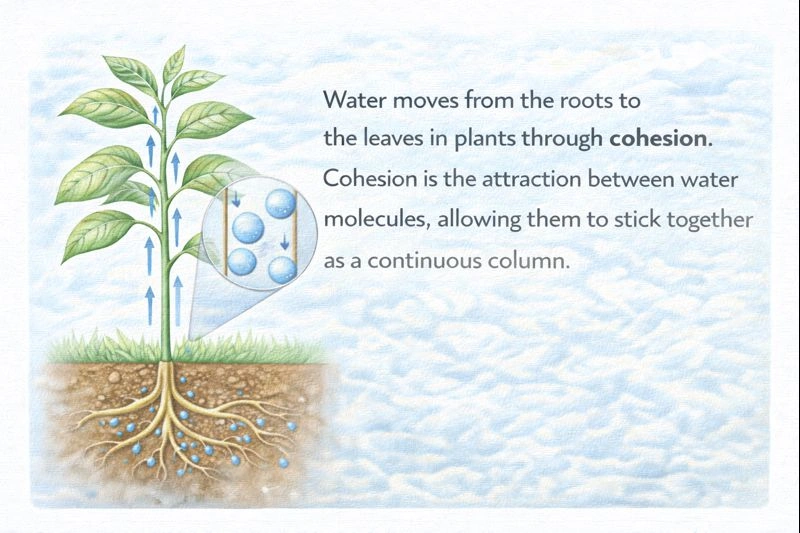
Which property of water enables it to move from the roots to the leaves of a plant?
A.
Heat capacity
B. Conductivity
C. Solution
D. Cohesion
Rationale
The property of water that enables it to move from the roots to the leaves of a plant is cohesion.
Water transport in plants occurs through the xylem and is explained by the cohesion–tension theory. This mechanism depends on the physical properties of water rather than on metabolic energy from the plant.
A. Heat capacity
Heat capacity refers to water's ability to absorb large amounts of heat with only a small change in temperature. This property helps stabilize temperatures in organisms and environments, but it does not contribute to the upward movement of water in plants.
B. Conductivity
Conductivity is the ability to conduct heat or electricity. While water can conduct electrical current when ions are dissolved in it, this property has no role in moving water through plant tissues.
C. Solution
Water is an excellent solvent, allowing minerals and nutrients to dissolve and be transported as sap. However, being a solvent does not explain how water moves upward against gravity from roots to leaves.
D. Cohesion
Cohesion is the attraction between water molecules due to hydrogen bonding. This is the correct answer. Cohesion allows water molecules to stick together, forming a continuous, unbroken column of water inside the xylem vessels. When water evaporates from the leaves during transpiration, it creates tension (negative pressure) that pulls this cohesive column upward from the roots. Without cohesion, the water column would break, and upward transport would not be possible.
Conclusion
Water moves from roots to leaves because cohesive forces hold water molecules together in a continuous column that can be pulled upward by transpiration. Therefore, the correct answer is D. Cohesion
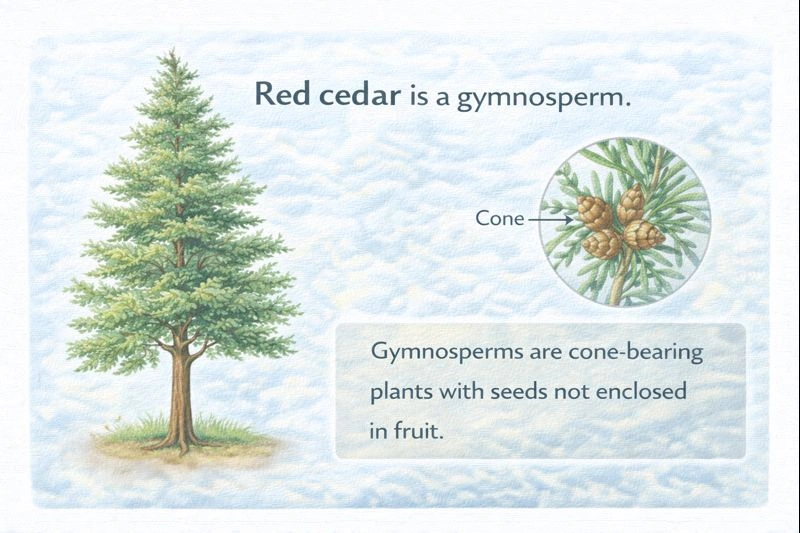
Which is an example of a gymnosperm?
A.
Red cedar
B. Japanese cherry
C. Flowering dogwood
D. American chestnut
Rationale
Red cedar is an example of a gymnosperm.
Gymnosperms are plants that produce naked seeds, meaning the seeds are not enclosed within a fruit or ovary. Most gymnosperms are cone-bearing plants such as conifers, which do not produce flowers. Red cedar fits this definition because it produces seeds in cones rather than in fruits.
A. Red cedar
Red cedar (commonly Juniperus virginiana) is a conifer. Conifers are gymnosperms that reproduce using cones and do not form flowers or fruits. Their seeds are exposed on cone scales, which is the defining feature of gymnosperms. This makes red cedar the correct example.
B. Japanese cherry
Japanese cherry trees are flowering plants. They produce flowers that develop into cherries, which are fruits enclosing seeds. Because their seeds are enclosed within a fruit, they are classified as angiosperms, not gymnosperms.
C. Flowering dogwood
Flowering dogwood produces flowers and fruits that contain seeds. The presence of flowers and seed-containing fruits clearly places this plant in the angiosperm group.
D. American chestnut
American chestnut trees produce nuts that develop from flowers and are enclosed within a bur. Since the seeds originate from an ovary and are enclosed, this plant is also an angiosperm.
Conclusion
Gymnosperms are cone-bearing plants with naked seeds. Among the options given, only red cedar meets this definition. Therefore, the correct answer is A. Red cedar.
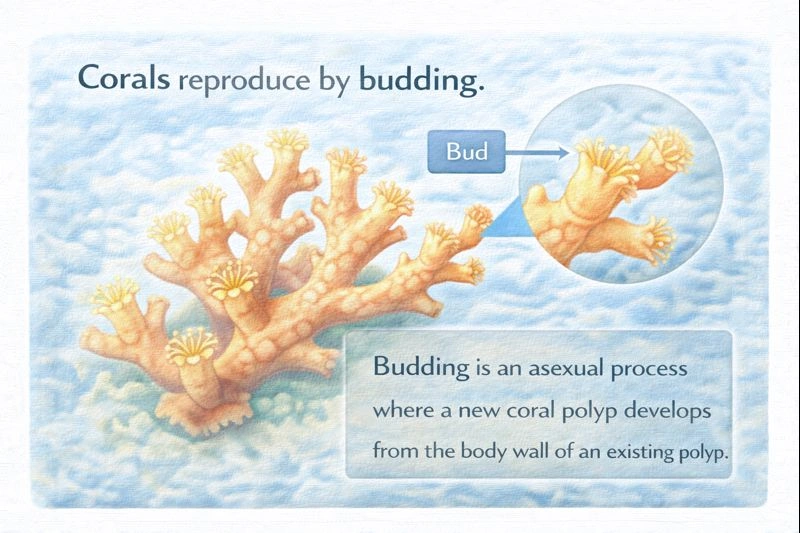
Which organism reproduces by budding?
A.
Willow
B. Fungus
C. Coral
D. Fern
Rationale
Coral is an organism that reproduces by budding.
Budding is a form of asexual reproduction in which a new individual develops as an outgrowth (bud) from the body of the parent organism. This bud grows while still attached, receives nutrients from the parent, and may eventually separate or remain connected, forming a colony. Among the options given, coral best fits this definition.
A. Willow
Willow trees can reproduce asexually, but not by budding in the biological sense. They commonly reproduce through vegetative propagation, such as cuttings or fragmentation, where a piece of the plant (like a stem or branch) grows into a new individual. This process differs from budding, which involves the formation of a new organism as a localized outgrowth from the parent body.
B. Fungus
Fungi reproduce in several ways, most commonly through the production of spores, either sexually or asexually. While yeast (which is a type of fungus) does reproduce by budding, the term "fungus" here is too broad. Most fungi, such as molds and mushrooms, do not reproduce by budding, making this option less accurate in a general biology context.
C. Coral
Coral is the correct answer. Corals are colonial animals belonging to the phylum Cnidaria. Many corals reproduce asexually by budding, where new polyps form as outgrowths from existing polyps. These buds remain attached, allowing the coral colony to grow larger and form extensive reef structures. This is a classic and well-known example of budding in animals.
D. Fern
Ferns reproduce by spores, not by budding. Spores are produced in specialized structures called sporangia, usually located on the underside of fern fronds. This reproductive strategy is completely different from budding and does not involve the growth of a new organism directly from the parent body.
Conclusion
Budding involves the formation of a new individual as an outgrowth from the parent. Among the organisms listed, coral is the one that commonly and clearly reproduces by budding. Therefore, the correct answer is C. Coral.
Why is yeast used to make bread rise?
A.
Photosynthesis → O₂
B. Photosynthesis → CO₂
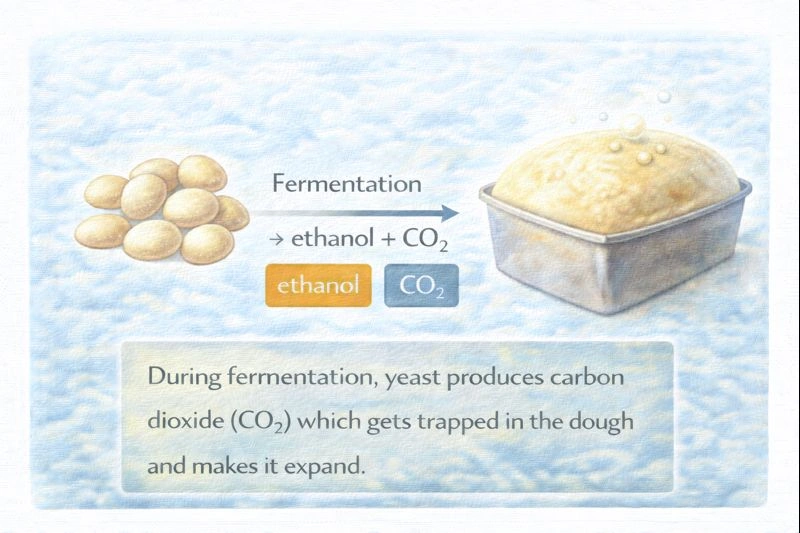
C. Fermentation → ethanol + CO₂
D. Aerobic respiration → CO₂
Rationale
Yeast is used to make bread rise because it carries out fermentation, producing ethanol and carbon dioxide.
Bread dough provides yeast with sugars and a low-oxygen environment. Under these conditions, yeast metabolizes sugars through alcoholic fermentation. This process releases carbon dioxide gas, which becomes trapped in the dough and causes it to expand, giving bread its light and airy structure.
A. Photosynthesis → O₂
This is incorrect. Yeast are fungi, not plants. They do not contain chlorophyll or chloroplasts and therefore cannot perform photosynthesis or produce oxygen.
B. Photosynthesis → CO₂
This is also incorrect for the same reason. Yeast do not photosynthesize, so they cannot produce carbon dioxide through this process.
C. Fermentation → ethanol + CO₂
This is the correct answer. Yeast (Saccharomyces cerevisiae) carries out alcoholic fermentation when oxygen is limited. During fermentation, sugars are broken down into ethanol and carbon dioxide. The carbon dioxide forms gas bubbles that are trapped by the gluten network in the dough, causing the dough to rise. The ethanol produced evaporates during baking.
D. Aerobic respiration → CO₂
While aerobic respiration does produce carbon dioxide, it is not the main process responsible for bread rising. Oxygen in dough is quickly used up, and fermentation becomes the dominant pathway. Fermentation produces carbon dioxide rapidly enough to leaven the dough effectively.
Conclusion
Bread rises because yeast produces carbon dioxide during fermentation. The trapped gas expands the dough, creating the soft, porous texture of baked bread. Therefore, the correct answer is C. Fermentation → ethanol and carbon dioxide.
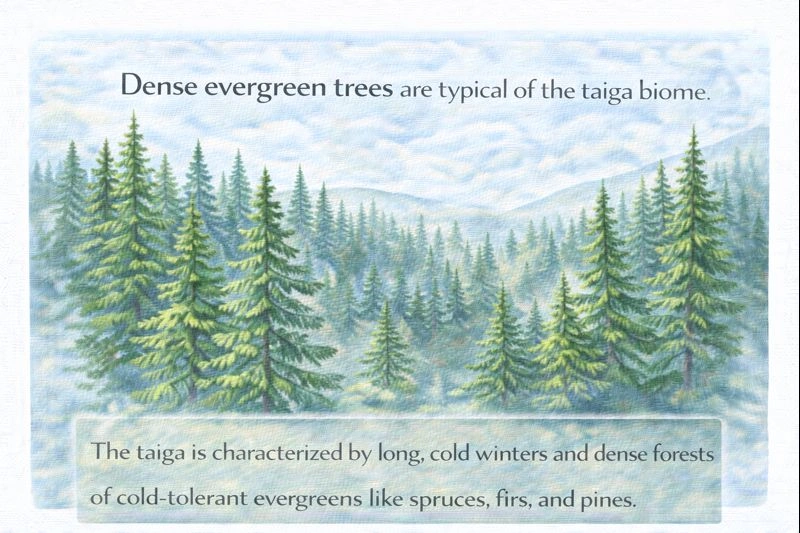
What sort of plant growth would you expect in the biome known as a taiga?
A.
Ferns and orchids
B. Perennial grasses
C. Sage and scrub oaks
D. Dense evergreen trees
Rationale
Dense evergreen trees are the characteristic plant growth found in the taiga biome.
The taiga, also called the boreal forest, occurs in high northern latitudes and is defined by long, extremely cold winters and short, cool summers. Plant life in this biome must be adapted to low temperatures, frozen soils, and a very short growing season. Evergreen coniferous trees dominate because they are best suited to survive and function under these harsh conditions.
A. Ferns and orchids
Ferns and orchids are typically found in warm, moist environments such as tropical rainforests or humid temperate forests. These plants require relatively stable temperatures and abundant moisture throughout the year. The cold temperatures and short growing season of the taiga do not support this type of vegetation.
B. Perennial grasses
Perennial grasses are characteristic of grassland biomes such as prairies, savannas, and steppes. These environments have moderate rainfall and are generally warmer than the taiga. The cold climate and nutrient-poor soils of the taiga limit grass growth.
C. Sage and scrub oaks
Sagebrush and scrub oaks are adapted to dry environments with hot summers and mild winters, such as chaparral or semi-arid shrublands. These conditions are the opposite of those found in the taiga, making this option incorrect.
D. Dense evergreen trees
Evergreen coniferous trees such as spruce, fir, and pine dominate the taiga. Their needle-like leaves reduce water loss, resist freezing, and allow snow to slide off easily, preventing branch damage. Keeping their needles year-round allows these trees to photosynthesize as soon as conditions permit, an advantage in a biome with a very short growing season.
Conclusion
The taiga biome is defined by dense forests of cold-tolerant evergreen coniferous trees. Therefore, the correct answer is D.
Which statement regarding energy content is true?
A.
Decomposers > secondary consumers
B. Primary consumers > producers
C. Producers > secondary consumers
D. Secondary consumers > primary consumers
Rationale
The correct answer is that producers have more energy content than secondary consumers.
Energy flow in ecosystems follows a unidirectional pattern governed by the laws of thermodynamics. Producers, such as green plants and algae, capture energy directly from sunlight through photosynthesis and convert it into chemical energy stored in organic molecules. This energy forms the base of the energy pyramid. As energy moves upward through trophic levels, a large portion is lost at each transfer, primarily as heat through respiration and metabolic processes. On average, only about 10% of the energy at one trophic level is passed on to the next. Because of this progressive loss, organisms at higher trophic levels always contain less total energy than those below them.
A. Decomposers > secondary consumers
This statement is incorrect. Decomposers obtain energy by breaking down dead organic matter from producers and consumers, but the energy available in dead material is already reduced by prior metabolic losses. There is no general rule that decomposers contain more stored energy than secondary consumers. Energy content depends on trophic position, and decomposers do not form a higher-energy level than living consumers.
B. Primary consumers > producers
This statement is incorrect. Producers form the base of the energy pyramid and contain the greatest amount of energy in an ecosystem. Primary consumers obtain their energy by feeding on producers and receive only a fraction of the energy originally captured by plants. Therefore, primary consumers always contain less energy than producers.
C. Producers > secondary consumers
This statement is correct. Producers occupy the first trophic level and contain the largest energy store in an ecosystem. Secondary consumers occupy a higher trophic level and receive energy only after it has passed through producers and primary consumers, with significant losses at each step. As a result, secondary consumers contain far less energy than producers.
D. Secondary consumers > primary consumers
This statement is incorrect. Energy decreases with each trophic transfer. Secondary consumers feed on primary consumers and therefore receive only a small fraction of the energy that primary consumers contain. Primary consumers always have more energy content than secondary consumers.
Conclusion:
Because energy is lost at every trophic transfer, producers contain the greatest amount of energy in an ecosystem. Therefore, the true statement regarding energy content is that producers have more energy than secondary consumers.

HESI A2 Exams
Chemistry Quizzes
3 Practice Tests
Chemistry Quizzes
3 Practice Tests
Anatomy Quizzes
3 Practice Tests
Anatomy Quizzes
3 Practice Tests
Reading Quizzes
4 Practice Tests
Reading Quizzes
4 Practice Tests
Grammar Quizzes
3 Practice Tests
Grammar Quizzes
3 Practice Tests
Vocabulary Quizzes
3 Practice Tests
Vocabulary Quizzes
3 Practice Tests
Physics Quizzes
3 Practice Tests
Physics Quizzes
3 Practice Tests
HESI Quizzes
3 Practice Tests
HESI Quizzes
3 Practice Tests