Right before cell division, a DNA molecule and its associated proteins
-
A
coil tightly.
-
B
stretch out.
-
C
form a double helix.
-
D
wrap around each other.
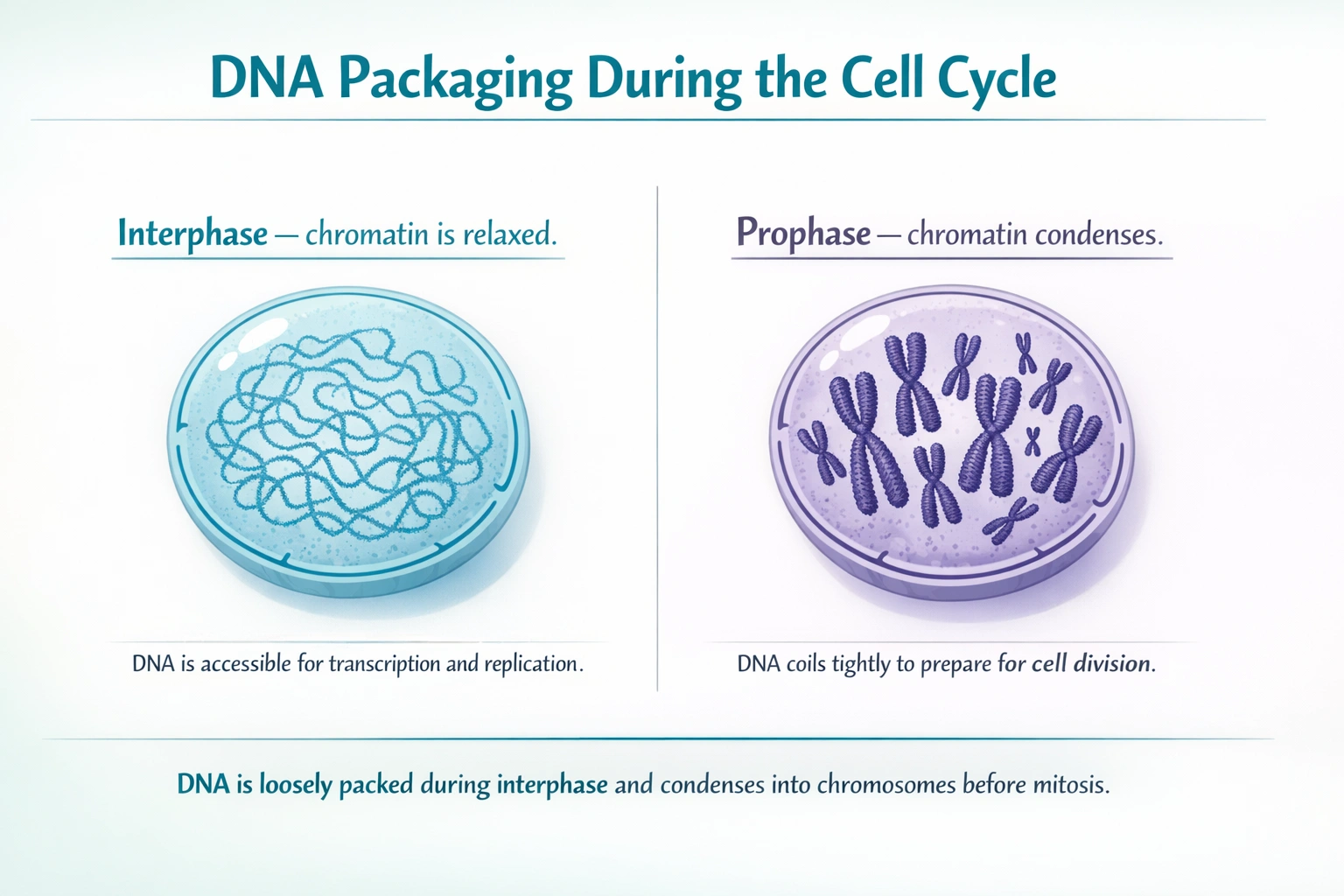
In preparation for mitosis or meiosis, the DNA-protein complex (chromatin) undergoes a dramatic process of condensation, coiling into highly compact, visible chromosomes to facilitate accurate segregation.
During prophase, chromatin fibers, already organized into nucleosomes, coil into increasingly thicker and shorter structures through supercoiling. These loops and folds eventually form the rod-shaped chromosomes visible under a light microscope. This tight coiling prevents tangling and allows the mitotic spindle to maneuver and separate the genetic material efficiently.
A) coil tightly.
This describes the critical transformation of chromatin into chromosomes during early mitosis. The level of compaction increases by several orders of magnitude, making the DNA manageable for division.
B) stretch out.
This describes the state of euchromatin during interphase, when DNA is loosely packed to allow access for transcription and replication. Right before division, the cell does the opposite, it condenses the chromatin, making genes largely inaccessible.
C) form a double helix.
The DNA double helix is the molecule's fundamental secondary structure, which exists at all times in the cell cycle (except during brief periods of replication or transcription). The change before division involves higher-order packaging of this already-existing double helix, not its formation.
D) wrap around each other.
This is a vague description that could refer to sister chromatids being held together or DNA wrapping around histones. The primary, dramatic change immediately preceding division is the progressive coiling and supercoiling of individual chromatin fibers to condense them, not merely wrapping.
Conclusion:
Prior to cell division, DNA must be packaged into discrete, sturdy units. The double helix is a constant; stretching out is characteristic of interphase; and wrapping is a lower-level organizational feature. The defining transformation is the tight coiling and condensation of chromatin into chromosomes, which is essential for the mechanical process of mitosis.
Topic Flashcards
Click to FlipWhat happens to DNA right before cell division?
It coils tightly to form condensed chromosomes.
What is DNA called when it is loosely packed during interphase?
Chromatin.
During which phase does DNA begin to condense for division?
Prophase.
hy must DNA condense before cell division?
To prevent tangling and ensure accurate chromosome separation.
What protein structures help package DNA into chromatin?
Histones.