100%
4
Rated
Attempts
127
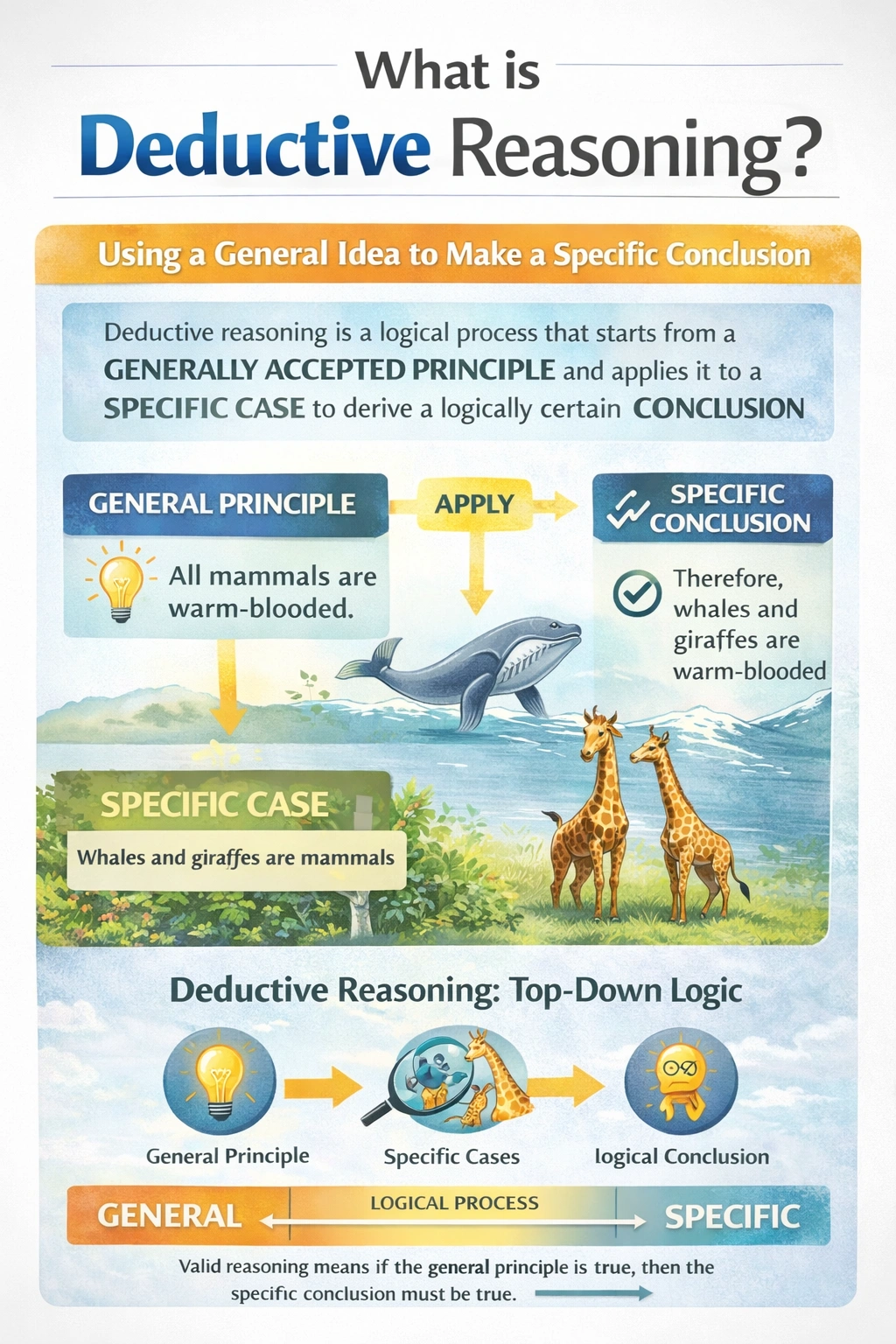
Deductive reasoning is a logical process based on
-
A
working with data to formulate a hypothesis.
-
B
drawing conclusions from a specific observation.
-
C
. using a general idea to make a specific conclusion.
-
D
. relying on empirical evidence to answer questions.
A
working with data to formulate a hypothesis.
B
drawing conclusions from a specific observation.
C
. using a general idea to make a specific conclusion.
D
. relying on empirical evidence to answer questions.
Topic Flashcards
Click to FlipMini Quiz
1 / 3
Is deductive reasoning characterized as a "bottom-up" process that starts with specific data?
Related Questions
Top Picks
Atom X has an atomic number of 10 and a mass of 20 amu. Atom Y has 10 protons and 12 neutrons. Which of the following describes the relationship between these atoms?
Which of the following describes a neutral atom of tin-120?
How many electrons does a neutral atom of iodine have?
An atom has 28 protons, 32 neutrons, and 28 electrons. What is the name of this isotope?
How many kilograms are in 1,800 grams?
Available FREE Test
Sets
Available Test
Sets