100%
4
Rated
Attempts
127
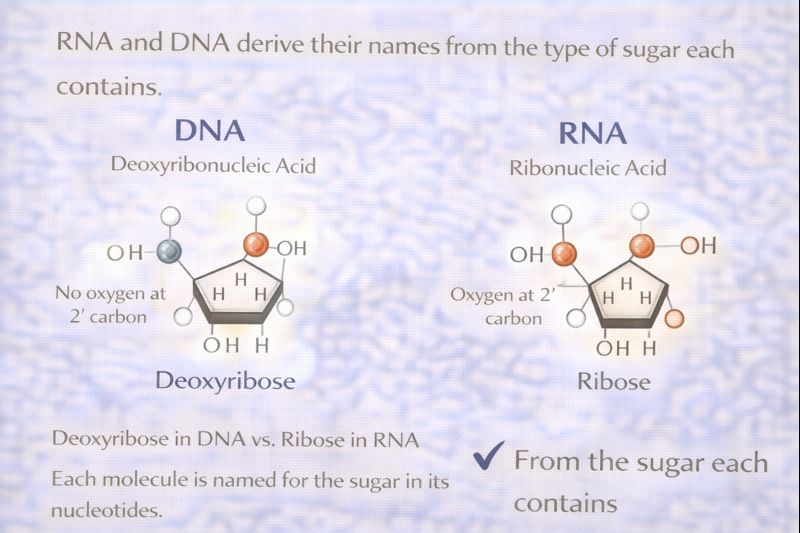
How do RNA and DNA derive their names?
-
A
From the sugar each contains
-
B
From the structure of their nucleotides
-
C
From the information they transfer
-
D
From their formative processes
A
From the sugar each contains
B
From the structure of their nucleotides
C
From the information they transfer
D
From their formative processes
Topic Flashcards
Click to FlipMini Quiz
1 / 3
Is the primary reason DNA is more stable than RNA directly linked to the sugar from which it derives its name?
Related Questions
Top Picks
Huntington’s disease is carried on the dominant allele. In a situation where twoheterozygous parents have the disease, what percentage of their offspring arepredicted to be disease-free?
If bacteria are placed in a strong solution of salt water, they will shrink as watermoves out of the bacteria. What is this process called?
Which animal has an open transport system?
How does an enzyme work on a chemical reaction that occurs in a substrate?
Where is the ovary located in a flowering plant?
Available FREE Test
Sets
Available Test
Sets