How is mitosis different from meiosis?
-
A
Mitosis is the process by which sex cells are formed
-
B
Meiosis creates cells with half the chromosomes of the parent cell
-
C
Telophase does not take place in mitosis.
-
D
Spermatogenesis and oogenesis occur via mitosis.
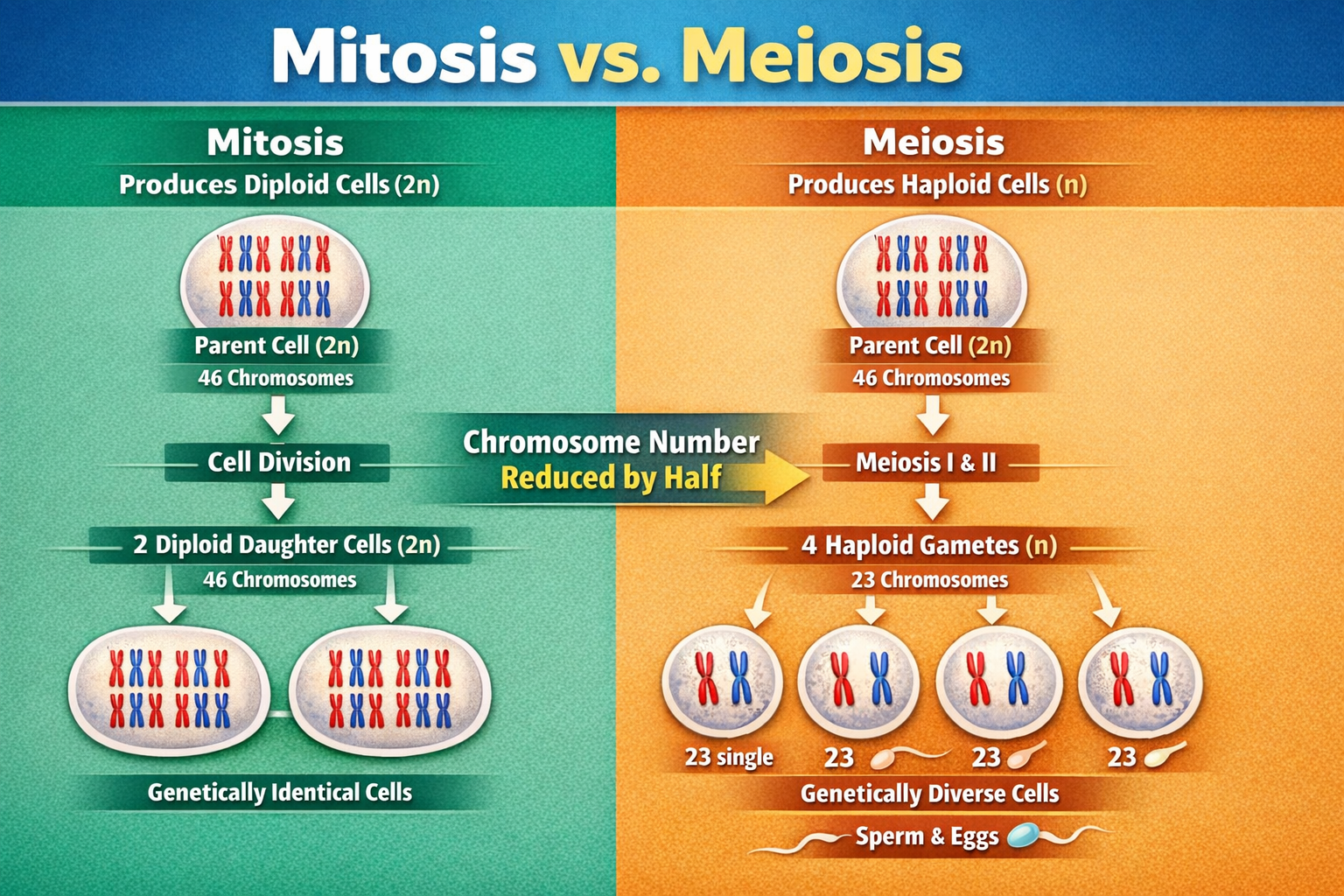
Meiosis creates cells with half the number of chromosomes of the parent cell, whereas mitosis produces daughter cells with the same chromosome number as the parent cell.
This difference is fundamental to how the body grows and repairs itself versus how it produces sex cells for sexual reproduction. Mitosis maintains genetic stability in body tissues, while meiosis introduces genetic diversity and reduces chromosome number to form gametes.
A) Mitosis is the process by which sex cells are formed
Mitosis is responsible for producing somatic (body) cells used in growth, tissue repair, and routine cell replacement.
Examples include skin cells, blood cells, and cells lining internal organs. These cells must retain the same chromosome number as the original cell to maintain normal body function.
Sex cells (sperm and eggs), however, are produced through meiosis, not mitosis. Meiosis is specifically designed to create reproductive cells with half the usual chromosome number so that fertilization restores the normal diploid state.
Therefore, this statement is incorrect.
B) Meiosis creates cells with half the chromosomes of the parent cell
In meiosis, a diploid cell (2n) undergoes two successive divisions (meiosis I and meiosis II) to produce four haploid cells (n).
These haploid cells:
- Contain half the number of chromosomes
- Are genetically unique due to crossing over and independent assortment
- Function as gametes (sperm or eggs)
In contrast, mitosis produces two genetically identical diploid cells with the same chromosome number as the parent cell.
Because this accurately describes the key difference between the two processes, this option is correct.
C) Telophase does not take place in mitosis
Telophase is a stage of mitosis in which:
- Chromosomes decondense
- Nuclear membranes reform
- The cell prepares to divide into two daughter cells
Telophase also occurs in meiosis, specifically in telophase I and telophase II.
Since telophase is present in both mitosis and meiosis, this statement is false.
D) Spermatogenesis and oogenesis occur via mitosis
Spermatogenesis (formation of sperm) and oogenesis (formation of eggs) both involve meiosis as their defining division process.
While precursor germ cells may undergo mitotic divisions to increase cell numbers early in development, the actual production of gametes requires meiosis to reduce chromosome number and generate genetic variation.
Thus, this statement is incorrect.
Conclusion:
Mitosis and meiosis serve different biological purposes:
- Mitosis maintains chromosome number and produces identical body cells for growth and repair.
- Meiosis reduces chromosome number by half and produces genetically unique sex cells for reproduction.
Among the options given, only the statement that meiosis creates cells with half the chromosomes of the parent cell correctly distinguishes the two processes.
Therefore, the correct answer is that meiosis creates cells with half the chromosomes of the parent cell.

Topic Flashcards
Click to FlipWhat is the key difference in chromosome number between the cells produced by mitosis versus meiosis?
Mitosis produces cells with the same number of chromosomes as the parent (diploid → diploid). Meiosis produces cells with half the number of chromosomes (diploid → haploid).
Which cellular process—mitosis or meiosis—is used for growth, repair, and asexual reproduction in multicellular organisms?
Mitosis.
Which cellular process—mitosis or meiosis—is specifically used to produce genetically unique gametes (sperm and eggs)?
Meiosis.
Does Telophase occur in mitosis?
Yes. Telophase is the final stage of mitosis where two new nuclei form.
What is the correct process for spermatogenesis and oogenesis: mitosis or meiosis?
Meiosis. While mitotic divisions may occur in germ cell precursors, the final gamete formation requires meiosis to reduce chromosome number.