When using the scientific method, what does a researcher do immediately after proposing a scientific question?
-
A
Perform background research on the topic
-
B
Analyze data to observe trends or patterns
-
C
Collect information or data during an experiment
-
D
Communicate results in an article or presentation
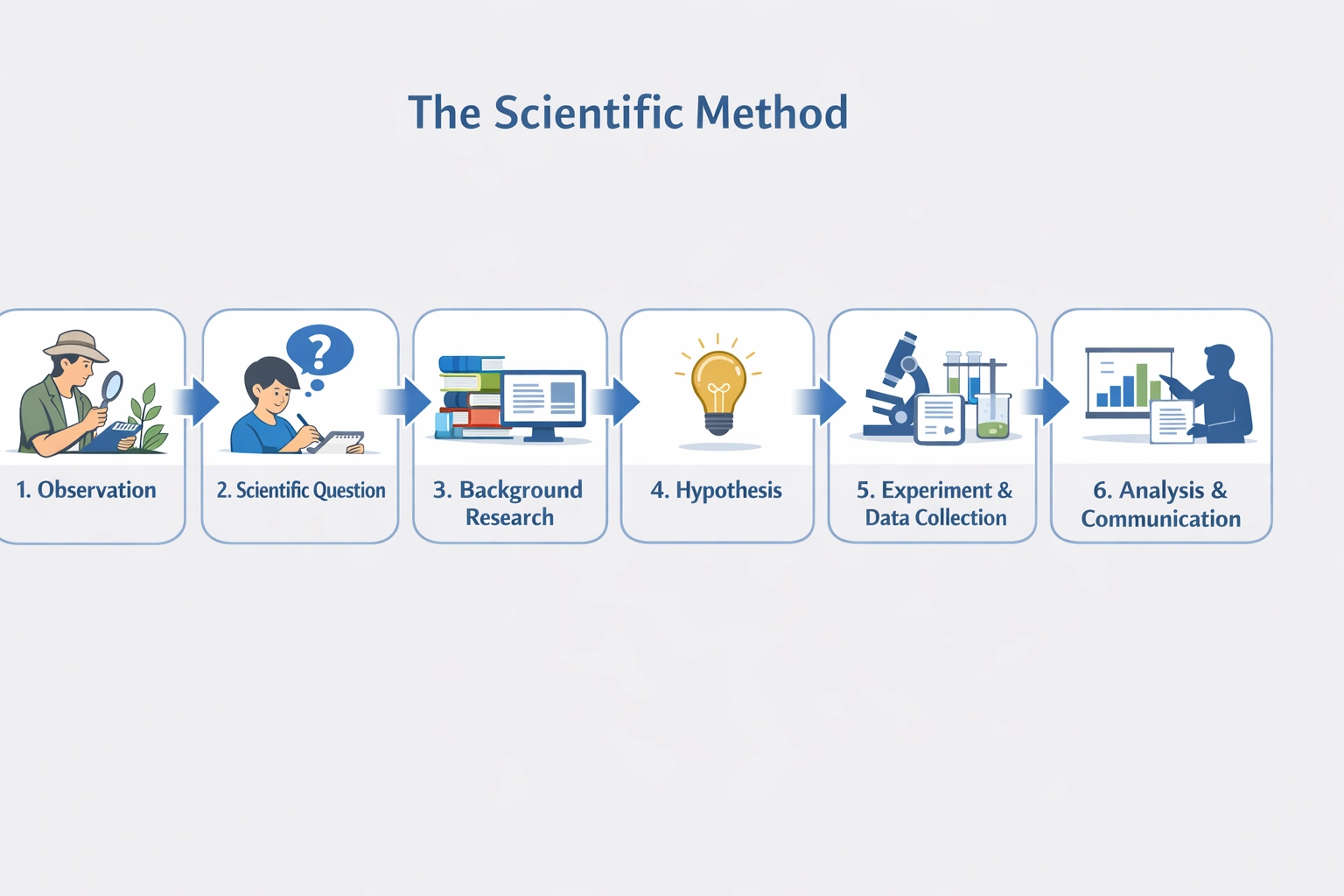
Immediately after proposing a scientific question, a researcher performs background research on the topic.
The scientific method is a cyclical, structured process designed to ensure valid and reliable inquiry. The initial step involves making an observation and formulating a specific, testable question. The logical and necessary next step is to investigate existing knowledge before any experimental design can begin. This background research involves a comprehensive review of scientific literature, prior studies, and established theories related to the question. This phase is indispensable for understanding the current state of knowledge, identifying gaps that the new research can address, and avoiding the duplication of past work. It allows the researcher to refine the question, develop a well-informed and precise hypothesis, and design a methodology that is both feasible and grounded in established scientific principles. Skipping this step risks designing an experiment based on flawed assumptions or reinventing established concepts, which undermines the validity and contribution of the entire study.
A) Perform background research on the topic
Conducting background research is the immediate and essential step following question formulation. It involves delving into academic databases, journals, and textbooks to gather all relevant information. This process provides context, reveals what methodologies have been successful or problematic in the past, and helps shape a hypothesis that is both novel and testable. It transforms a general curiosity into a focused, researchable project by building a foundational framework of understanding.
B) Analyze data to observe trends or patterns
Data analysis is a subsequent phase that occurs only after an experiment has been conducted and data has been collected. It involves the application of statistical tests, graphical interpretation, and logical reasoning to make sense of the experimental results. This step seeks to identify patterns, correlations, or causal relationships within the collected information. At the point immediately after posing a question, no experiment has been run, and therefore no data exists to analyze. This option represents a later stage in the scientific cycle.
C) Collect information or data during an experiment
Data collection is the core activity of the experimental phase itself. It involves the systematic measurement of variables, observation of outcomes, and recording of results under controlled conditions. This hands-on investigative work cannot commence until after the background research has informed the hypothesis and a detailed experimental procedure has been planned. The act of collecting data is the execution of the designed experiment, which is necessarily preceded by the preparatory work of background investigation.
D) Communicate results in an article or presentation
Communicating results is the final stage in the scientific process, intended to share findings with the broader scientific community for scrutiny, replication, and application. This involves writing research papers, creating conference presentations, or publishing reports. This step is separated from the initial question by the entire research cycle, which includes background research, hypothesis formation, experimentation, and data analysis. It is the culmination of the process, not the immediate next step.
Conclusion
The sequence of the scientific method is deliberate and logical, ensuring that each step builds upon the previous one. After a scientific question is proposed, the researcher must engage with existing scholarship to build a necessary foundation. This research informs every subsequent action, from hypothesis development to experimental design. Analyzing data, collecting data, and communicating results are all critical, but they occur later in the sequence. Therefore, performing background research is the indispensable and immediate step that follows the formulation of a scientific question.
Topic Flashcards
Click to FlipWhat step follows immediately after proposing a scientific question?
Performing background research.
Why is background research important before experimentation?
It helps refine the question and informs hypothesis development.
What sources are commonly used during background research?
Scientific journals, textbooks, and previous studies.
Which step of the scientific method involves reviewing existing knowledge?
Background research.
What step comes after background research in the scientific method?
Forming a hypothesis.
Is background research done before designing an experiment?
Yes