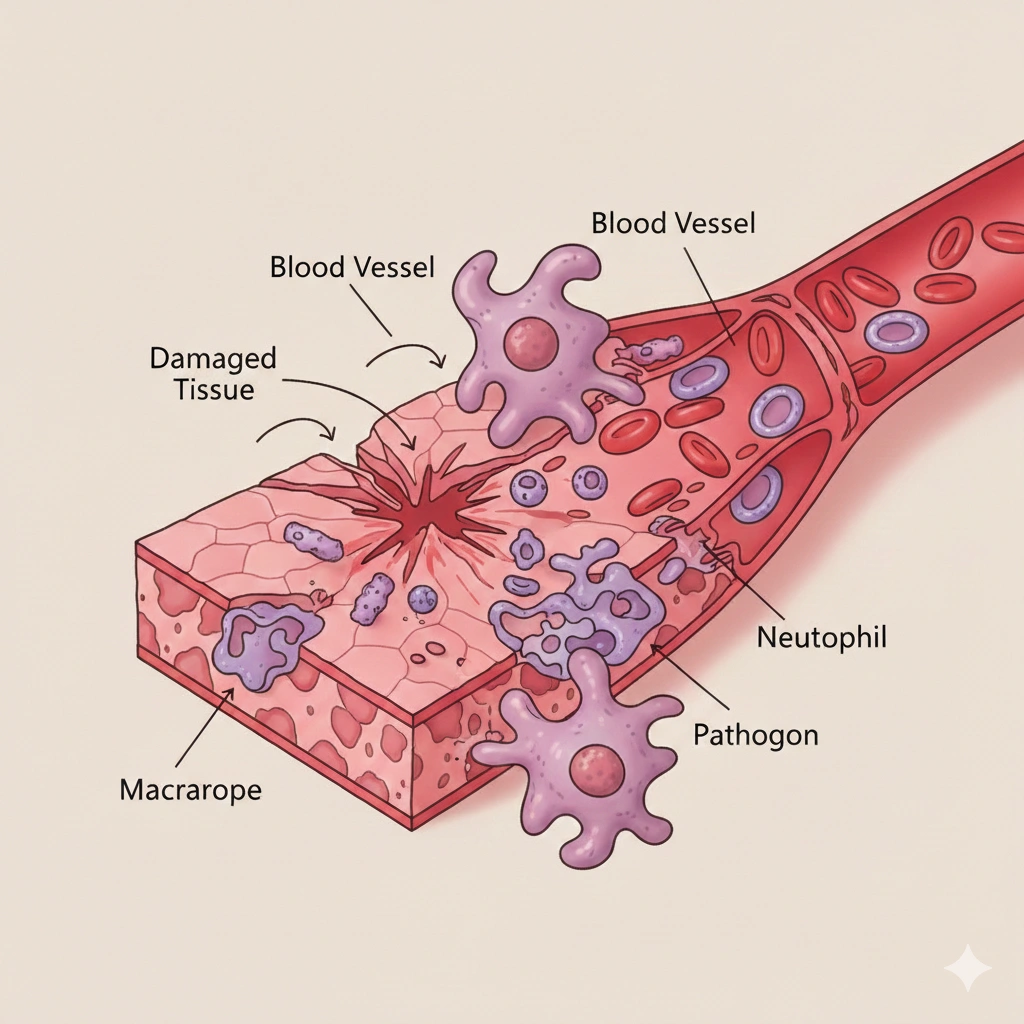
Which is a secondary defense for the body against pathogens?
-
A
Tears
-
B
Urine
-
C
Inflammation
-
D
Mucus
Inflammation is a secondary defense for the body against pathogens.
It is part of the body's immune response that occurs after the initial physical barriers, such as the skin or mucous membranes, have been breached. Inflammation helps to contain and eliminate pathogens, repair damaged tissues, and activate immune cells to fight infections.
A. Tears
Tears are part of the body's primary defense against pathogens. They contain enzymes like lysozyme, which help to break down the cell walls of bacteria. Tears, along with other first-line defenses like saliva and mucus, act as physical and chemical barriers to prevent pathogens from entering the body.
B. Urine
Urine is also part of the body's primary defense, particularly in flushing out waste and pathogens from the urinary tract. While it helps prevent infection by washing away potential pathogens, it is considered part of the body's first-line defense rather than a secondary response.
C. Inflammation
This is the correct answer. Inflammation is a secondary defense mechanism that the body activates after pathogens have breached the primary defenses. It involves redness, heat, swelling, and pain, and helps recruit immune cells to the site of infection to neutralize the pathogens.
Conclusion:
Inflammation is considered a secondary defense mechanism because it occurs after the primary defenses (like tears and urine) are breached by pathogens. It plays a vital role in the immune system's response to infections by containing the pathogens and facilitating immune responses.

Topic Flashcards
Click to FlipWhat distinguishes secondary defenses from first-line defenses?
Secondary defenses (e.g., inflammation) are activated responses involving immune cells; first-line defenses (tears, mucus, urine) are passive barriers.
What is the main role of inflammation as a secondary defense?
Limits pathogen spread, removes debris, and recruits immune cells by increasing blood flow, swelling, heat, and pain.
Why are tears considered a first-line defense rather than secondary?
Tears contain lysozyme and other antimicrobial chemicals that kill pathogens on the eye surface before they invade.
How does mucus act as a primary defense against pathogens?
Traps microbes in sticky mucus in respiratory and digestive tracts; cilia and coughing/swallowing remove them.
Which defense mechanism involves redness, swelling, heat, and pain?
Inflammation. Classic signs of the secondary innate response to tissue damage or infection.