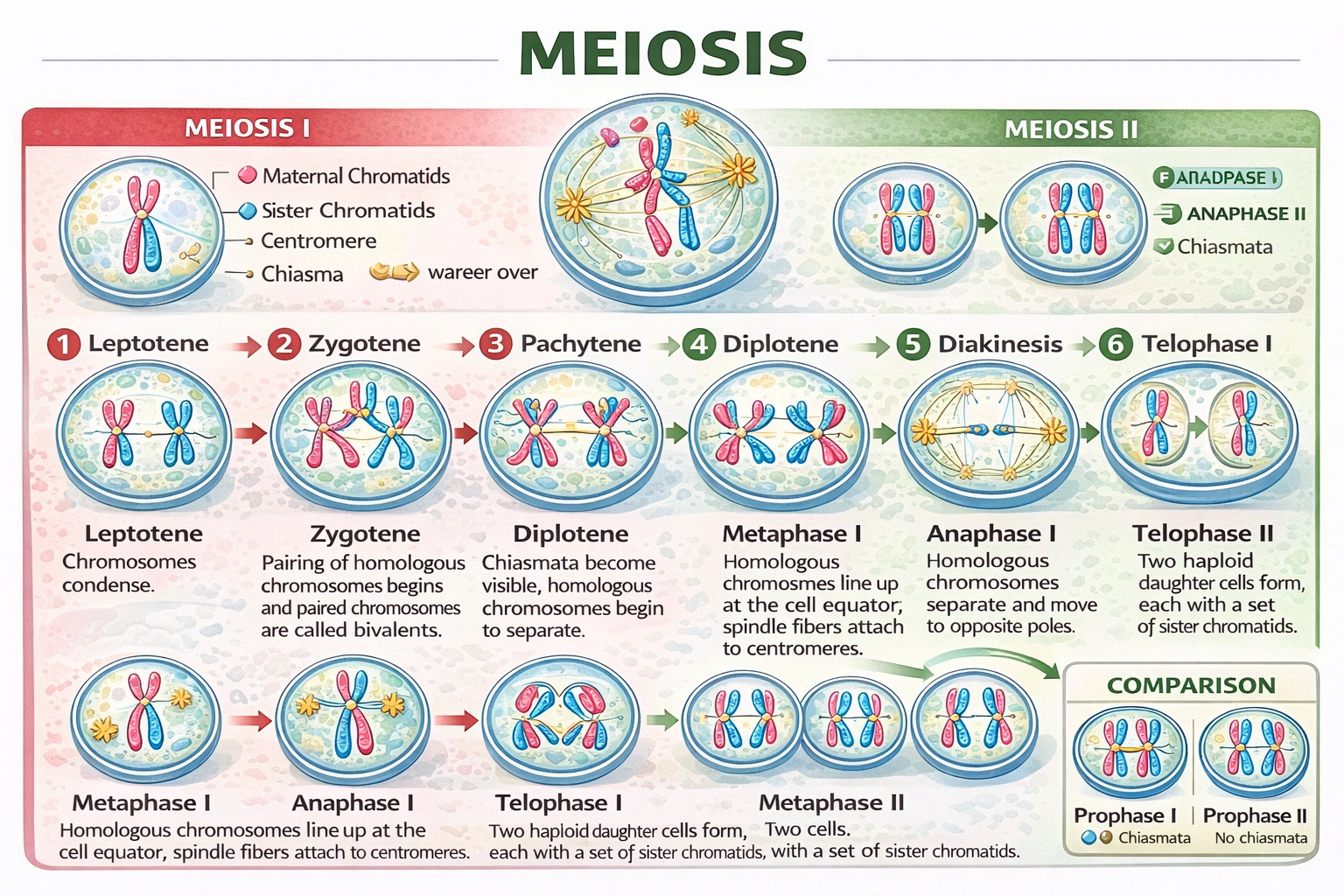
During which phase of meiosis do chiasmata structures form?
-
A
Prophase I
-
B
Prophase II
-
C
Metaphase I
-
D
Metaphase II
Chiasmata structures form during Prophase I of meiosis.
Meiosis is a specialized form of cell division that reduces the chromosome number by half, producing four haploid gametes from one diploid cell. It consists of two consecutive divisions: Meiosis I and Meiosis II. A critical event unique to Meiosis I is the pairing and genetic recombination between homologous chromosomes. Chiasmata (singular: chiasma) are the visible, X-shaped points where non-sister chromatids of homologous chromosomes overlap. They are the physical manifestations of crossing over, the process where segments of DNA are exchanged between these chromatids. Chiasmata serve a crucial mechanical function by holding the homologous chromosome pair (called a bivalent or tetrad) together until anaphase I, ensuring proper alignment and segregation.
A) Prophase I
Prophase I is an extended and complex phase subdivided into five stages: leptotene, zygotene, pachytene, diplotene, and diakinesis. Crossing over, catalyzed by enzymes, occurs during the pachytene stage when homologous chromosomes are fully synapsed. As the homologous chromosomes begin to separate slightly in the subsequent diplotene stage, they remain physically connected at the sites of crossing over; these connections are the chiasmata. Thus, chiasmata become visible during the diplotene sub-stage of Prophase I.
B) Prophase II
Prophase II is a brief phase that occurs after the first meiotic division. The chromosomes, now consisting of two sister chromatids, re-condense, and a new spindle apparatus forms. However, the homologous chromosomes have already been separated into different daughter cells during Anaphase I. There is no pairing of homologous chromosomes in Meiosis II, and therefore, no crossing over occurs and no chiasmata form.
C) Metaphase I
During Metaphase I, the homologous chromosome pairs (bivalents) align at the metaphase plate, with chiasmata still present and helping to maintain the connection between homologs. However, chiasmata are not formed during metaphase; they were established earlier in Prophase I. Metaphase I is characterized by the alignment of chromosomes held together by pre-existing chiasmata, not by the creation of these structures.
D) Metaphase II
Metaphase II resembles mitotic metaphase, where individual chromosomes (each composed of two sister chromatids) align single-file at the metaphase plate. Since homologous chromosomes are not paired in Meiosis II, there is no possibility for chiasmata to form or be present. The connections seen are between sister chromatids at the centromere, not chiasmata between homologs.
Conclusion
The formation of chiasmata is a landmark event exclusive to the first meiotic division, specifically during its prolonged prophase. These structures are both a visible result of genetic recombination and a physical tether ensuring the proper orientation of homologous chromosomes on the meiotic spindle. Their formation during Prophase I is essential for the reduction of chromosome number and for generating genetic diversity among gametes, as the exchange of DNA at chiasmata creates new combinations of alleles on the chromosomes.
Topic Flashcards
Click to FlipDuring which phase of meiosis do chiasmata form?
Prophase I.
What are chiasmata?
Physical points where homologous chromosomes exchange DNA.
What meiotic process produces chiasmata?
Crossing over between non-sister chromatids.
Why are chiasmata important in meiosis?
They hold homologous chromosomes together and increase genetic variation.
In which substage of Prophase I does crossing over occur?
Pachytene.