How does the integumentary system work with the nervous system?
-
A
The integumentary system removes heat from the neurons in the nervous system.
-
B
The nervous system circulates nutrients outward to the integumentary system.
-
C
Touch input via the integumentary system sends messages to the nervous system.
-
D
Messages from the nervous system affect the color and texture of the skin.
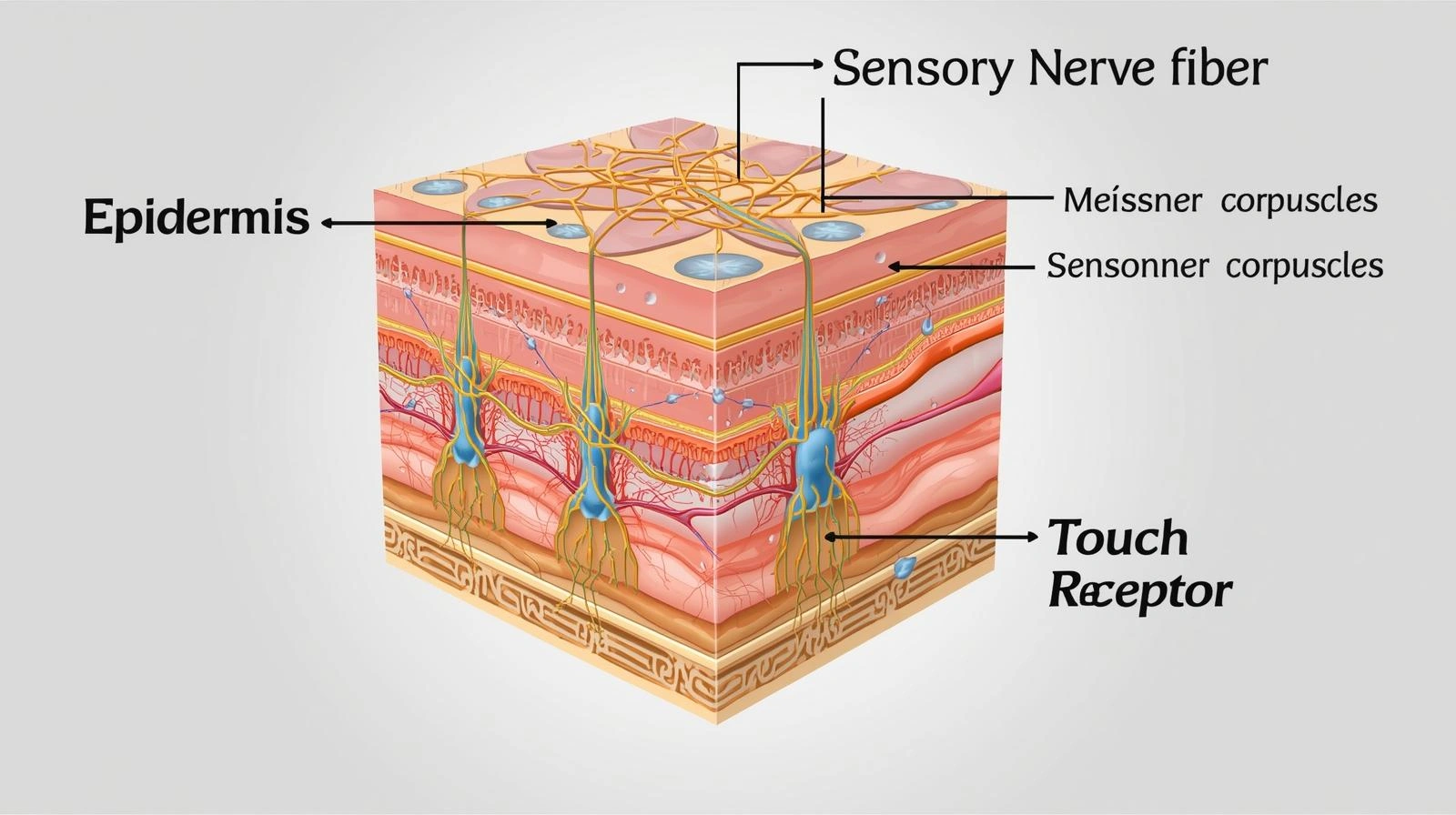
The integumentary system works with the nervous system by sending touch input via the integumentary system to the nervous system.
The skin contains sensory receptors that detect stimuli such as pressure, temperature, and pain. These sensory signals are then transmitted to the nervous system, which processes the information and enables the body to react appropriately.
A. The integumentary system removes heat from the neurons in the nervous system.
This is incorrect. The integumentary system helps regulate overall body temperature through mechanisms like sweating and vasodilation, but it does not directly remove heat from neurons in the nervous system. The regulation of body temperature is more about maintaining homeostasis rather than managing heat removal from neurons specifically.
B. The nervous system circulates nutrients outward to the integumentary system.
This is incorrect. The nervous system does not circulate nutrients. Nutrient distribution is the function of the circulatory system. The nervous system is responsible for transmitting electrical signals, not for transporting nutrients to the skin.
C. Touch input via the integumentary system sends messages to the nervous system.
This is the correct answer. The skin, as part of the integumentary system, contains sensory receptors that detect various forms of touch input like pressure, temperature, and pain. These sensory signals are transmitted to the nervous system, which processes them and allows the body to respond to different stimuli.
D. Messages from the nervous system affect the color and texture of the skin.
While the nervous system can influence some aspects of skin function (for example, during the fight-or-flight response), it does not directly control the color and texture of the skin. Skin color and texture are influenced by factors like blood flow, melanin production, and overall skin health, but not by direct neural messages.
Conclusion:
The integumentary system and the nervous system work together by the skin detecting touch and other stimuli and sending this sensory input to the nervous system for processing. This collaboration allows the body to respond to changes in the environment effectively.

Topic Flashcards
Click to FlipWhich specific type of sensory receptor in the skin is primarily responsible for detecting fine, discriminative touch?
Meissner's corpuscles (in glabrous skin).
What are the specialized nerve endings in the skin that detect touch, pressure, temperature, and pain called?
Cutaneous sensory receptors.
Which specific type of sensory receptor in the skin is primarily responsible for detecting fine, discriminative touch?
Meissner's corpuscles (in glabrous skin).
Through which type of neurons are sensory signals from the skin transmitted to the central nervous system?
Sensory (afferent) neurons.
What is the name of the involuntary, rapid motor response to a potentially harmful stimulus (like touching something hot) that involves both the integumentary and nervous systems?
A reflex arc (specifically, a withdrawal reflex).
What condition results from damage to peripheral nerves, causing numbness, tingling, or pain in the skin, illustrating the link between the two systems?
Peripheral neuropathy.