How does the lymphatic system work with the circulatory system?
-
A
The circulatory system produces red blood cells for the lymphatic system
-
B
Lymph draws excess fluid from the cells and deposits it into the blood vessels.
-
C
The heart regulates the production of lymph in the lymph glands.
-
D
White cells from the lymphatic system eliminate excess red blood cells
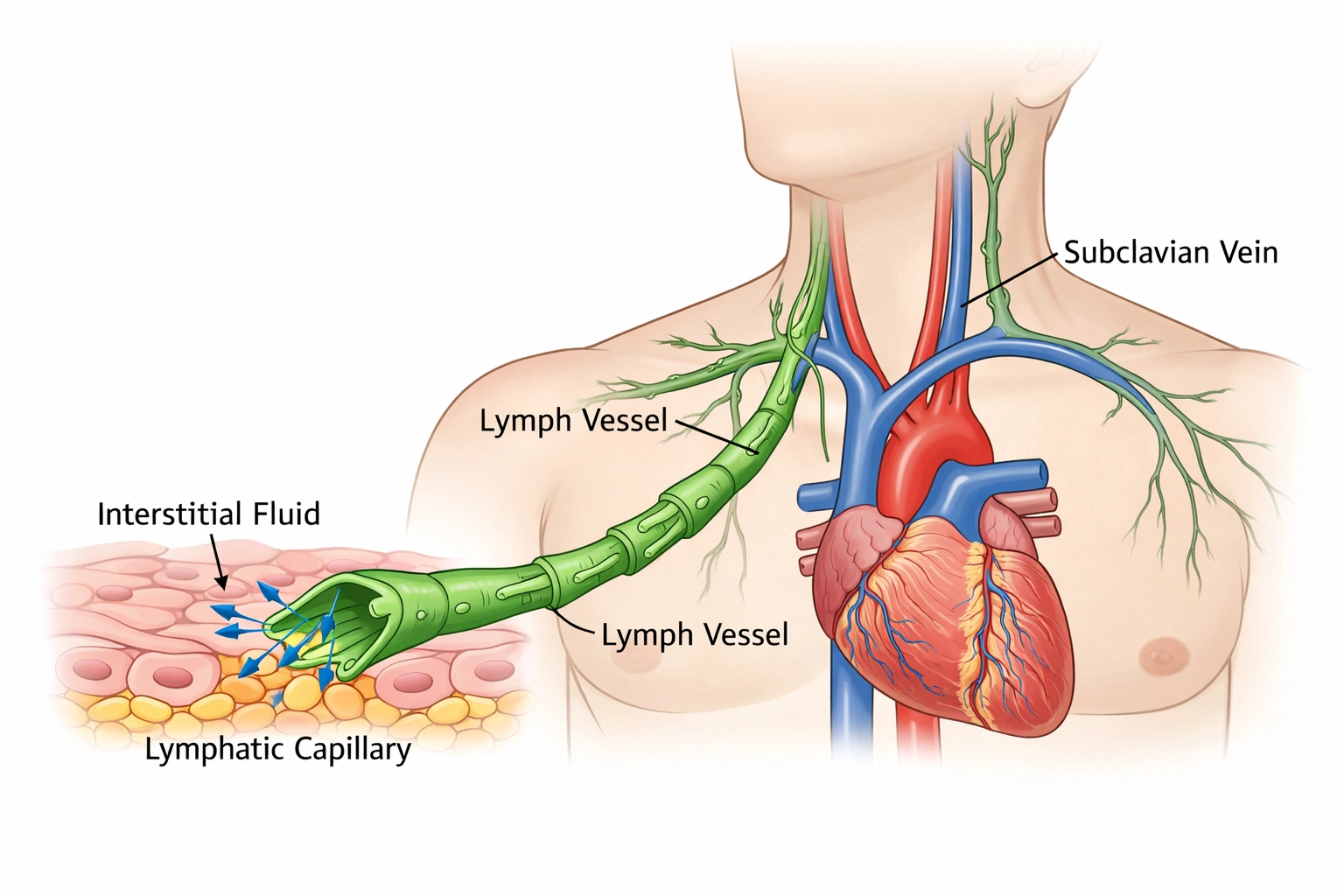
The lymphatic system works with the circulatory system by collecting excess fluid from body tissues and returning it to the bloodstream.
As blood circulates through capillaries, part of the plasma is forced out into the surrounding tissues to deliver oxygen and nutrients. Not all of this fluid returns directly to the blood vessels. The lymphatic system prevents fluid accumulation by absorbing this excess interstitial fluid (now called lymph) and transporting it back into the circulatory system, helping maintain normal blood volume and tissue fluid balance.
A) Circulatory system produces RBCs for lymphatic system
Red blood cells are produced in the bone marrow through a process called erythropoiesis, not by the circulatory system itself.
The lymphatic system does not require red blood cells to perform its functions, nor does it receive them from the circulatory system for immune or transport purposes. Instead, the lymphatic system primarily contains lymphocytes (white blood cells) that originate in the bone marrow and mature in lymphoid organs such as the thymus and lymph nodes.
Because red blood cell production and delivery are unrelated to how the lymphatic and circulatory systems cooperate, this option is incorrect.
B) Lymph draws excess fluid into blood vessels
Blood pressure within capillaries causes approximately 2–3 liters of plasma per day to leak into surrounding tissues as interstitial fluid. This fluid bathes cells and allows exchange of nutrients and wastes.
Blind-ended lymphatic capillaries absorb this excess fluid, converting it into lymph. The lymph then travels through lymphatic vessels and lymph nodes and ultimately returns to the bloodstream via the thoracic duct and right lymphatic duct, which empty into the subclavian veins.
This process:
- Prevents tissue swelling (edema)
- Maintains blood volume
- Supports circulation efficiency
- Allows immune surveillance through lymph nodes
Because this describes the primary cooperative function between the lymphatic and circulatory systems, this option is correct.
C) Heart regulates lymph production
The heart pumps blood through the circulatory system but does not control lymph formation.
Lymph is produced passively as a result of capillary filtration pressure and tissue fluid dynamics. Lymph movement depends on skeletal muscle contractions, breathing, and one-way valves in lymph vessels, not cardiac regulation.
Lymph nodes filter lymph but do not generate it. Therefore, this option is incorrect.
D) White cells eliminate excess RBCs
Old or damaged red blood cells are removed mainly by macrophages in the spleen and liver. While lymph nodes also contain macrophages, this process represents blood cell recycling rather than a cooperative fluid-balance function between the lymphatic and circulatory systems.
This mechanism does not explain how the two systems work together to maintain circulation and tissue fluid levels, so this option is incorrect.
Conclusion:
The circulatory system delivers fluid to tissues during capillary exchange, and the lymphatic system prevents fluid buildup by collecting excess interstitial fluid and returning it to the bloodstream. This partnership maintains blood volume, prevents edema, and supports immune defense.
Red blood cell production occurs in bone marrow, the heart does not regulate lymph formation, and removal of old red blood cells is a separate homeostatic process.
Therefore, the correct description of how the lymphatic and circulatory systems work together is that lymph draws excess fluid from tissues and returns it to the blood vessels.

Topic Flashcards
Click to FlipWhat is the term for the clear, yellowish fluid that leaks from blood capillaries into tissue spaces before it enters lymphatic vessels?
Interstitial fluid.
Which lymphatic duct drains lymph from most of the body (left side and lower right) into the left subclavian vein?
The thoracic duct.
What structural feature prevents backflow in lymphatic vessels, similar to veins in the circulatory system?
One-way valves.
How does the lymphatic system assist the circulatory system in immune defense?
Lymph nodes filter lymph, trapping pathogens and allowing immune cells (lymphocytes) to respond before fluid returns to blood.
What condition results from a parasitic infection blocking lymphatic vessels, leading to severe tissue swelling?
Elephantiasis (lymphatic filariasis).