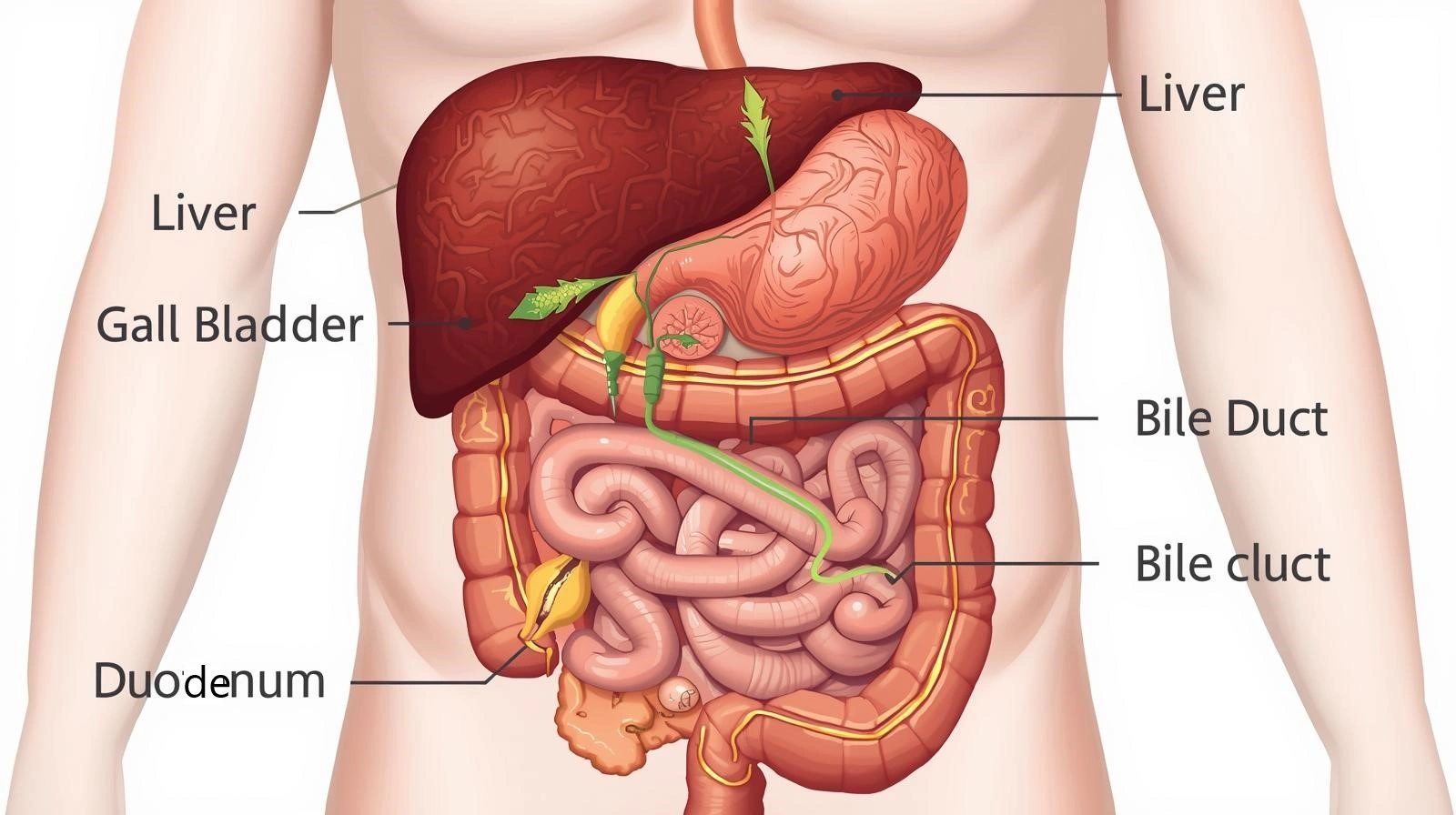
The gall bladder is part of the _________________.
-
A
endocrine system
-
B
urinary system
-
C
digestive system
-
D
nervous system
The gall bladder is anatomically and functionally categorized as an accessory organ of the digestive system.
This pear-shaped organ resides beneath the right hepatic lobe and serves as a specialized reservoir for bile, a digestive fluid synthesized by the liver. While the liver produces bile continuously, the gall bladder concentrates this secretion by absorbing water and electrolytes, increasing its potency up to tenfold and storing up to 50 milliliters.
A) Endocrine system
The endocrine system comprises ductless glands that synthesize and secrete hormones directly into the bloodstream to regulate metabolism, growth, and homeostasis, including the pituitary, thyroid, adrenal glands, and pancreatic islets. The gall bladder possesses a distinct anatomical duct system—the cystic duct—that channels bile into the gastrointestinal lumen rather than releasing chemical signals into vascular spaces. While the organ responds to hormonal stimulation, particularly cholecystokinin from duodenal enteroendocrine cells, it does not itself produce, store, or release hormones into systemic circulation. The epithelial lining contains cells specialized for absorption and storage rather than hormone secretion. The gall bladder's function is purely exocrine, directed toward the external environment of the GI tract rather than the internal milieu.
B) Urinary system
The urinary system maintains fluid and electrolyte balance while excreting nitrogenous wastes through the kidneys, ureters, urinary bladder, and urethra. This system filters blood plasma through nephrons to produce urine containing urea, creatinine, and uric acid. The gall bladder shares neither anatomical continuity nor functional overlap with these structures. While both organs serve storage functions, the urinary bladder contains urine—an excretory waste product—whereas the gall bladder stores bile—a digestive surfactant.
C) Digestive system
The gall bladder is definitively classified within the digestive system. This classification derives from its embryological origin from the foregut endoderm, its anatomical position as part of the hepatobiliary tree, and its physiological role in storing and delivering bile for fat emulsification. The organ functions as an accessory digestive organ alongside the liver and pancreas, concentrating bile and releasing it in response to dietary lipids to facilitate the digestion and absorption of fats and fat-soluble vitamins A, D, E, and K. Its structural integration into the portal triad and its coordination with pancreatic enzyme secretion cement its essential role within the gastrointestinal apparatus.
D) Nervous system
The nervous system comprises the brain, spinal cord, and peripheral nerves that coordinate sensory perception, motor responses, and cognition through electrochemical signaling. The gall bladder is not composed of neural tissue and does not generate, transmit, or process action potentials as its primary function. Although the organ receives autonomic innervation—sympathetic fibers from the celiac plexus inhibiting contraction and parasympathetic vagal fibers stimulating contraction—these connections merely regulate smooth muscle tone to support digestion. Such innervation indicates the organ is controlled by the nervous system, not that it is part of it.
Conclusion:
The gall bladder is exclusively classified as a component of the digestive system based upon its embryological development, anatomical positioning within the hepatobiliary tree, and indispensable physiological role in facilitating lipid digestion. Unlike the endocrine system, which operates through ductless hormonal secretion into the bloodstream, the gall bladder utilizes ducts to deliver bile into the gastrointestinal lumen. Unlike the urinary system, which manages nitrogenous waste excretion through renal filtration, the gall bladder concentrates and stores digestive surfactants. Unlike the nervous system, which coordinates electrochemical signaling throughout the body, the gall bladder functions as an effector organ responding to neural input rather than processing information.

Topic Flashcards
Click to FlipWhat is the primary function of the gallbladder?
To store and concentrate bile produced by the liver.
Through which duct does bile travel from the gallbladder to the small intestine?
The common bile duct.
What stimulus causes the gallbladder to contract and release bile?
The presence of fatty food in the duodenum, which triggers the release of the hormone cholecystokinin (CCK).
What are the solid particles that can form in the gallbladder, often causing pain and blockage?
Gallstones.
What is the name of the surgical procedure to remove the gallbladder?
Cholecystectomy.