Which is not an important electrolyte?
-
A
Potassium
-
B
Nitrogen
-
C
Sodium
-
D
Calcium
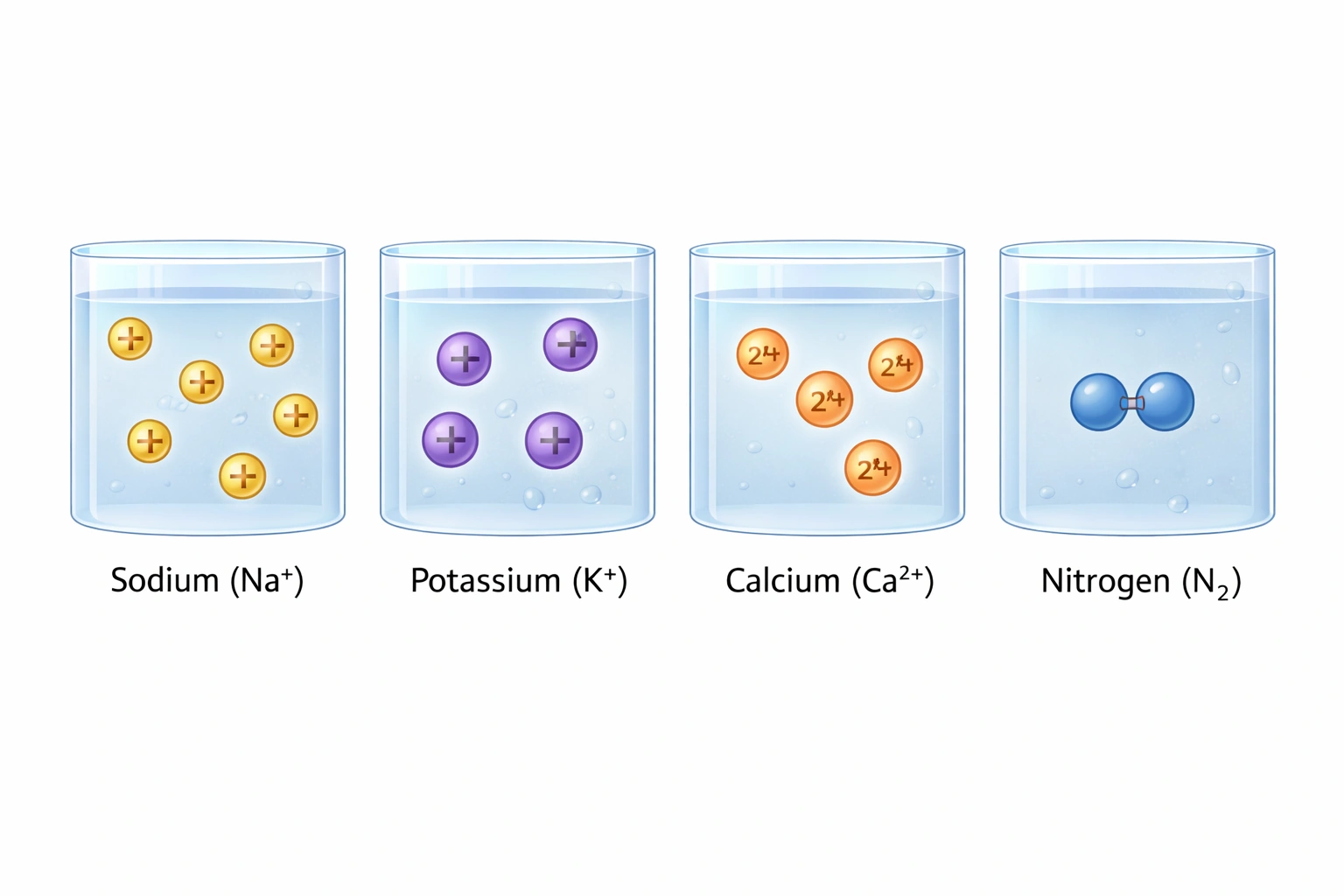
The element that is not an important electrolyte is Nitrogen.
Electrolytes are minerals in the body that carry an electrical charge and are essential for various physiological functions, such as regulating fluid balance, muscle contractions, and nerve signaling. The key electrolytes in the body include potassium, sodium, and calcium, among others. Let's break down each option:
- A. Potassium: Potassium is a crucial electrolyte in the body. It plays a major role in maintaining proper cell function, fluid balance, and nerve signal transmission. It is especially important in muscle function, including the regulation of the heart's electrical activity. Potassium levels must be carefully regulated, as imbalances can lead to serious health issues, including arrhythmias.
- B. Nitrogen: Nitrogen is an essential element for life, particularly as a component of amino acids and proteins, but it is not an electrolyte. Nitrogen makes up about 78% of Earth's atmosphere and is used by the body primarily in the form of proteins and nucleic acids. It is not involved in carrying an electrical charge or participating in functions like fluid balance or nerve signaling. Therefore, it is not considered an electrolyte.
- C. Sodium: Sodium is one of the most important electrolytes in the body. It is essential for regulating blood pressure, maintaining fluid balance, and ensuring proper nerve and muscle function. Sodium plays a key role in maintaining the body's overall electrolyte balance, and imbalances can lead to conditions like hyponatremia or hypernatremia.
- D. Calcium: Calcium is another critical electrolyte, particularly for bone health, muscle contraction, and nerve signaling. It is involved in blood clotting and the function of various enzymes. Calcium ions also play a key role in cellular processes and the contraction of muscles, including the heart.
Conclusion: Nitrogen is not an electrolyte because it does not carry an electrical charge and does not function in the same way as other electrolytes in the body. Therefore, the correct answer is B. Nitrogen.

Topic Flashcards
Click to FlipWhat defines a substance as an electrolyte in the context of human physiology?
It is a mineral that dissociates into positively or negatively charged ions (e.g., Na⁺, K⁺, Ca²⁺, Cl⁻) when dissolved in body fluids, allowing it to conduct electricity and participate in vital functions.
Which electrolyte is the primary cation (positively charged ion) in extracellular fluid and is crucial for nerve impulses and blood pressure?
Sodium (Na⁺).
Which electrolyte is the primary cation found inside cells and is vital for maintaining cell volume and electrical activity of the heart?
Potassium (K⁺).
While nitrogen is not an electrolyte, in what vital forms is it used by the body?
As a key component of amino acids (proteins), nucleic acids (DNA/RNA), and some vitamins.
What is a common medical intervention for a severe electrolyte imbalance?
Administration of IV (intravenous) fluids containing specific electrolytes, like normal saline (NaCl) or Ringer's solution.