100%
4
Rated
Attempts
127
How should a researcher test the hypothesis that eating chocolate leads to acne in teenagers?
-
A
Take 100 teenagers and feed each one a different amount of chocolate daily for 60 days; then test for acne.
-
B
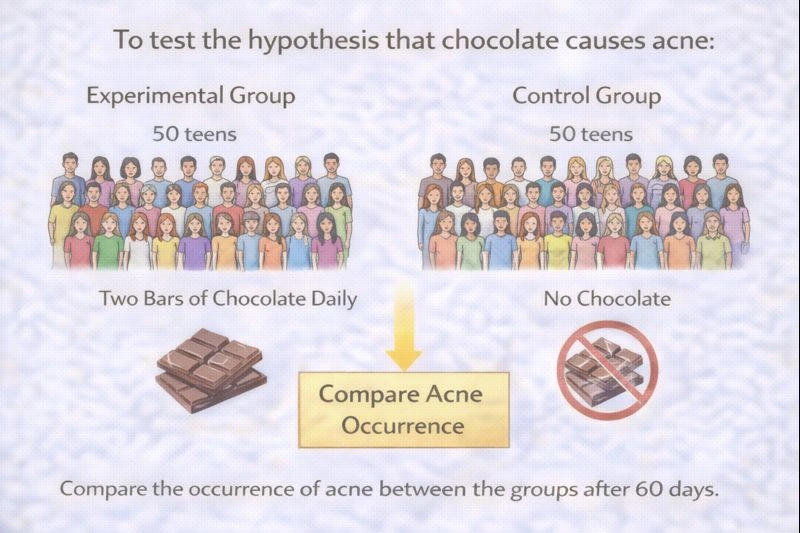
Take 100 teenagers and feed 50 two bars of chocolate daily for 60 days while the other 50 eat no chocolate; then test for acne.
-
C
Take 1 teenager and feed him or her two bars of chocolate for 30 days and no chocolate for 30 days; then test for acne.
-
D
Take 100 teenagers and feed them no chocolate for 30 days and two bars of chocolate apiece for 30 days; then test for acne.
A
Take 100 teenagers and feed each one a different amount of chocolate daily for 60 days; then test for acne.
B
Take 100 teenagers and feed 50 two bars of chocolate daily for 60 days while the other 50 eat no chocolate; then test for acne.
C
Take 1 teenager and feed him or her two bars of chocolate for 30 days and no chocolate for 30 days; then test for acne.
D
Take 100 teenagers and feed them no chocolate for 30 days and two bars of chocolate apiece for 30 days; then test for acne.
Topic Flashcards
Click to FlipMini Quiz
1 / 3
Can a well-designed observational study (e.g., tracking teens' diets and acne) definitively prove that eating chocolate causes acne?
Related Questions
Top Picks
Available FREE Test
Sets
Available Test
Sets