On the periodic table, which are the periods?
-
A
The vertical columns
-
B
The horizontal rows
-
C
The left-hand groups
-
D
The right-hand groups
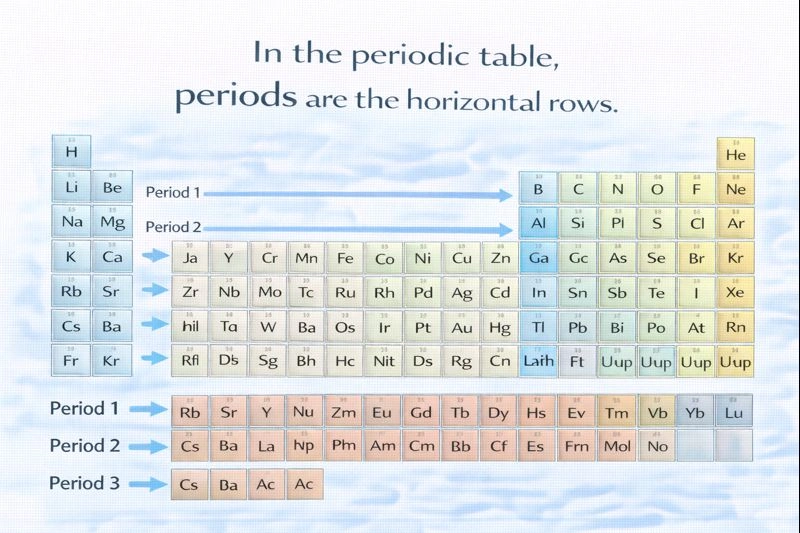
The periods on the periodic table are the horizontal rows.
The periodic table is organized in a structured way to show repeating patterns in the properties of elements. One major organizational feature is the division into rows and columns. Periods run horizontally across the table and reflect changes in atomic structure as atomic number increases. Elements within the same period have the same number of occupied electron shells, and as you move from left to right across a period, the number of protons and electrons increases by one for each successive element.
A. The vertical columns
Vertical columns on the periodic table are called groups or families. Elements in the same group share similar chemical properties because they have the same number of valence electrons.
B. The horizontal rows
This is correct. Horizontal rows are called periods. Each period corresponds to a principal energy level being filled with electrons, which is why chemical properties change in a predictable way across a row.
C. The left-hand groups
While the left side of the periodic table contains certain types of elements (such as alkali and alkaline earth metals), this is a positional description, not a definition of periods.
D. The right-hand groups
The right side of the table includes nonmetals and noble gases, but these are still organized into groups vertically, not periods.
Conclusion
Periods refer specifically to the horizontal rows of the periodic table, each representing a different principal energy level for electrons.