What is the function of parathyroid hormone?
-
A
Increasing energy levels
-
B
Stimulating cell reproduction
-
C
Speeding up metabolism
-
D
Activating vitamin D
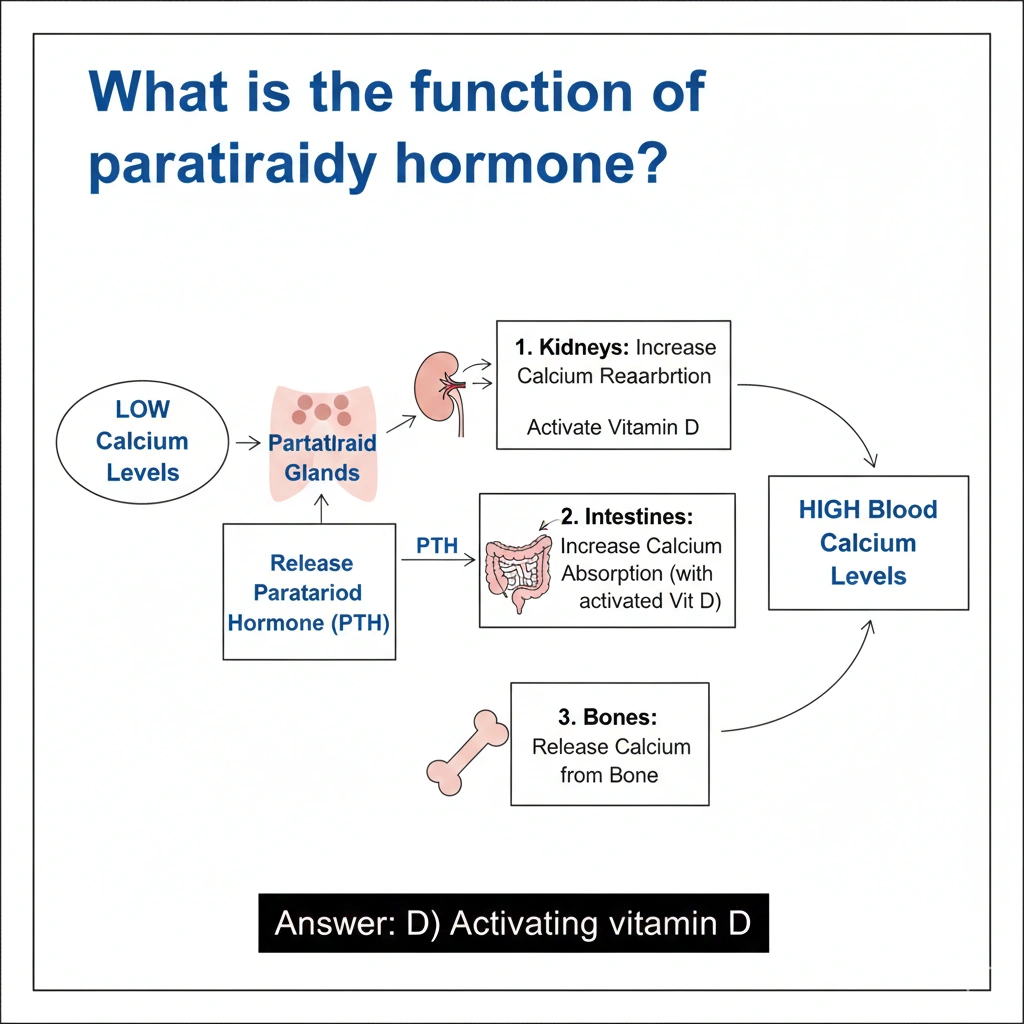
The primary function of parathyroid hormone (PTH) is activating vitamin D.
which plays a crucial role in regulating calcium levels in the body.
Parathyroid hormone is produced by the parathyroid glands, which are small glands located behind the thyroid gland in the neck. PTH helps regulate calcium and phosphate levels in the blood by acting on the bones, kidneys, and intestines. One of the key actions of PTH is to stimulate the activation of vitamin D in the kidneys. Activated vitamin D enhances calcium absorption in the intestines, thereby increasing calcium levels in the blood. Additionally, PTH increases calcium release from bones and reduces calcium excretion by the kidneys, further supporting the maintenance of proper calcium balance.
- A. Increasing energy levels: Parathyroid hormone is not involved in directly increasing energy levels. Energy levels in the body are more closely related to metabolic processes, such as those regulated by hormones like thyroid hormone, insulin, and adrenaline. While calcium and vitamin D play essential roles in overall health, they do not directly affect energy production or the sensation of energy in the way that metabolic hormones do.
- B. Stimulating cell reproduction: Parathyroid hormone is not primarily involved in stimulating cell reproduction. While calcium signaling plays a role in many cellular processes, including cell division, PTH's main role is in calcium regulation. Hormones like growth hormone or certain signaling molecules are more directly responsible for stimulating cell reproduction and growth.
- C. Speeding up metabolism: PTH does not directly speed up metabolism. Metabolism, which includes processes like energy production and fat burning, is more closely regulated by hormones such as thyroid hormone (T3 and T4). These hormones control the rate of metabolism in cells. While calcium levels regulated by PTH can influence cellular functions, PTH itself does not have a direct impact on metabolic rate.
- D. Activating vitamin D: This is the correct answer. One of the key roles of parathyroid hormone is to stimulate the kidneys to convert inactive vitamin D (also known as calcidiol) into its active form (calcitriol). Active vitamin D is essential for the absorption of calcium in the intestines, and it also helps in regulating calcium levels by acting on bones and kidneys. By activating vitamin D, PTH helps ensure that calcium levels in the blood remain within a healthy range.
- Conclusion: Parathyroid hormone is primarily responsible for activating vitamin D, which in turn facilitates the absorption of calcium from the intestines, regulates calcium levels in the blood, and helps maintain bone health. Therefore, the correct answer is D. Activating vitamin D.

Topic Flashcards
Click to FlipWhat is the primary trigger for the release of parathyroid hormone (PTH) from the parathyroid glands?
Low blood calcium levels (hypocalcemia).
How does PTH affect phosphate levels in the blood?
PTH decreases blood phosphate levels by increasing its excretion in the urine (phosphaturia).
Which vitamin does PTH activate, and where does this activation occur?
PTH activates vitamin D (converts 25-hydroxyvitamin D to 1,25-dihydroxyvitamin D) in the kidneys.
What is the name of the cells in bone that are stimulated by PTH to release calcium into the blood?
Osteoclasts (indirectly via osteoblast signaling).
What condition results from overproduction of PTH, leading to high blood calcium and bone demineralization?
Hyperparathyroidism.