Which mineral is important for the formation of red blood cells?
-
A
Selenium
-
B
Calcium
-
C
Magnesium
-
D
Copper
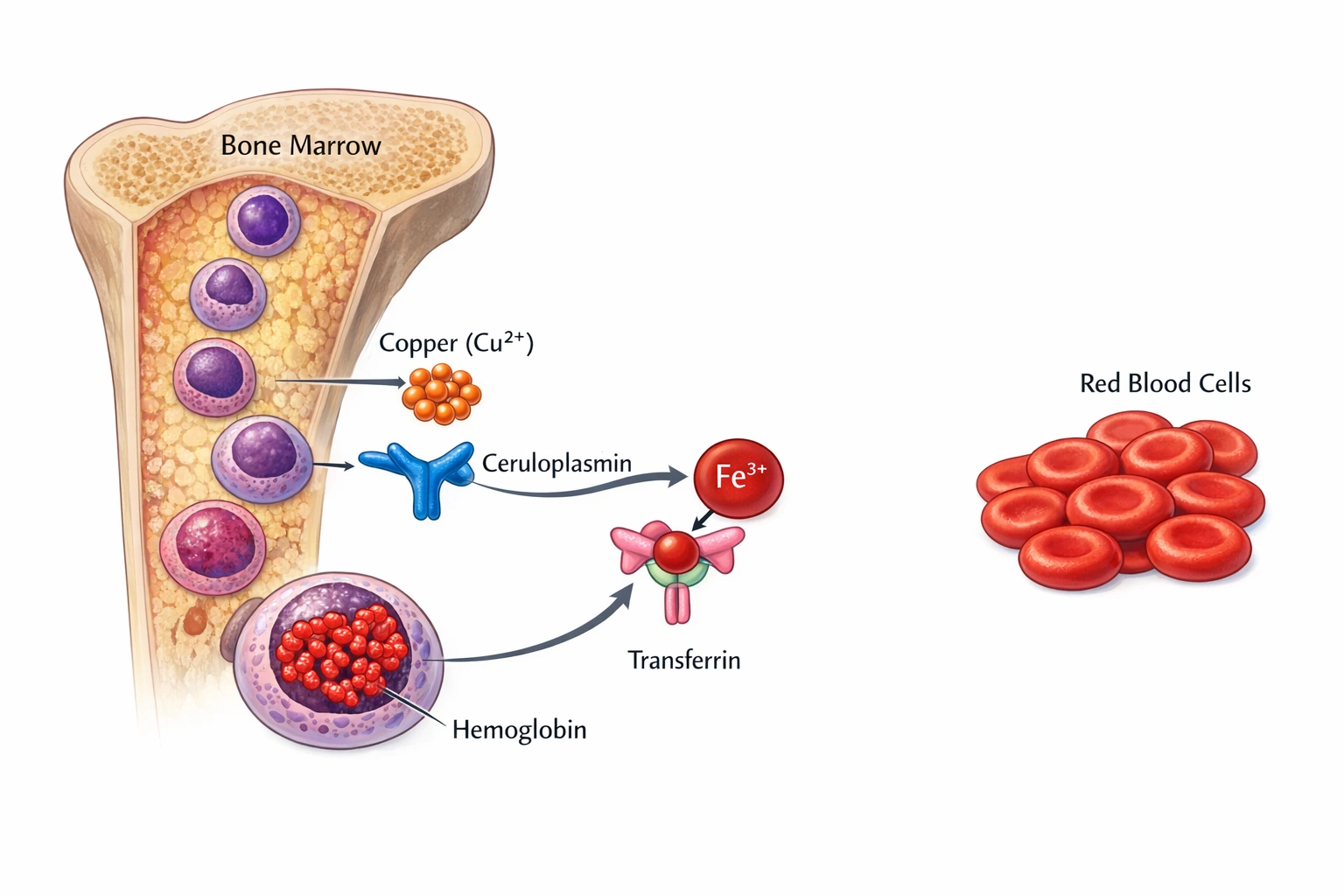
The mineral important for the formation of red blood cells is copper.
Copper plays a crucial role in the body’s ability to form red blood cells. It is an essential trace mineral that is involved in the process of iron metabolism and the formation of hemoglobin, the protein in red blood cells that carries oxygen throughout the body. Copper aids in the absorption and transport of iron, and it is also a cofactor for several enzymes required for red blood cell production, including ceruloplasmin, which is involved in iron regulation.
- A. Selenium: Selenium is an important mineral that acts as an antioxidant, protecting cells from damage caused by free radicals. While selenium is essential for overall health, it does not directly play a role in the formation of red blood cells. It is more involved in immune function and thyroid hormone metabolism.
- B. Calcium: Calcium is crucial for bone health, muscle function, and nerve transmission. It also plays a role in blood clotting. However, calcium does not directly influence the production of red blood cells. While it is essential for overall health, its primary role is in maintaining bone density and supporting muscle and nerve activity.
- C. Magnesium: Magnesium is important for muscle and nerve function, as well as for bone health. It also plays a role in energy production. However, like calcium, it does not directly affect red blood cell formation. Magnesium is vital for various cellular processes, but it is not as critical for red blood cell production as copper.
- D. Copper: This is the correct answer. Copper is essential for the proper functioning of several enzymes involved in the production of red blood cells. It aids in the absorption and utilization of iron, which is necessary for hemoglobin production. Without copper, the body would struggle to produce enough red blood cells, leading to anemia and other related health issues.
Conclusion: Copper is the mineral most important for the formation of red blood cells, as it aids in iron metabolism and supports the enzymes necessary for the production of red blood cells. Therefore, the correct answer is D. Copper.

Topic Flashcards
Click to FlipWhat is the primary role of copper in red blood cell (RBC) formation?
Copper is essential for iron metabolism; it helps absorb iron from the gut and mobilize it from storage sites for hemoglobin synthesis.
Which copper-containing enzyme is crucial for oxidizing iron so it can be loaded onto transferrin for transport?
Ceruloplasmin (a ferroxidase enzyme).
What type of anemia can result from a severe copper deficiency?
Hypochromic, microcytic anemia (similar to iron deficiency anemia).
Besides copper, which vitamin is absolutely critical for the maturation of red blood cells?
Vitamin B12 (cobalamin) and/or Folate (Vitamin B9).
Which other mineral is the central atom in every hemoglobin molecule and is directly incorporated into RBCs?
Iron (Fe²⁺).