Which organ system is primarily responsible for preventing water loss?
-
A
The nervous system
-
B
The integumentary system
-
C
The lymphatic system
-
D
The urinary system
The organ system primarily responsible for preventing water loss is the integumentary system.
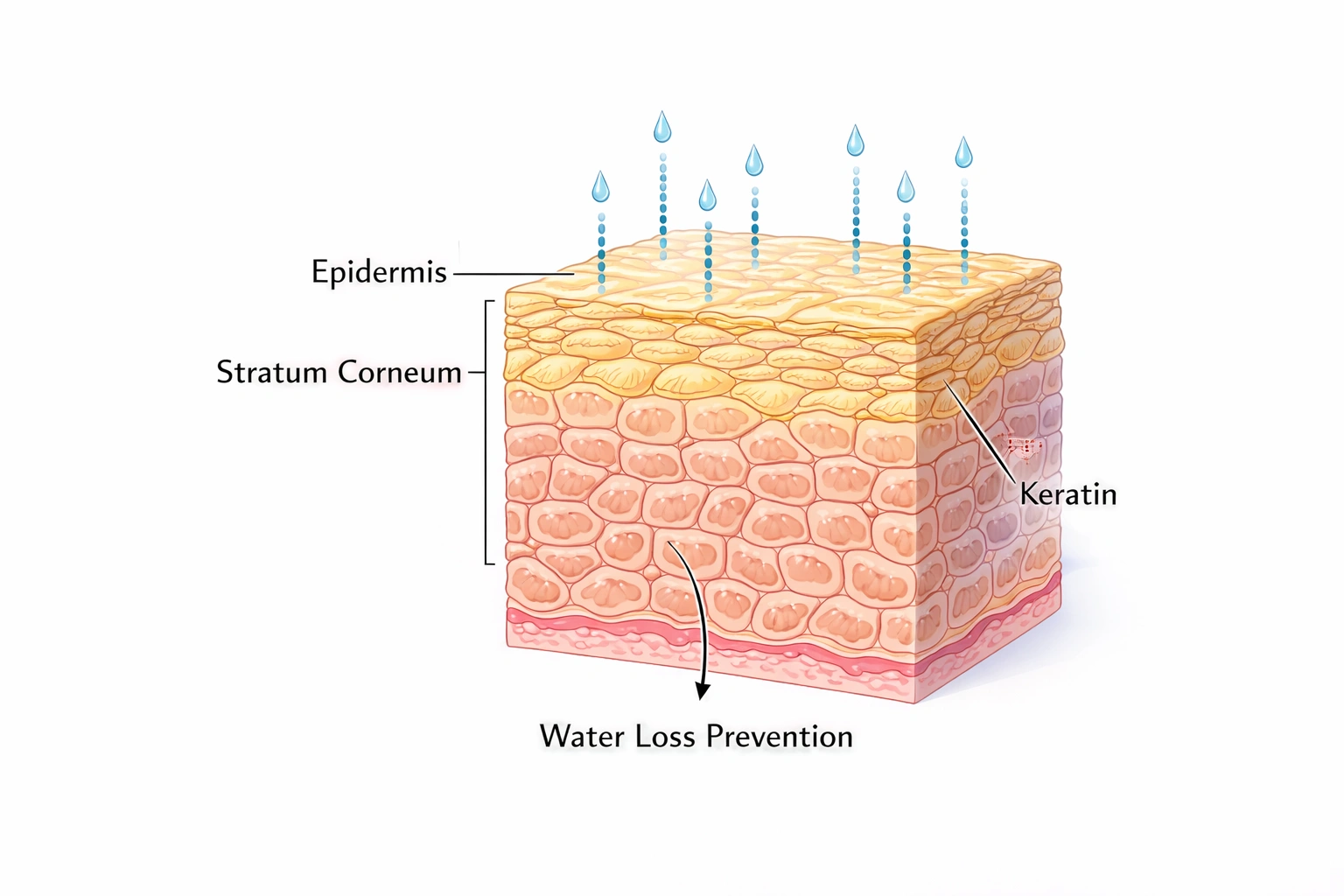
The integumentary system includes the skin, hair, nails, and various glands. Its primary function is to act as a protective barrier for the body, and one of its key roles is to prevent excessive water loss. The skin acts as a physical barrier that prevents dehydration by reducing the amount of water lost through evaporation. The outermost layer of the skin, known as the epidermis, contains keratinized cells that help seal in moisture. Additionally, the sebaceous glands produce oils that further help to keep the skin hydrated and reduce water loss.
- A. The nervous system: The nervous system is responsible for transmitting signals throughout the body, controlling body functions, and responding to stimuli. While it plays a vital role in regulating various physiological processes, it is not primarily responsible for preventing water loss. The nervous system may influence water balance by triggering thirst, but it does not have a direct role in preventing water loss like the integumentary system does.
- B. The integumentary system: This is the correct answer. The integumentary system's primary function in preventing water loss is through the skin. The skin's waterproof barrier, composed of keratin and lipids, significantly reduces water loss from the body. Sweat glands also help in regulating body temperature and fluid balance by releasing sweat, although this can lead to some water loss under specific conditions. Despite this, the integumentary system plays a crucial role in minimizing overall water loss to maintain hydration.
- C. The lymphatic system: The lymphatic system is involved in the transport of lymph, a fluid that contains immune cells, and it plays a critical role in immune defense and the maintenance of fluid balance within the body. However, it is not directly involved in preventing water loss from the body. Its functions are more focused on fluid circulation and immune responses rather than water retention.
- D. The urinary system: The urinary system is responsible for filtering waste products from the blood and producing urine. While it helps regulate fluid balance by excreting excess water and waste, it does not primarily function to prevent water loss. In fact, the urinary system can result in water loss through urine production, and the body uses other mechanisms, such as the integumentary system and hormonal regulation, to prevent dehydration and excessive water loss.
Conclusion: The integumentary system, particularly through the skin, is the organ system that plays the most significant role in preventing water loss, acting as a protective barrier to reduce the evaporation of water. Therefore, the correct answer is B. The integumentary system.

Topic Flashcards
Click to FlipWhich specific, water-resistant protein in skin cells is a key component of the barrier against water loss?
Keratin.
What is the primary function of sebum, the oily secretion from sebaceous glands in the skin?
To lubricate the skin and hair, and to help form a hydrophobic (water-repellent) barrier that prevents excessive evaporation.
While the integumentary system prevents uncontrolled water loss, which other organ system is primarily responsible for regulating the body's total water volume by excreting excess?
The urinary system.
What is the medical term for the life-threatening condition that can result from extreme water loss through damaged skin, such as from severe burns?
Dehydration leading to hypovolemic shock.
Besides preventing water loss, name two other vital protective functions of the integumentary system.
Protection against pathogens (mechanical/chemical barrier), protection from UV radiation (via melanin), and thermoregulation.