What are the two main parts of the mammalian skull?
-
A
The temporal bone and the occipital bone
-
B
The maxilla and the mandible
-
C
The mandible and the cranium
-
D
The frontal bone and the temporal bone
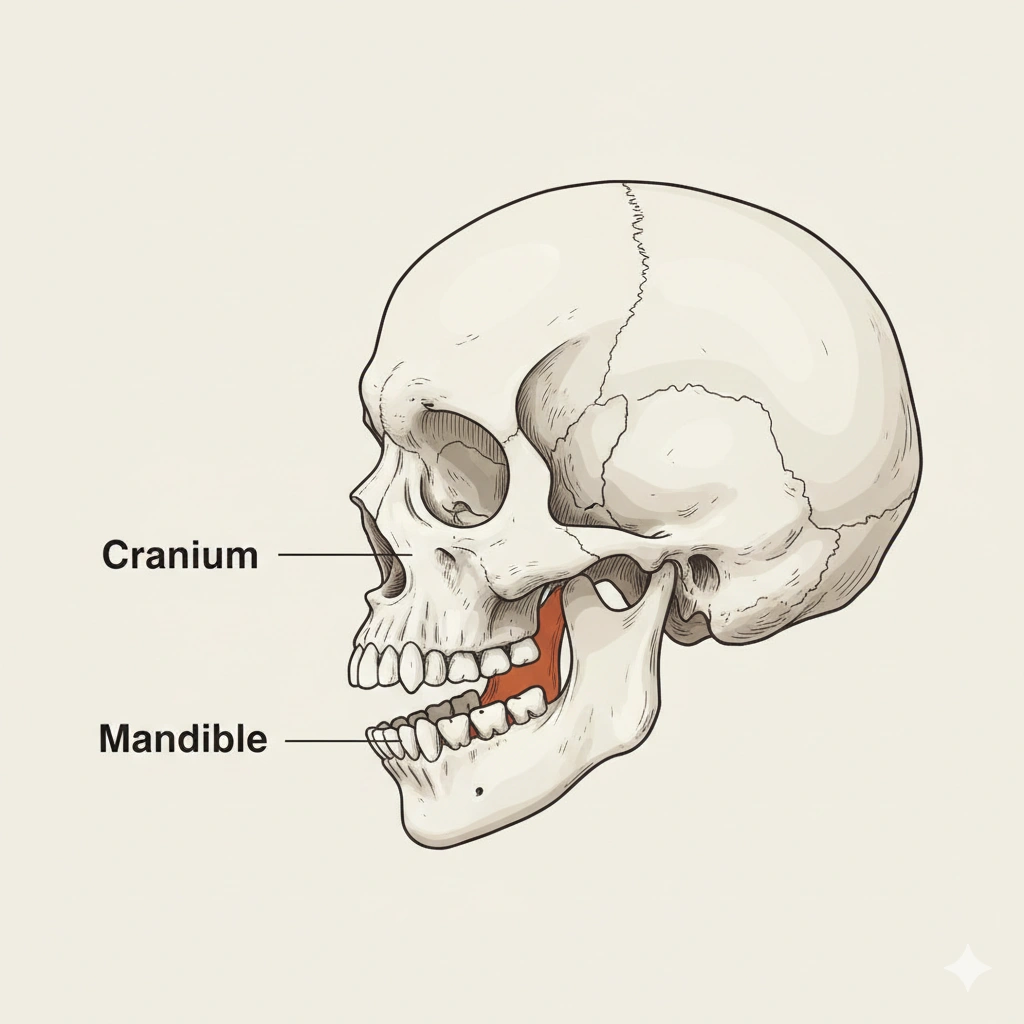
The two main parts of the mammalian skull are the mandible and the cranium.
The cranium, also known as the braincase, houses and protects the brain, while the mandible is the lower jaw that holds the teeth and facilitates chewing and articulation. These two parts form the fundamental structure of the skull in mammals.
A. The temporal bone and the occipital bone
While the temporal bone and occipital bone are important components of the skull, they are not the primary divisions. The temporal bone is located on the sides of the skull and the occipital bone forms the back of the skull. However, these bones are part of the cranium rather than being separate main parts of the skull.
B. The maxilla and the mandible
The maxilla is the upper jawbone, and the mandible is the lower jawbone. Together, they form the structure of the mouth and jaw, but they are not the primary divisions of the entire skull. The cranium, which includes other bones such as the frontal, parietal, and temporal bones, is the other main part of the skull.
C. The mandible and the cranium
This is the correct answer. The two main parts of the mammalian skull are the cranium, which houses and protects the brain, and the mandible, which is the lower jaw and plays a role in feeding and articulation.
D. The frontal bone and the temporal bone
The frontal bone forms the forehead and the upper part of the eye sockets, while the temporal bone forms part of the sides and base of the skull. These bones are important in the structure of the cranium but are not the two main parts of the skull.
Conclusion:
The two main parts of the mammalian skull are the mandible and the cranium. The cranium protects the brain, while the mandible is responsible for the lower jaw and teeth. Other bones like the maxilla, frontal bone, and temporal bone are important for the overall structure but are not considered the primary divisions of the skull.
Topic Flashcards
Click to FlipWhat are the two primary divisions of the mammalian skull?
Cranium and mandible. Cranium encloses the brain and sensory structures; mandible forms the lower jaw for mastication and movement.
Which part of the mammalian skull includes the braincase and upper jaw elements?
Cranium protects the brain, houses sensory organs (eyes, ears, nose), and includes fused bones like frontal, parietal, occipital;
In mammals, what is the only movable bone of the skull?
Mandible (lower jaw) — articulates with the cranium at the temporomandibular joint; cranium is the fixed brain-protecting portion.
How is the mammalian skull functionally divided?
Into cranium (neurocranium/braincase + rostrum/upper jaw) for protection and support, and mandible (lower jaw) for jaw movement and chewing.
Why is the mandible considered separate from the cranium in mammalian skulls?
Mandible is the single dentary bone that forms the lower jaw and is movable; cranium is the fused upper portion enclosing the brain and upper teeth.
Does the cranium include the braincase in mammals?
Yes