When does the pancreas secrete the most insulin?
-
A
When blood sugar falls
-
B
When blood sugar rises
-
C
Before food is consumed
-
D
After fat is burned
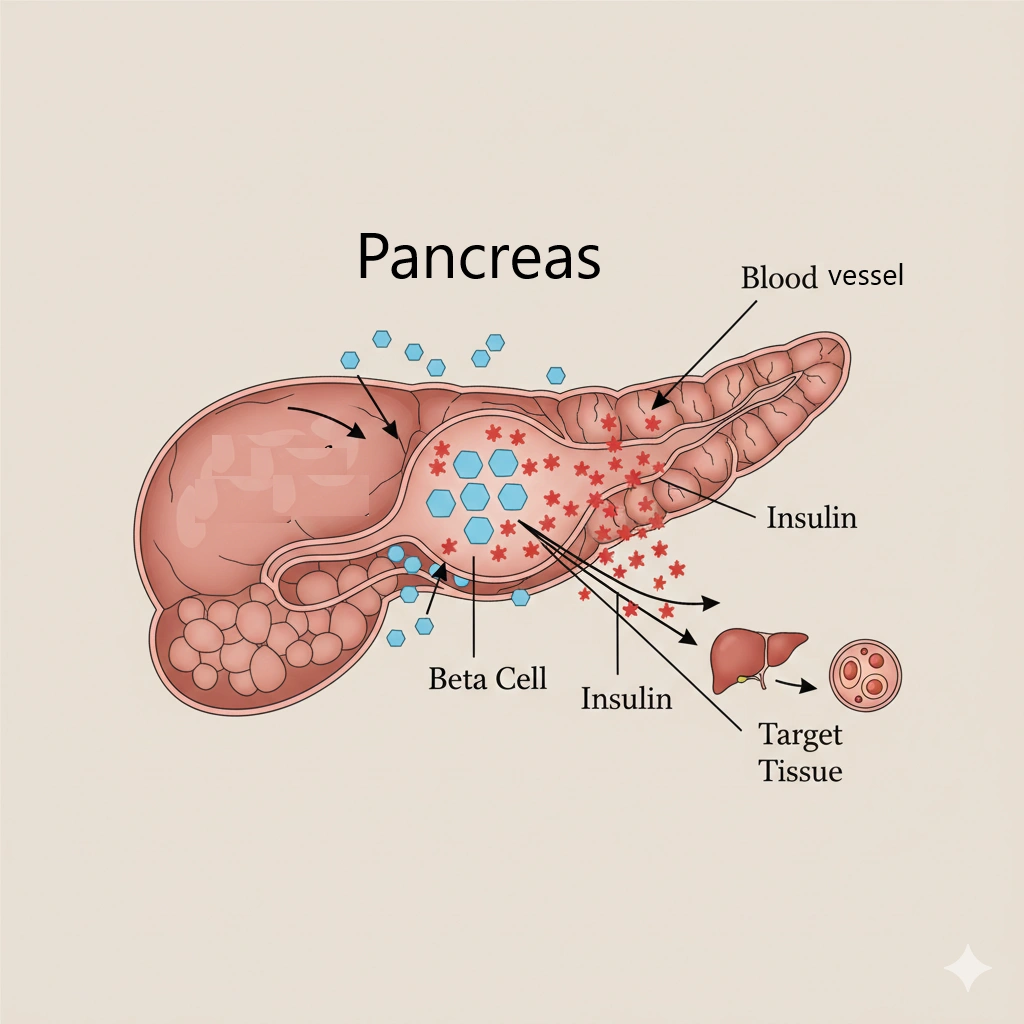
The pancreas secretes the most insulin when blood sugar rises.
After consuming food, especially carbohydrates, glucose from the food enters the bloodstream, causing blood sugar levels to increase. In response, the pancreas releases insulin, a hormone that helps cells absorb glucose for energy or storage, which in turn lowers blood sugar levels back to normal.
A. When blood sugar falls
When blood sugar falls, the pancreas secretes glucagon, not insulin. Glucagon is a hormone that helps raise blood sugar by stimulating the liver to release stored glucose. Insulin, on the other hand, is released when blood sugar levels rise to help lower it.
B. When blood sugar rises
This is the correct answer. After eating, blood sugar levels increase, prompting the pancreas to release insulin. Insulin helps cells absorb glucose and lowers blood sugar levels, which is essential for regulating blood sugar and maintaining overall metabolic balance.
C. Before food is consumed
While the pancreas may prepare to release insulin in anticipation of food, the most significant release of insulin occurs after blood sugar rises following food consumption. The pancreas does not secrete the most insulin before food is consumed, as blood sugar has not yet increased.
D. After fat is burned
Burning fat primarily affects energy metabolism, but it does not directly trigger the pancreas to release insulin. Insulin secretion is mainly regulated by blood glucose levels, not fat metabolism.
Conclusion:
The pancreas secretes the most insulin when blood sugar rises, typically after food consumption. This helps regulate blood sugar levels and ensures glucose is available to cells for energy. Other triggers, such as low blood sugar or fat burning, do not play a significant role in insulin secretion compared to blood glucose levels.
Topic Flashcards
Click to FlipUnder what condition does the pancreas release the highest amount of insulin?
When blood glucose levels rise (e.g., after a meal), beta cells in the pancreas detect the increase and secrete large amounts of insulin to facilitate glucose uptake into cells and storage as glycogen or fat.
What primary trigger causes peak insulin secretion from pancreatic beta cells?
A rise in blood sugar concentration stimulates insulin release; glucose enters beta cells, increases ATP, closes potassium channels, depolarizes the membrane, opens calcium channels, and triggers insulin granule exocytosis
When is insulin secretion highest: low blood sugar or high blood sugar?
High blood sugar :- glucose is the primary stimulus; secretion is proportional to rising plasma glucose after meals.
Does the pancreas secrete most insulin when blood glucose falls?
No:- low glucose suppresses insulin and stimulates glucagon instead; maximal secretion occurs only with elevated glucose.
Which factor triggers the greatest insulin release from beta cells?
Elevated blood glucose which directly drives biphasic secretion (rapid first phase, sustained second) via GLUT2 uptake and metabolic signaling.
Why does insulin surge after eating carbs?
Carbs raise blood glucose quickly; pancreas responds with high insulin output to promote uptake into cells and storage.