Extract:
What information does a genotype give that a phenotype does not?
-
A
The genotype necessarily includes the proteins coded for by its alleles.
-
B
The genotype will always show an organism's recessive alleles.
-
C
The genotype must include the organism's physical characteristics.
-
D
The genotype shows what an organism's parents looked like.
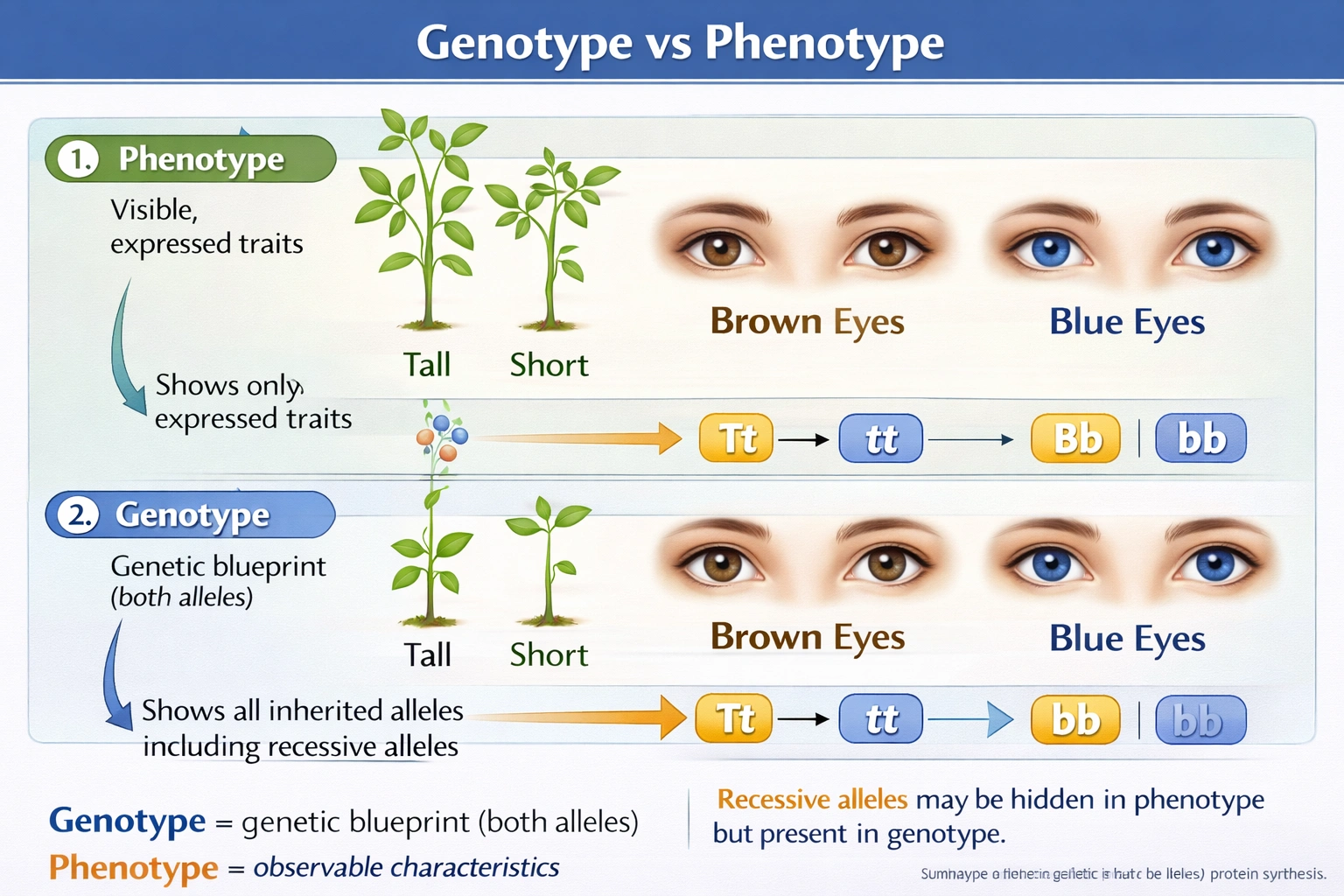
The genotype will always show an organism's recessive alleles.
The genotype reveals the complete allelic composition of an organism's genetic makeup, including both dominant and recessive alleles that may not be expressed in the observable phenotype. This genetic information provides the complete blueprint for potential traits, whereas the phenotype only represents the expressed characteristics influenced by both genetic and environmental factors.
A) The genotype necessarily includes the proteins coded for by its alleles
Genotypes specify the DNA sequences (alleles) that code for proteins but do not contain the proteins themselves. Proteins are synthesized through transcription and translation processes after the genotype is established. The genotype represents the genetic instructions for protein production, but the actual proteins are phenotypic expressions resulting from those instructions—not components of the genotype. This option confuses genetic information with its molecular products.
B) The genotype will always show an organism's recessive alleles
The genotype explicitly identifies all alleles present in an organism's DNA, including recessive alleles that remain hidden in the phenotype when masked by dominant alleles. For example, a heterozygous individual with genotype Tt (where T is dominant for tall and t is recessive for short) carries the recessive allele in their genetic code but expresses only the tall phenotype. This complete allelic information enables prediction of potential offspring traits and identification of carrier status for recessive conditions—information unavailable from phenotype observation alone.
C) The genotype must include the organism's physical characteristics
Physical characteristics constitute the phenotype, not the genotype. The genotype consists solely of the specific DNA sequences (alleles) inherited from parents, while the phenotype represents the observable expression of those alleles influenced by environmental factors. A genotype like Bb (for brown eyes) doesn't contain the physical characteristic of brown eyes—it contains the genetic instruction that, when expressed, produces that characteristic. This option inverts the relationship between genotype and phenotype.
D) The genotype shows what an organism's parents looked like
The genotype reveals which alleles were inherited from parents, not the parents' physical appearances. Parents with identical phenotypes can have different genotypes (e.g., both tall parents could be TT or Tt), and the genotype only shows the specific alleles passed to offspring—not parental appearance. For instance, a child with genotype tt (short) could have two tall parents who were both heterozygous (Tt), demonstrating that genotype information doesn't directly reveal parental phenotypes.
Conclusion:
Genotype provides the complete genetic blueprint including hidden recessive alleles that determine inheritance patterns and potential trait expression in offspring, while phenotype only shows currently expressed characteristics. This distinction is critical for understanding genetic inheritance, carrier status for recessive disorders, and predicting future trait expression. Option B correctly identifies that genotypes reveal recessive alleles that phenotypes may not express—enabling genetic counseling, selective breeding, and understanding of hereditary patterns that would be impossible from phenotypic observation alone.
