What is urea?
-
A
Colorless liquid in urine
-
B
End product of protein metabolism
-
C
Molecule produced by the kidneys
-
D
Fluid stored in the bladder
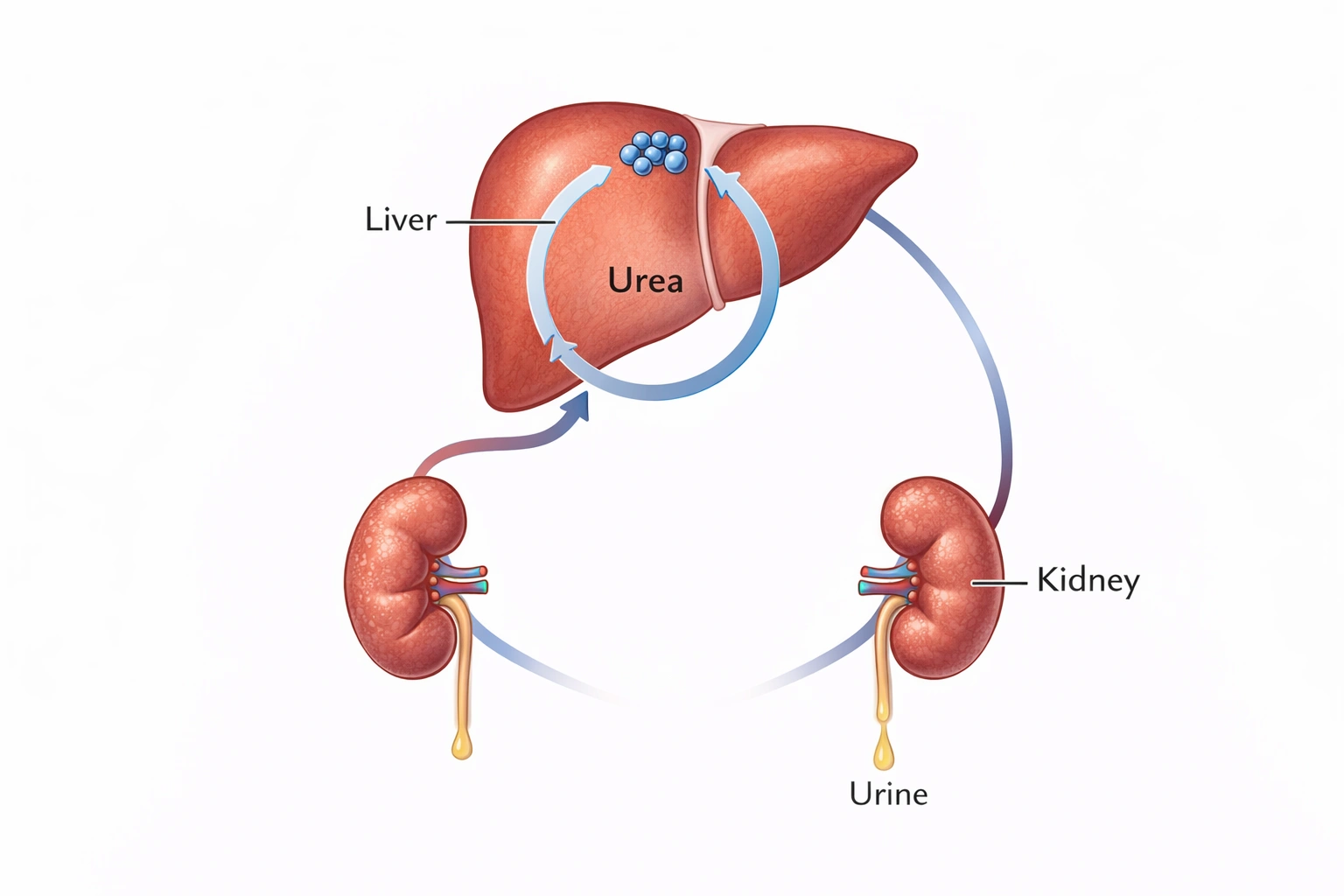
Urea is the end product of protein metabolism.
It is produced by the liver as a waste product of the breakdown of amino acids during protein metabolism. Urea is then transported via the bloodstream to the kidneys, where it is filtered out and excreted in urine.
A. Colorless liquid in urine
While urea is present in urine, it is not a colorless liquid by itself. Urine contains many substances, including urea, water, salts, and other waste products. The color of urine is primarily due to urochrome, a pigment, not urea.
B. End product of protein metabolism
This is the correct answer. Urea is produced when the body metabolizes proteins, particularly when amino acids are broken down. The ammonia produced in this process is converted into urea by the liver and is excreted by the kidneys.
C. Molecule produced by the kidneys
The kidneys filter urea from the blood, but they do not produce it. Urea is produced in the liver, not the kidneys. The kidneys are responsible for excreting it through urine.
D. Fluid stored in the bladder
Urea is a component of urine, but it is not a fluid stored in the bladder. The bladder stores urine, which contains urea, water, and other substances. However, urea itself is not the fluid stored in the bladder.
Conclusion:
Urea is the end product of protein metabolism, produced by the liver, and excreted by the kidneys in urine. It is not the fluid stored in the bladder or a colorless liquid in urine, although it is a component of urine.

Topic Flashcards
Click to FlipIn which organ is urea primarily synthesized?
The liver.
What is the name of the metabolic cycle in the liver that converts toxic ammonia into urea?
The urea cycle (ornithine cycle).
What is the primary nitrogenous waste product in human urine?
Urea.
Elevated blood urea nitrogen (BUN) is often a laboratory indicator of dysfunction in which two organ systems?
The kidneys (excretion) and/or the liver (production).
Why must toxic ammonia produced from protein breakdown be converted to urea?
Ammonia is highly toxic to cells, especially neurons. Urea is a less toxic, water-soluble compound that can be safely transported in blood and excreted by the kidneys.