Extract:
I. Mouth
II. Stomach
III. Small Intestine
Which locations in the digestive system are sites of chemical digestion?
-
A
II only
-
B
III only
-
C
II and III only
-
D
I, II, and III
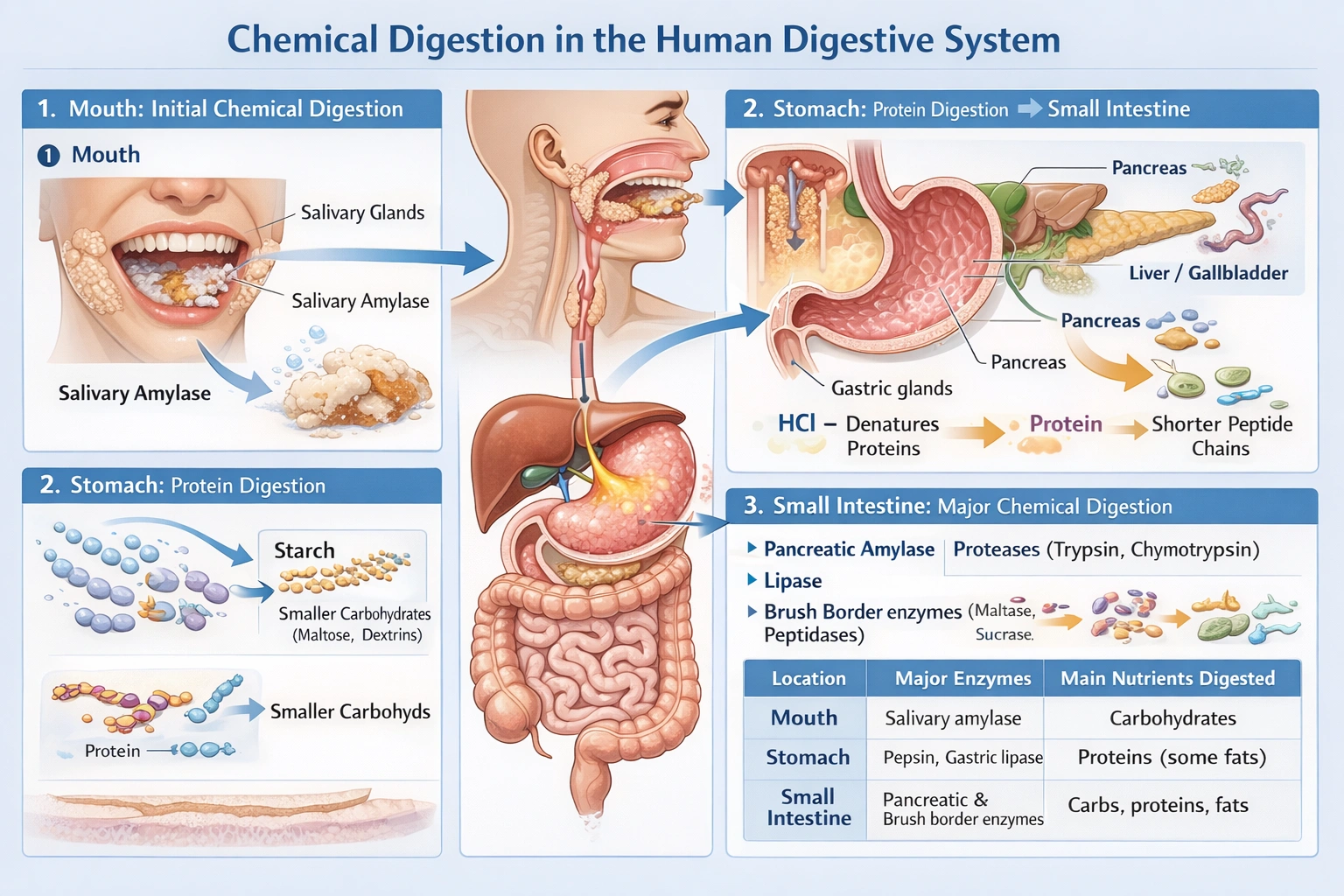
Chemical digestion occurs in the mouth, stomach, and small intestine.
All three locations contribute enzymatic and secretory processes that break down macromolecules into absorbable subunits through hydrolysis reactions.
A) II only
This option recognizes gastric chemical digestion via pepsin and hydrochloric acid but omits salivary amylase activity in the mouth and the extensive enzymatic digestion occurring in the small intestine involving pancreatic enzymes and brush border enzymes.
B) III only
This option acknowledges the small intestine as the primary site of chemical digestion but neglects initial carbohydrate breakdown by salivary amylase in the oral cavity and protein denaturation/digestion by gastric juices in the stomach.
C) II and III only
This option correctly includes stomach and small intestine digestion but excludes the mouth, where salivary amylase begins starch hydrolysis into maltose and dextrins—a genuine chemical digestive process that continues until gastric acid inactivates the enzyme.
D) I, II, and III
The mouth initiates chemical digestion through salivary amylase acting on starch. The stomach continues digestion via pepsinogen conversion to pepsin for protein cleavage and gastric lipase for limited fat digestion. The small intestine completes digestion using pancreatic amylase, lipase, proteases, and brush border enzymes (maltase, sucrase, peptidases) to yield monosaccharides, fatty acids, and amino acids.
Conclusion:
Chemical digestion represents a sequential, multi-site process beginning in the mouth with carbohydrate breakdown, continuing in the stomach with protein denaturation and cleavage, and culminating in the small intestine where the majority of enzymatic hydrolysis occurs. All three locations contribute essential chemical digestive functions.