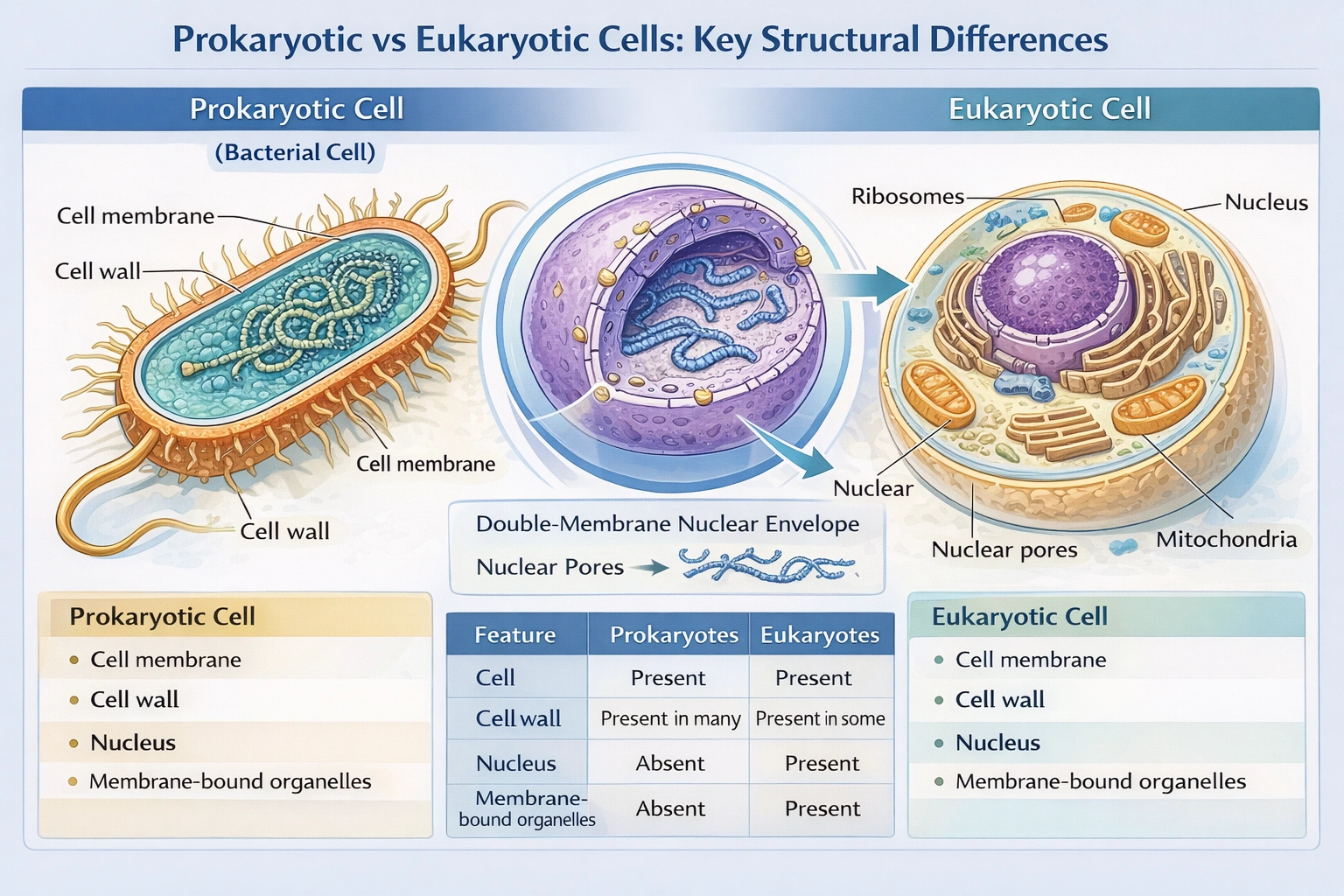
Which of the following structures is unique to eukaryotic cells?
-
A
Cell walls
-
B
Nuclei
-
C
Cell membranes
-
D
Organelles
Nuclei are unique to eukaryotic cells.
The nucleus is a membrane-bound compartment housing linear chromosomes and represents the defining structural feature distinguishing eukaryotes from prokaryotes.
A) Cell walls
Cell walls exist in numerous prokaryotes (bacterial peptidoglycan layers) as well as in eukaryotic plants (cellulose), fungi (chitin), and some protists. Their presence across domains makes them non-unique to eukaryotes.
B) Nuclei
Eukaryotic cells contain a true nucleus enclosed by a double-membrane nuclear envelope perforated by nuclear pores that regulate macromolecular transport. Prokaryotes lack any nuclear membrane; their circular DNA resides in a nucleoid region directly exposed to the cytoplasm without compartmentalization.
C) Cell membranes
All cellular life forms bacteria, archaea, and eukaryotes—possess phospholipid bilayer membranes that establish cellular boundaries and regulate transport. This universal feature cannot distinguish eukaryotes.
D) Organelles
The term "organelles" requires qualification. Membrane-bound organelles (mitochondria, endoplasmic reticulum, Golgi apparatus) characterize eukaryotes exclusively. However, prokaryotes contain functional subcellular structures such as ribosomes, inclusion bodies, and protein complexes that qualify as non-membrane-bound organelles in broader biological definitions, making this option ambiguous without specification.
Conclusion:
While eukaryotes possess multiple distinctive features, the membrane-enclosed nucleus remains the singular structure completely absent in prokaryotic organisms and universally present in eukaryotes, serving as the taxonomic hallmark of eukaryotic cellular organization.