Extract:
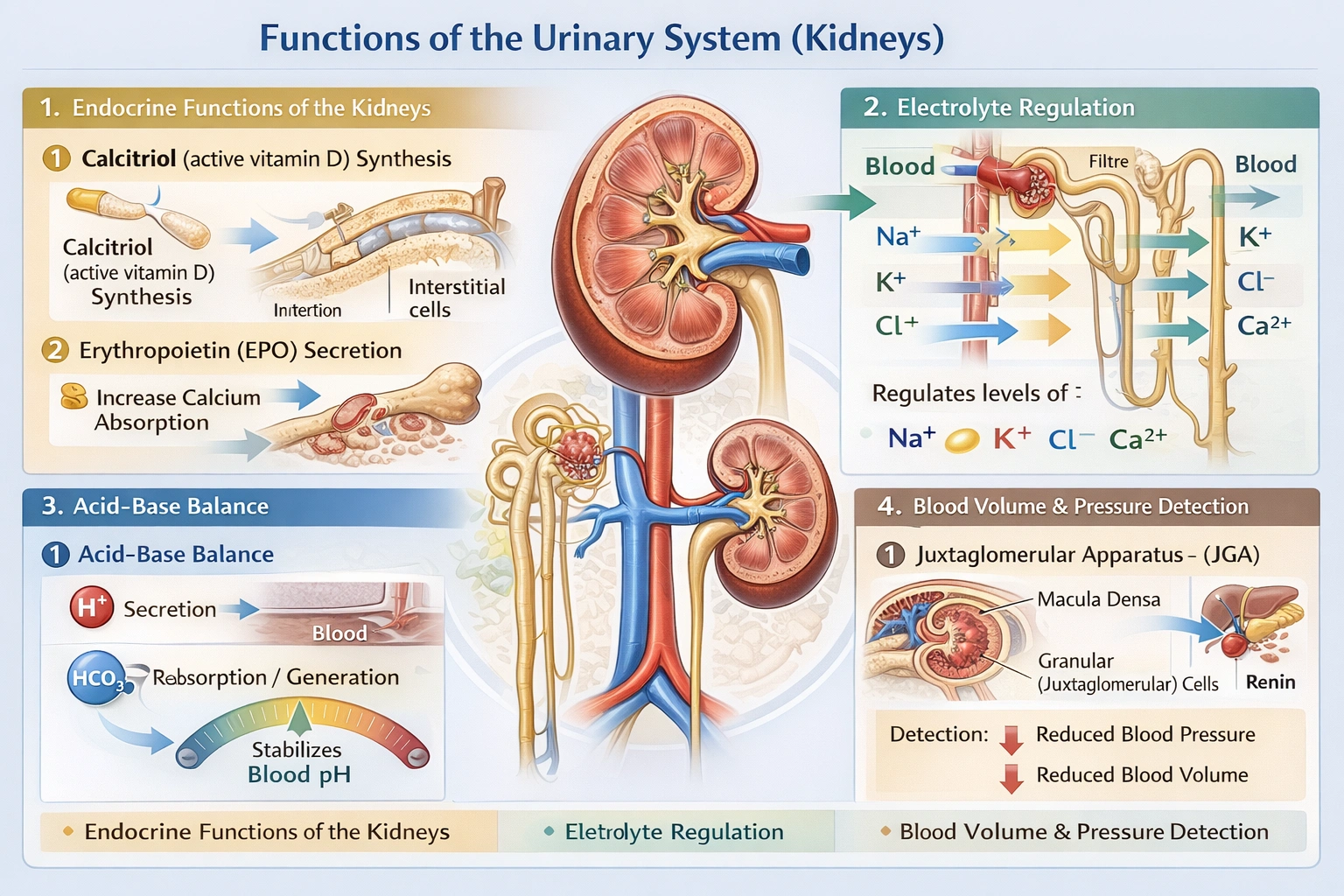
I. Synthesizing calcitriol and secreting erythropoietin
II. Regulating the concentrations of sodium, potassium, chloride, calcium, and other ions
III. Reabsorbing or secreting hydrogen ions and bicarbonate
IV. Detecting reductions in blood volume and pressure
Which of the following are functions of the urinary system?
-
A
I, II, and III
-
B
II and III
-
C
II, III, and IV
-
D
All of the above
The urinary system performs all four listed functions.
The kidneys serve as multifunctional organs integrating excretory, endocrine, regulatory, and sensory roles to maintain systemic homeostasis.
A) I, II, and III
This option correctly identifies endocrine functions (calcitriol synthesis for calcium absorption; erythropoietin secretion for red blood cell production), electrolyte regulation through tubular reabsorption/secretion, and acid-base balance via hydrogen ion and bicarbonate handling. However, it omits the juxtaglomerular apparatus's role in detecting hemodynamic changes.
B) II and III
This option recognizes electrolyte and acid-base regulation but excludes endocrine functions (I) and volume/pressure sensing capabilities (IV), both well-established renal activities.
C) II, III, and IV
This option includes electrolyte regulation, acid-base balance, and hemodynamic sensing through juxtaglomerular granular cells that detect reduced renal perfusion pressure. It omits the kidneys' endocrine role in producing calcitriol (active vitamin D) in proximal tubules and erythropoietin in interstitial fibroblasts.
D) All of the above
The kidneys synthesize calcitriol from vitamin D precursors to enhance intestinal calcium absorption and secrete erythropoietin to stimulate bone marrow erythropoiesis. Nephrons precisely regulate ion concentrations via filtration and selective tubular transport. Acid-base homeostasis occurs through hydrogen ion secretion and bicarbonate reabsorption/generation in proximal tubules and collecting ducts. The juxtaglomerular apparatus contains baroreceptors that detect decreased blood volume/pressure, triggering renin release to activate the renin-angiotensin-aldosterone system.
Conclusion:
The urinary system extends far beyond waste excretion to encompass endocrine secretion, electrolyte homeostasis, pH regulation, and cardiovascular monitoring. All four functions represent integral physiological roles of the kidneys in maintaining the body's internal environment.