Which of the following are considered normal values for the measure of a person's pulse and blood pressure?
-
A
55 beats per minute and 75 over 60 mm Hg
-
B
72 beats per minute and 120 over 80 mm Hg
-
C
100 beats per minute and 140 over 100 mm Hg
-
D
160 beats per minute and 100 over 70 mm Hg
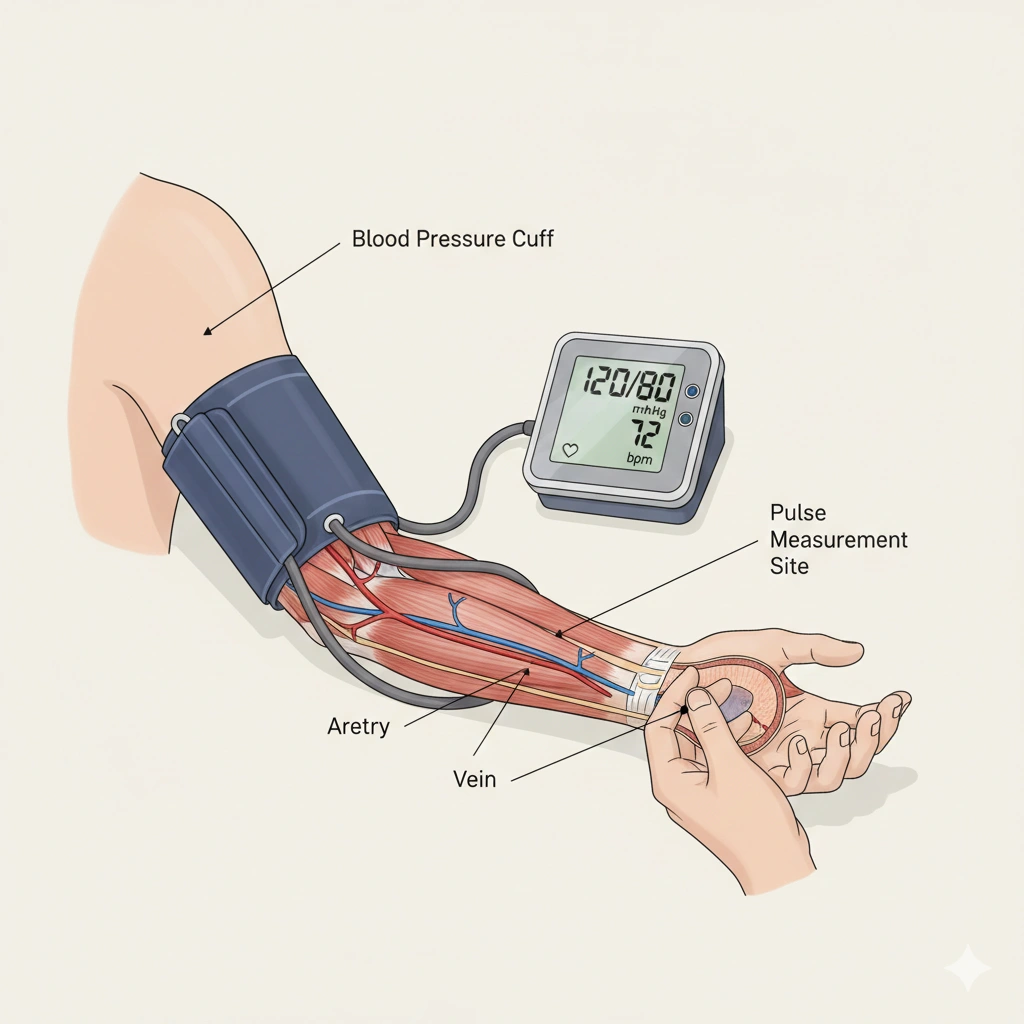
The normal values for pulse and blood pressure are 72 beats per minute and 120 over 80 mm Hg.
A normal resting heart rate for adults typically ranges from 60 to 100 beats per minute, and normal blood pressure is considered to be around 120/80 mm Hg. These values indicate a healthy cardiovascular system in a relaxed state.
A. 55 beats per minute and 75 over 60 mm Hg
A pulse rate of 55 beats per minute is lower than the typical resting heart rate of 60-100 beats per minute. While it can be normal for athletes or highly conditioned individuals, for most people, it may indicate bradycardia (abnormally slow heart rate). A blood pressure reading of 75/60 mm Hg is on the lower side but can be normal for some individuals, especially if they do not experience symptoms like dizziness or fainting. However, overall, this combination may not be ideal for the average person.
B. 72 beats per minute and 120 over 80 mm Hg
This is the correct answer. A pulse rate of 72 beats per minute falls within the normal resting range of 60-100 beats per minute. A blood pressure of 120/80 mm Hg is considered the standard for normal blood pressure and indicates a healthy cardiovascular state, with no signs of hypertension or hypotension.
C. 100 beats per minute and 140 over 100 mm Hg
A pulse rate of 100 beats per minute is at the higher end of the normal resting range and may indicate mild tachycardia (fast heart rate). A blood pressure of 140/100 mm Hg is considered high blood pressure (hypertension) and may require medical attention. This combination of pulse and blood pressure would not be considered normal for most individuals.
D. 160 beats per minute and 100 over 70 mm Hg
A pulse rate of 160 beats per minute is significantly higher than the normal resting heart rate, indicating tachycardia (abnormally fast heart rate). A blood pressure of 100/70 mm Hg is within the normal range, but the elevated heart rate would be concerning. This combination suggests a possible health issue that requires attention, especially if it occurs at rest.
Conclusion:
The combination of a pulse rate of 72 beats per minute and blood pressure of 120/80 mm Hg represents normal values for most individuals. Other options indicate either abnormal pulse rates or elevated blood pressure, which could suggest underlying health concerns.

Topic Flashcards
Click to FlipWhat is the normal resting pulse range for most healthy adults?
60–100 beats per minute — values like 72 bpm fall comfortably in this range; below 60 may indicate bradycardia (unless athletic), above 100 tachycardia.
Which combination represents normal adult pulse and blood pressure: 72 bpm & 120/80, or 100 bpm & 140/100?
72 bpm & 120/80 mm Hg — both within standard ranges (pulse 60–100, BP <120/80); the other shows tachycardia and stage 2 hypertension
What blood pressure reading is classified as normal for adults?
Less than 120/80 mm Hg — 120 over 80 is the upper limit of normal; higher indicates elevated or hypertension.
Why is 55 bpm and 75/60 mm Hg not typically normal for an average adult?
Pulse of 55 bpm is below the usual 60–100 range (possible in athletes but low otherwise); BP 75/60 is low-normal but paired with low pulse may suggest issues.
What indicates abnormal values in pulse and blood pressure readings?
Pulse >100 bpm (tachycardia) or <60 bpm (bradycardia, non-athletic); BP ≥130/80 mm Hg (hypertension) or <90/60 mm Hg (hypotension).