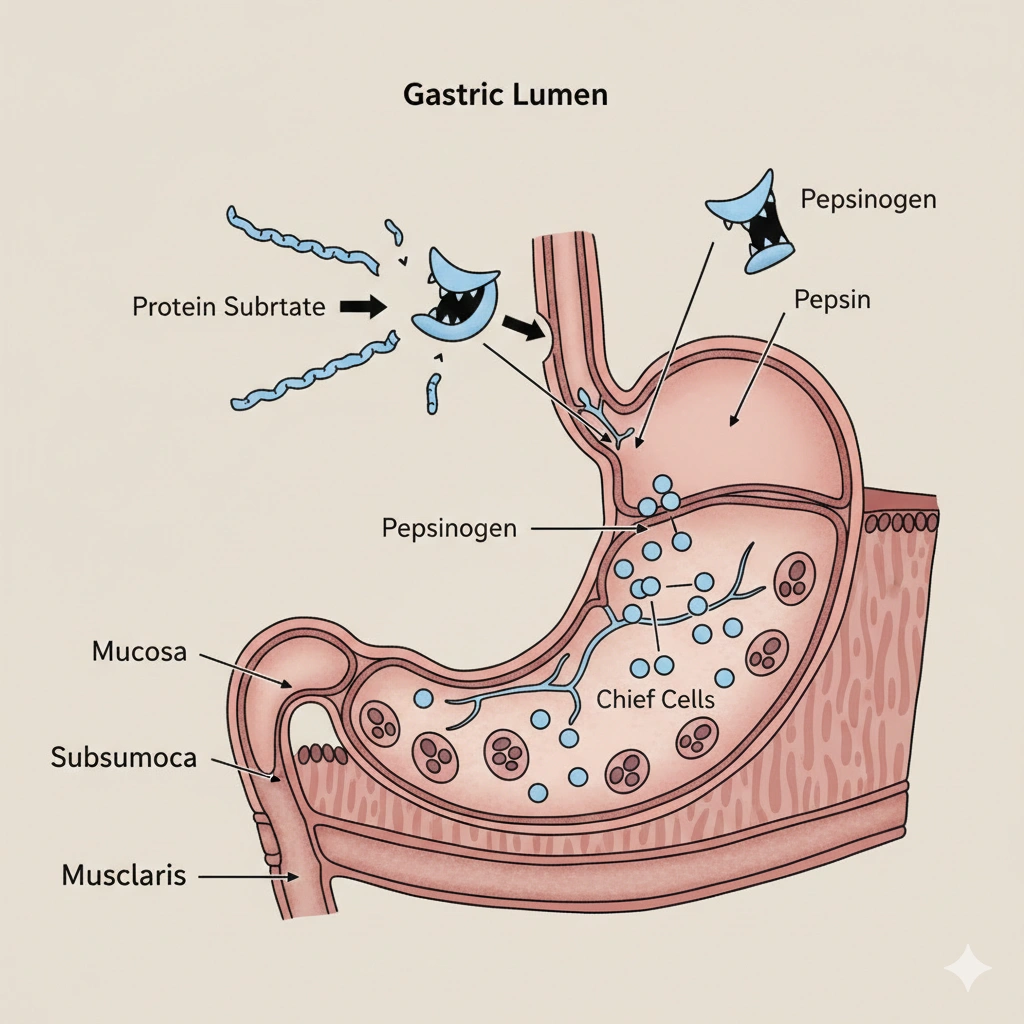
How is pepsin used by the body?
-
A
To break down proteins
-
B
To break down starches
-
C
To emulsify fats and oils
-
D
To absorb water and nutrients
Pepsin is used by the body to break down proteins.
It is an enzyme secreted by the stomach that helps in the digestion of proteins by breaking them down into smaller peptides. Pepsin works optimally in the acidic environment of the stomach, facilitating protein digestion, which is crucial for absorbing amino acids for various bodily functions.
A. To break down proteins
This is the correct answer. Pepsin is a digestive enzyme produced in the stomach, where it plays a key role in breaking down proteins into smaller peptides. This process is essential for the body to absorb the amino acids that are needed for growth, repair, and maintenance of tissues.
B. To break down starches
Pepsin is not involved in breaking down starches. Starch digestion begins in the mouth with the enzyme amylase, not in the stomach. Pepsin specifically targets proteins, not carbohydrates like starch.
C. To emulsify fats and oils
Pepsin does not emulsify fats and oils. The process of emulsifying fats is primarily carried out by bile, which is produced by the liver and stored in the gallbladder. Bile breaks down large fat molecules into smaller droplets, making them easier to digest by lipases, enzymes that break down fats.
D. To absorb water and nutrients
Pepsin is not involved in absorption. The absorption of water and nutrients occurs primarily in the small intestine, where the absorbed nutrients enter the bloodstream. Pepsin's role is limited to the breakdown of proteins in the stomach.
Conclusion:
Pepsin is an enzyme used by the body to break down proteins into smaller peptides, which is essential for protein digestion and nutrient absorption. It does not play a role in the breakdown of starches, emulsification of fats, or the absorption of water and nutrients.
Topic Flashcards
Click to FlipWhat is the primary function of pepsin in the digestive system?
Breaks down proteins — pepsin is a stomach enzyme that hydrolyzes dietary proteins into smaller peptides for further digestion in the intestines.
In which organ does pepsin mainly act to digest food?
Stomach — activated in acidic conditions (pH 1.5–2.5), pepsin cleaves peptide bonds in proteins from food like meat, eggs, and dairy.
What type of enzyme is pepsin, and what does it target?
Proteolytic (protease) enzyme — specifically targets and breaks down proteins into peptides and some amino acids as the first step of protein digestion.
Why is pepsin essential for protein digestion?
It initiates breakdown of large proteins into absorbable peptides; without it, proteins remain intact longer, though pancreatic enzymes continue digestion later.
How does pepsin differ from amylase or lipase in digestion?
Pepsin digests proteins (protease); amylase breaks down starches (carbohydrase), lipase emulsifies and digests fats — pepsin works only on proteins in the acidic stomach.