100%
4
Rated
Attempts
127
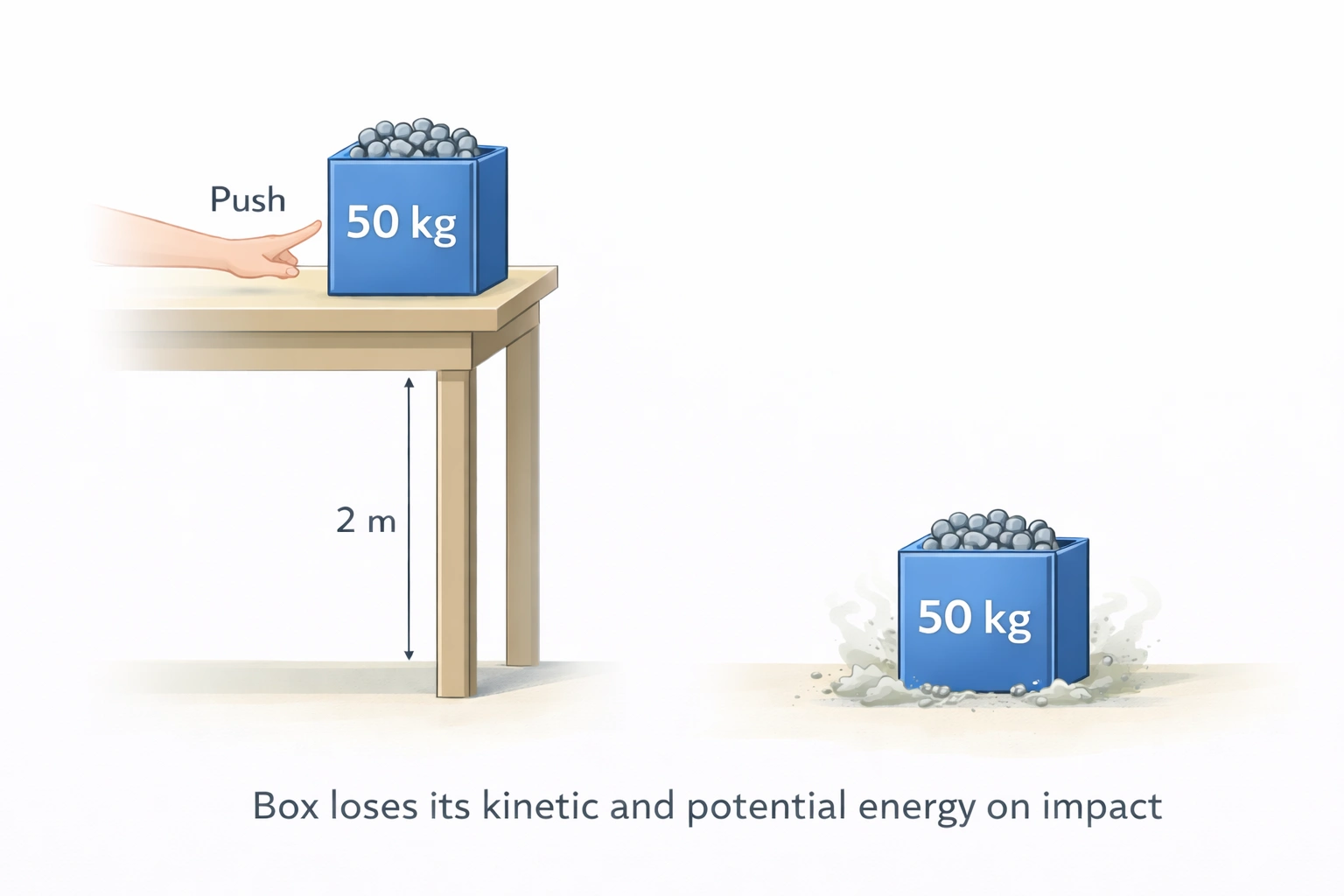
A 50-kg box of iron fishing weights is balanced at the edge of a table. Peter gives it a push and it falls 2 meters to the floor. Which of the following statements is true?
-
A
Once the box hit the floor, it lost its kinetic and potential energy.
-
B
The box had kinetic energy when it was balanced at the edge of the table.
-
C
The box had both kinetic and potential energy after it fell.
-
D
Once the box hit the floor, it still had kinetic energy.
A
Once the box hit the floor, it lost its kinetic and potential energy.
B
The box had kinetic energy when it was balanced at the edge of the table.
C
The box had both kinetic and potential energy after it fell.
D
Once the box hit the floor, it still had kinetic energy.
Topic Flashcards
Click to FlipMini Quiz
1 / 3
Does a motionless object at a height above the ground possess kinetic energy?
Related Questions
Top Picks
An airplane travels 500 miles northeast and then, on the return trip, travels 500 miles southwest. Which of the following is true?
When the heat of a reaction is negative, which statement is true?
A car, starting from rest, accelerates at 10 m/s² for 5 seconds. What is the velocity of the car after 5 seconds?
Longitudinal waves have vibrations that move ____.
A 10-kg object moving at 5 m/s has an impulse acted on it causing the velocity to change to 15 m/s. What was the impulse that was applied to the object?
Available FREE Test
Sets
Available Test
Sets