A child complains of heavy breathing even when relaxing. They are an otherwise healthy child with no history of respiratory problems. What might be the issue?
-
A
Asthma
-
B
Blood clot
-
C
Hyperventilation
-
D
Exercising too hard
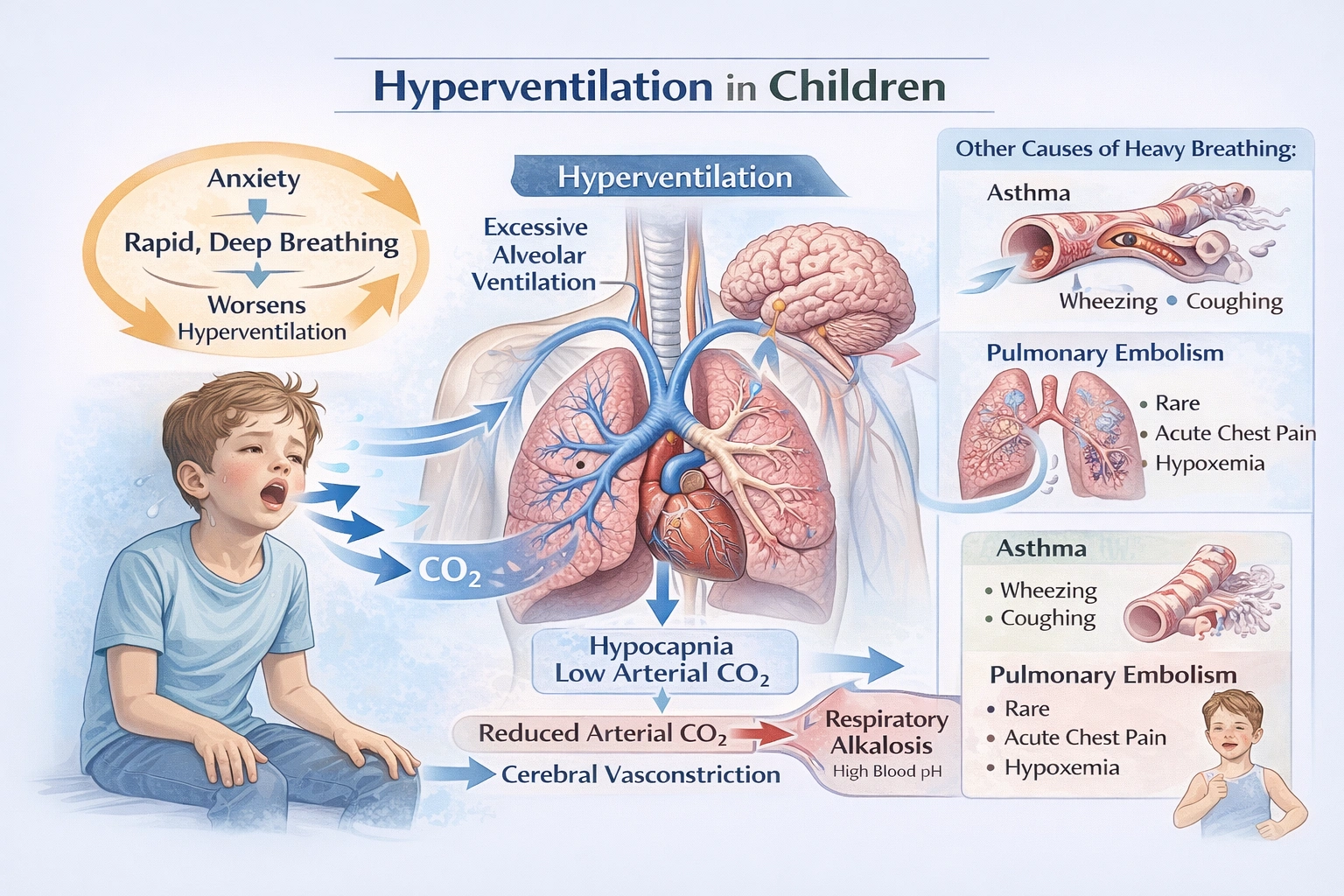
Hyperventilation likely explains the heavy breathing in a healthy child at rest, often triggered by anxiety, stress, or emotional distress without underlying respiratory pathology.
Hyperventilation syndrome involves excessive alveolar ventilation relative to metabolic demand, producing rapid or deep breathing that lowers arterial carbon dioxide levels (hypocapnia), potentially causing dizziness, paresthesia, or chest discomfort—symptoms that may further amplify anxiety in a self-perpetuating cycle.
A) Asthma
Asthma typically presents with recurrent episodes of wheezing, chest tightness, coughing, and dyspnea triggered by allergens, exercise, or respiratory infections—symptoms absent in this otherwise healthy child with no respiratory history. Asthmatic breathing difficulties usually involve expiratory difficulty due to bronchoconstriction and airway inflammation, not isolated heavy breathing at rest. Diagnosis requires characteristic symptom patterns, spirometry showing reversible obstruction, or positive bronchoprovocation testing—none indicated here.
B) Blood clot
Pulmonary embolism from a blood clot would be exceptionally rare in a healthy child without risk factors (e.g., recent surgery, immobilization, thrombophilia). Such an event typically presents with acute pleuritic chest pain, hemoptysis, tachycardia, hypoxemia, and sudden dyspnea—not isolated heavy breathing during relaxation. Absence of trauma, prolonged immobility, or hypercoagulable conditions makes this etiology highly improbable in a pediatric patient with otherwise normal health.
C) Hyperventilation
Hyperventilation commonly occurs in children and adolescents during emotional stress, anxiety, or panic episodes—even without diagnosed anxiety disorders. The child may breathe heavily while resting due to heightened autonomic arousal, often unaware of the breathing pattern change. Hypocapnia from excessive CO₂ elimination can cause cerebral vasoconstriction (leading to lightheadedness) and peripheral tingling from respiratory alkalosis-induced calcium binding. This condition requires no structural pathology and often resolves with reassurance, slow breathing techniques, or addressing underlying emotional triggers—consistent with the presentation of an otherwise healthy child.
D) Exercising too hard
This option contradicts the clinical scenario specifying breathing difficulty "even when relaxing." Exercise-induced dyspnea resolves within minutes of activity cessation as oxygen debt repays and lactate clears; persistent heavy breathing during rest cannot be attributed to prior exertion. The explicit description of symptoms occurring during relaxation eliminates exercise as a plausible cause.
Conclusion:
In pediatric patients presenting with unexplained heavy breathing at rest without respiratory history or systemic symptoms, hyperventilation secondary to psychological or emotional factors represents the most probable diagnosis. This functional breathing disorder lacks structural pathology yet produces genuine physiological effects through altered gas exchange dynamics. Recognition prevents unnecessary invasive testing for rare conditions like pulmonary embolism while enabling appropriate behavioral interventions. Option C aligns with the clinical presentation of a healthy child experiencing dyspnea exclusively during relaxation—a hallmark of hyperventilation rather than organic respiratory or cardiovascular disease.