A researcher identifies an unknown solution to have a pH of 3. What characteristic does the researcher most likely write down about this solution?
-
A
Sour in taste
-
B
Weak electrolyte
-
C
Minimally corrosive
-
D
Slippery to the touch
The researcher would most likely note that the solution is sour in taste.
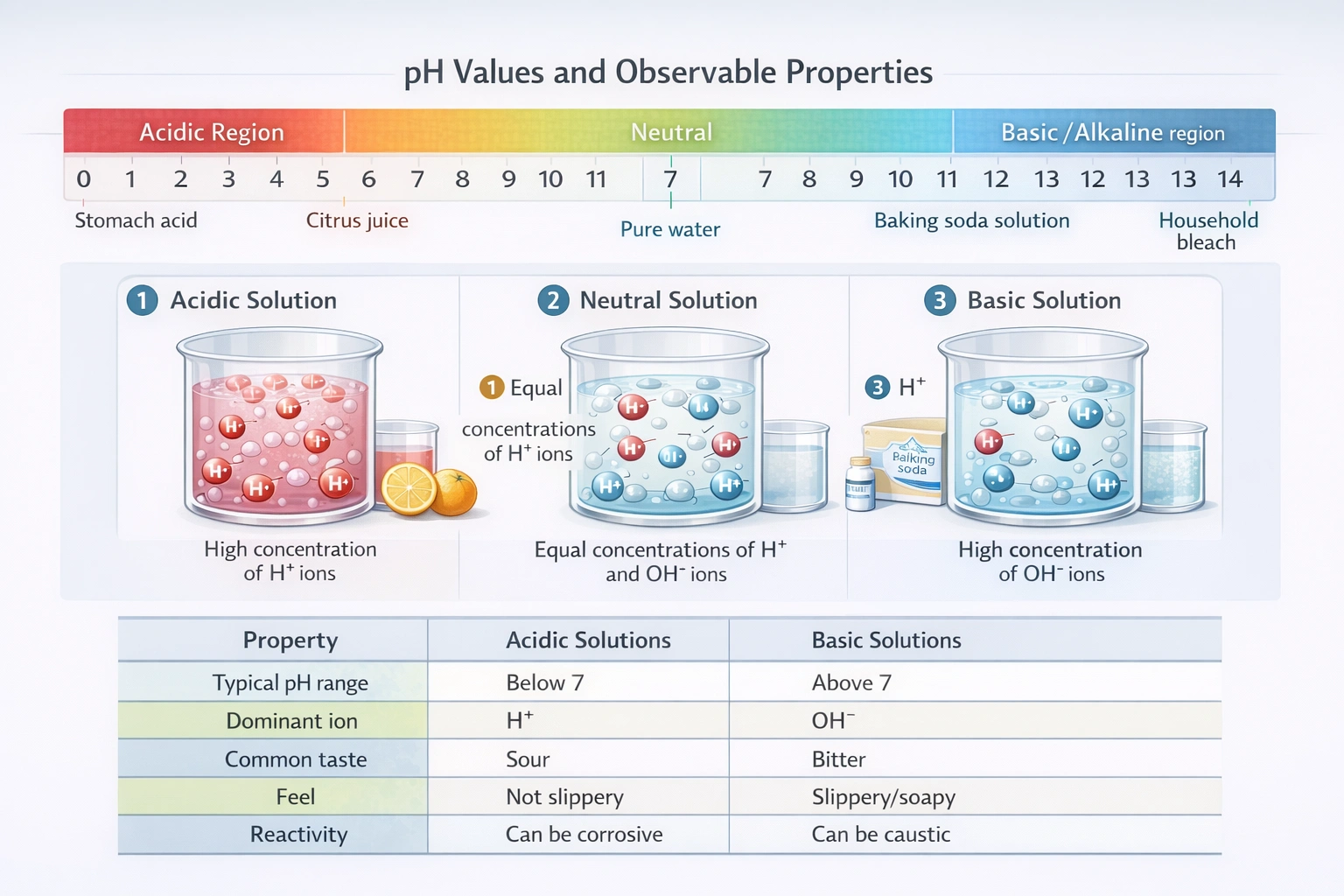
The pH scale measures the acidity or basicity of an aqueous solution. A pH of 3 indicates a relatively high concentration of hydrogen ions (H⁺), meaning the solution is acidic. Characteristic properties are associated with acids and bases.
A) Sour in taste
This is a classic, distinguishing sensory property of many acids. For example, citric acid in citrus fruits, acetic acid in vinegar, and lactic acid in sour milk all impart a sour taste. While tasting unknown laboratory chemicals is never safe or recommended, the sour taste is a well-known characteristic property used to describe acids in general.
B) Weak electrolyte
The strength of an electrolyte depends on its degree of dissociation into ions in solution. A pH of 3 tells us the concentration of H⁺ ions but not necessarily the source. This pH could result from a strong acid (like HCl) that is a strong electrolyte (100% dissociated) at a low concentration, or from a weak acid (like acetic acid) that is a weak electrolyte (partially dissociated) at a higher concentration. pH alone cannot distinguish between a strong and weak electrolyte.
C) Minimally corrosive
This is generally false for a solution with pH 3. Strongly acidic solutions (low pH) are often corrosive, meaning they can cause chemical burns and degrade materials. While corrosivity depends on the specific acid and its concentration, a pH of 3 indicates significant acidity and a potential for corrosive behavior, not minimal corrosiveness.
D) Slippery to the touch
A slippery, soapy feel is a characteristic property of bases (alkaline solutions), not acids. This sensation occurs because bases can saponify fats on the skin, effectively turning them into soap. An acidic solution would not produce this sensation.
Conclusion:
Among the given options, the property most directly and universally associated with acidic solutions and thus a solution with a pH of 3 is a sour taste. The other properties are either not determined by pH alone (electrolyte strength), are inversely related (corrosiveness), or are properties of bases (slipperiness).
Topic Flashcards
Click to FlipA solution has a pH of 3. Is it acidic, basic, or neutral? What is the primary particle that defines this?
Acidic. A pH below 7 indicates acidity, which is defined by a relatively high concentration of hydrogen ions (H⁺).
What is one characteristic sensory property (though never to be tested in a lab) commonly associated with acidic solutions like one with pH 3?
A sour taste (e.g., lemons, vinegar).
Why is "slippery to the touch" an incorrect description for a pH 3 solution?
A slippery, soapy feel is a characteristic property of bases, not acids.
Can you determine if an acid is a strong or weak electrolyte based on its pH value alone? Why or why not?
No. pH only measures H⁺ concentration. A low pH could come from a small amount of a strong acid (100% dissociated) or a larger amount of a weak acid (partially dissociated).
Are solutions with a low pH (like pH 3) generally considered minimally corrosive or potentially corrosive?
Potentially corrosive. Strongly acidic solutions can cause chemical burns and damage materials.
Would a researcher describe a pH 3 solution as "slippery to the touch"?
No.