Extract:

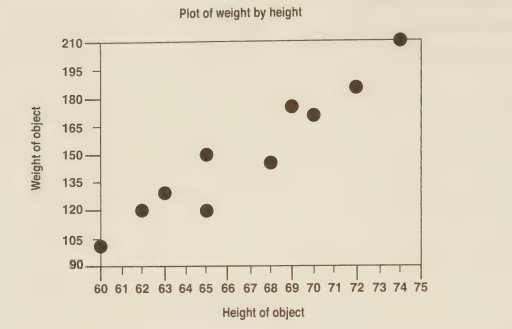
Based on the following graph, what does this data show?
-
A
Weight is independent of height.
-
B
As height increases, weight also increases.
-
C
Weight is indirectly correlated with height.
-
D
A negative variation exists between weight and height.
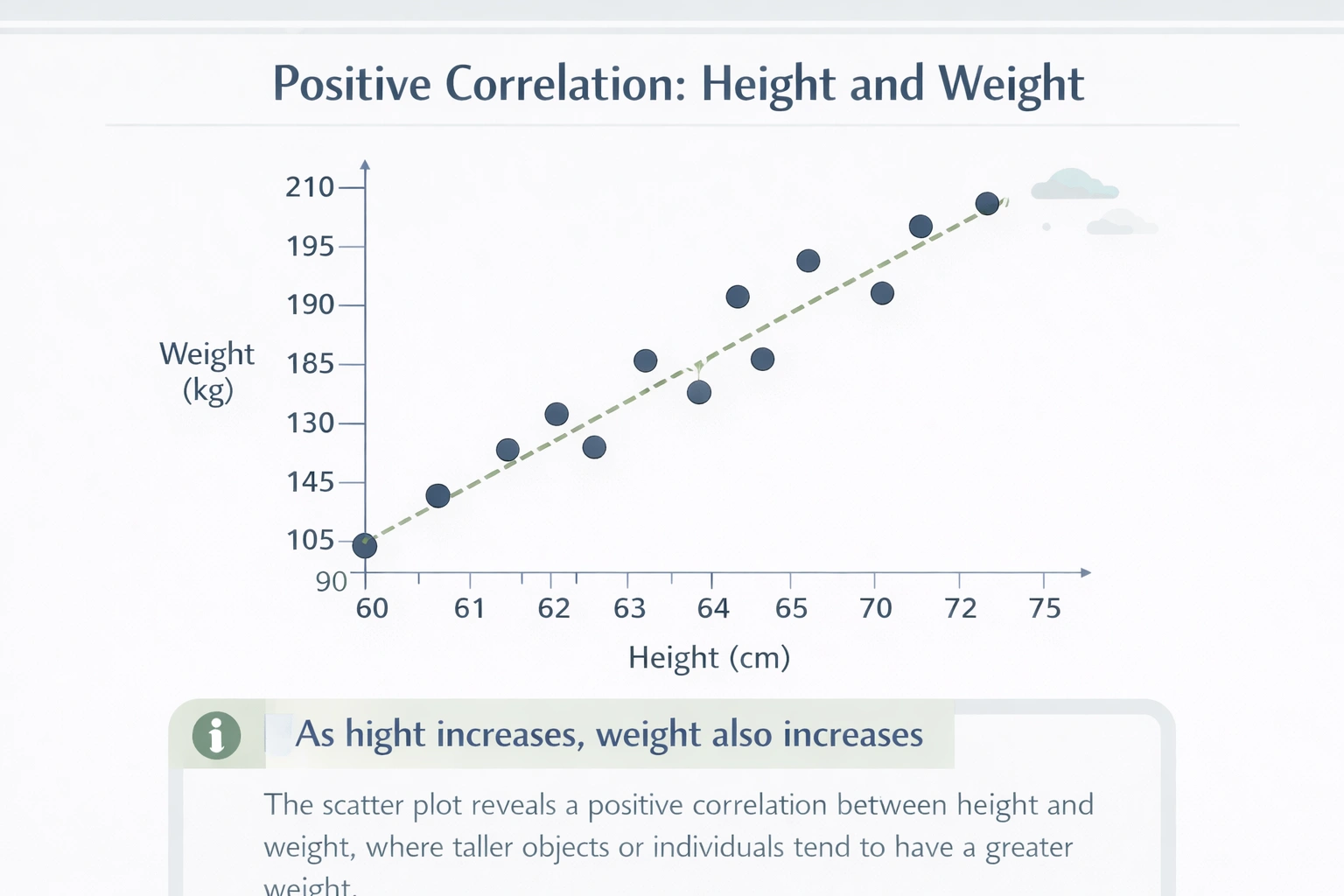
The data shows that as height increases, weight also increases.
A scatter plot with a positive slope, where data points trend from the lower left to the upper right, visually represents a positive correlation. This means that as the value of the variable on the x-axis (e.g., height) increases, the value of the variable on the y-axis (e.g., weight) tends to increase as well. In anthropometric data, this is a common and expected direct relationship, as taller individuals typically have larger body frames, bone structure, and muscle mass, leading to a greater overall weight.
A) Weight is independent of height.
Independence between two variables is indicated by a scatter plot with no discernible trend, where points are spread randomly across the graph. A "positive slope" is the definitive opposite of this; it shows a clear, direct relationship. Therefore, the graph's description explicitly rules out independence between weight and height.
B) As height increases, weight also increases.
A positive correlation is defined by this proportional relationship. The description "positive slope" confirms that the line of best fit through the data points would angle upward. This means that, on average, individuals with greater height measurements also have greater weight measurements within the studied population, which is precisely what this option states.
C) Weight is indirectly correlated with height.
An indirect correlation is synonymous with a negative or inverse correlation. This relationship would be depicted by a negative slope, where the data points trend from the upper left to the lower right, indicating that as one variable increases, the other decreases. Since the graph is described as having a positive slope, the relationship is direct, not indirect.
D) A negative variation exists between weight and height.
"Negative variation" describes a negative correlation. This would be visualized as a downward trend on the graph. The provided description states the graph has a positive slope, which is mutually exclusive with a negative variation. The data demonstrates a positive relationship, not a negative one.
Conclusion:
The direction of a trend line on a scatter plot is the key to interpreting the relationship between two continuous variables. An upward, or positive, slope signifies that the variables change in the same direction. The graph described, with its positive slope, provides clear graphical evidence supporting the direct, proportional relationship that as height increases, weight also tends to increase.