100% 4 Rated
Attempts 127

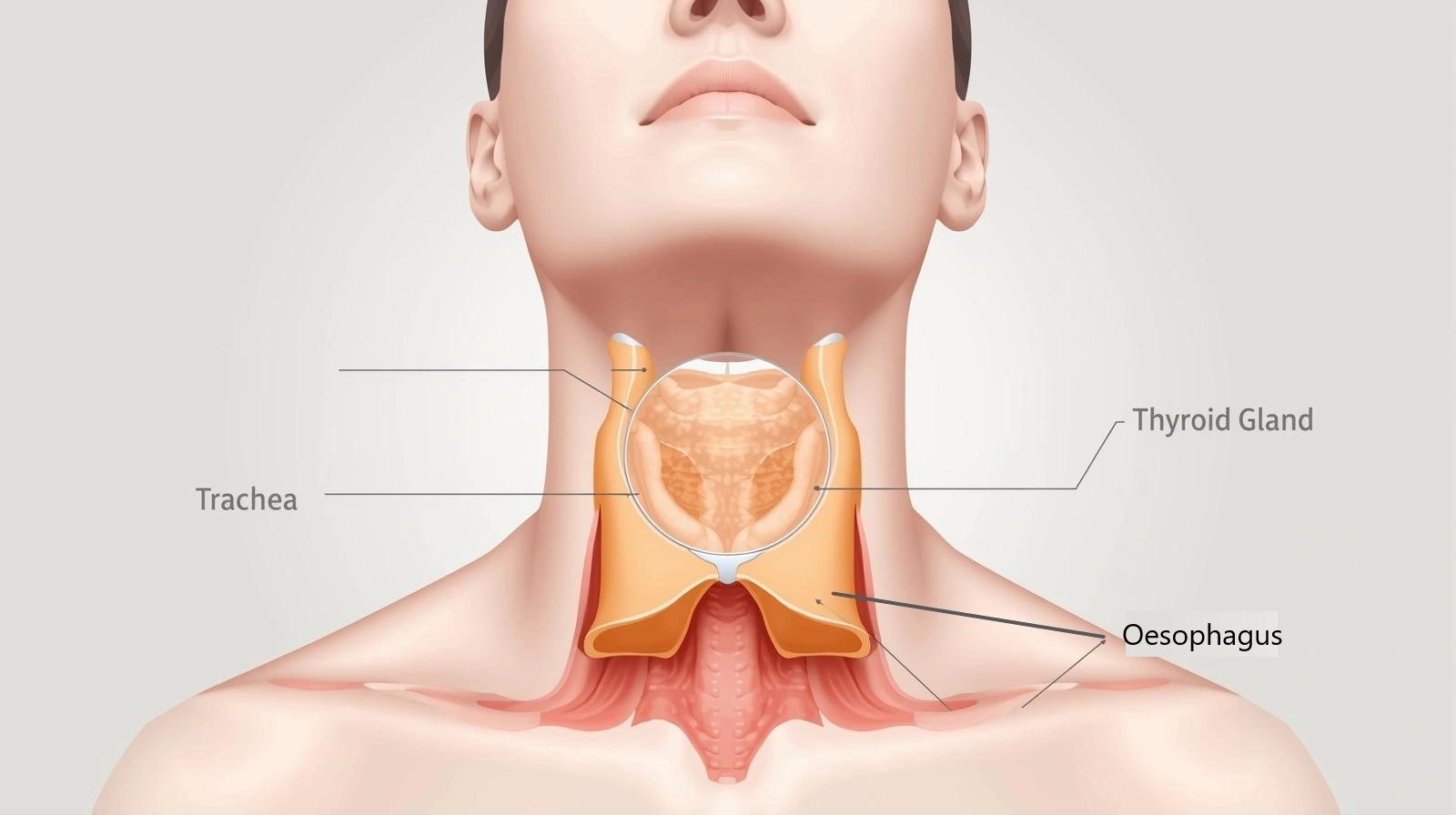
Enlargement of the thyroid, commonly known as a goiter, might be expected to affect____ .

  1. A
    swallowing
  2. B
    insulin levels
  3. C
    sleep
  4. D
    digestion

Topic Flashcards

Click to Flip
Question

What common symptom arises when a goiter enlarges and compresses nearby structures?

Answer

Difficulty swallowing (dysphagia) — the thyroid sits anterior to the esophagus; enlargement presses on it, making swallowing solids/liquids harder.

Question

What neck structure does an enlarged thyroid (goiter) most commonly compress to cause symptoms?

Answer

Esophagus — leading to swallowing difficulty; compression can also affect the trachea (breathing) or recurrent laryngeal nerve (voice).

Question

Does a goiter primarily affect insulin levels through mechanical enlargement?

Answer

No, insulin is pancreatic; goiter enlargement causes local compression symptoms like swallowing issues, not direct insulin effects.

Question

How does goiter enlargement impact sleep or digestion compared to swallowing?

Answer

Indirectly via hormone changes (e.g., hyper/hypothyroidism); swallowing is directly affected by physical compression of the esophagus.

Question

Why is dysphagia a classic compressive symptom of goiter?

Answer

The thyroid gland is located right in front of the esophagus; significant enlargement squeezes it, impairing food/liquid passage.

Mini Quiz

1 / 3
Does goiter enlargement directly affect insulin production or levels?
Available Test Sets
Available FREE Test Sets