How might vitamin D deficiency present?
-
A
As bleeding gums
-
B
As swollen extremities
-
C
As red patches
-
D
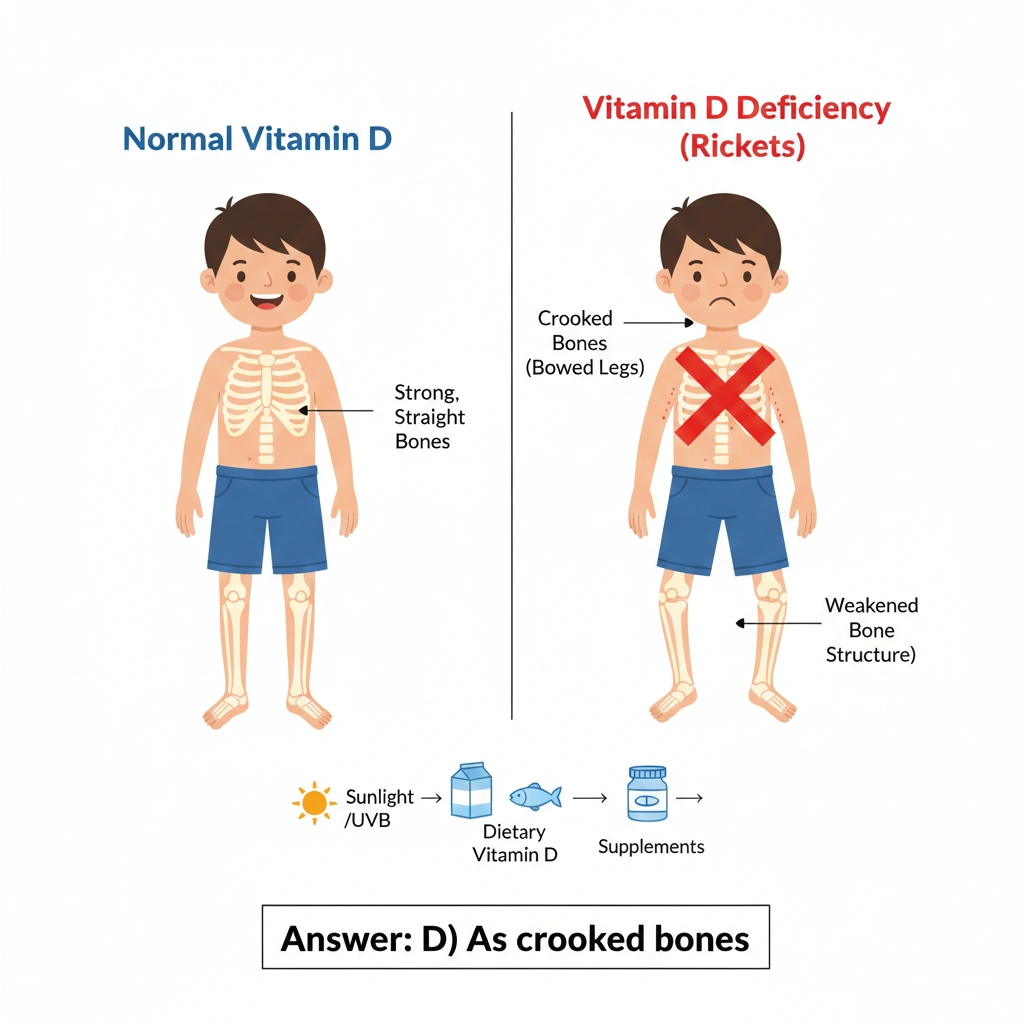
As crooked bones
Vitamin D deficiency may present as crooked bones.
Vitamin D is essential for calcium and phosphate absorption from the intestine and for proper mineralization of bone. When vitamin D levels are insufficient, bones cannot harden normally and become soft and weak, leading to deformities and abnormal curvature, especially in growing children.
A) As bleeding gums
Bleeding gums are a classic sign of vitamin C (ascorbic acid) deficiency, a condition known as scurvy.
Vitamin C is required for collagen synthesis, which maintains the strength of blood vessel walls and connective tissue. Without adequate vitamin C, capillaries become fragile and gums bleed easily.
Vitamin D does not play a role in collagen production or gum integrity, so this option is incorrect.
B) As swollen extremities
Swelling of the arms or legs (edema) is commonly associated with conditions such as heart failure, kidney disease, liver disease, or severe protein deficiency.
Vitamin D deficiency does not typically cause fluid retention or swelling of the extremities. Its primary effects are on bone metabolism and calcium balance rather than fluid regulation.
Therefore, this option is incorrect.
C) As red patches
Red patches on the skin can result from many causes, including allergic reactions, infections, inflammatory skin disorders, or deficiencies of certain B vitamins.
Vitamin D deficiency is not characteristically associated with skin redness or patchy rashes as a primary feature. Its clinical manifestations are predominantly skeletal.
Thus, this option is incorrect.
D) As crooked bones
Vitamin D deficiency interferes with calcium absorption, leading to poor bone mineralization.
In children, this results in rickets, characterized by:
- Bowing of the legs
- Thickened wrists and ankles
- Deformities of the chest (such as pigeon chest)
- Delayed growth
In adults, it causes osteomalacia, which leads to bone pain, muscle weakness, and increased risk of fractures.
Because the softened bones bend under normal body weight and muscle forces, they may become visibly deformed or “crooked.” This accurately describes one of the hallmark signs of vitamin D deficiency.
Therefore, this option is correct.
Conclusion:
Vitamin D is crucial for maintaining strong, properly mineralized bones. When it is deficient, bones become soft and structurally weak, leading to bending and deformities, particularly in growing children.
Bleeding gums indicate vitamin C deficiency, swelling suggests fluid imbalance or organ disease, and red patches are not a typical feature of vitamin D deficiency.
- For these reasons, the correct answer is crooked bones.

Topic Flashcards
Click to FlipIn children, what is the specific name for the bone-softening disease caused by severe vitamin D deficiency?
Rickets.
What is the name of the adult form of vitamin D deficiency, characterized by bone pain, muscle weakness, and soft bones?
Osteomalacia.
Besides weak or crooked bones, name two other common signs or symptoms of vitamin D deficiency.
Muscle weakness, bone pain, fatigue, frequent infections, or delayed wound healing.
Why does a lack of vitamin D lead to poor bone mineralization?
Vitamin D is required for the intestines to absorb dietary calcium and phosphate, which are the key minerals needed to harden bone.
What population is at especially high risk for vitamin D deficiency due to limited skin synthesis?
People with darker skin, those who are homebound or cover their skin completely, and individuals living in northern latitudes with limited sunlight.