Of the following processes, which one is a different level of defense from the others?
-
A
A low pH in the stomach
-
B
Cilia present in the trachea
-
C
Body cells recognizing a pathogen
-
D
Mucus present in the nasal cavity
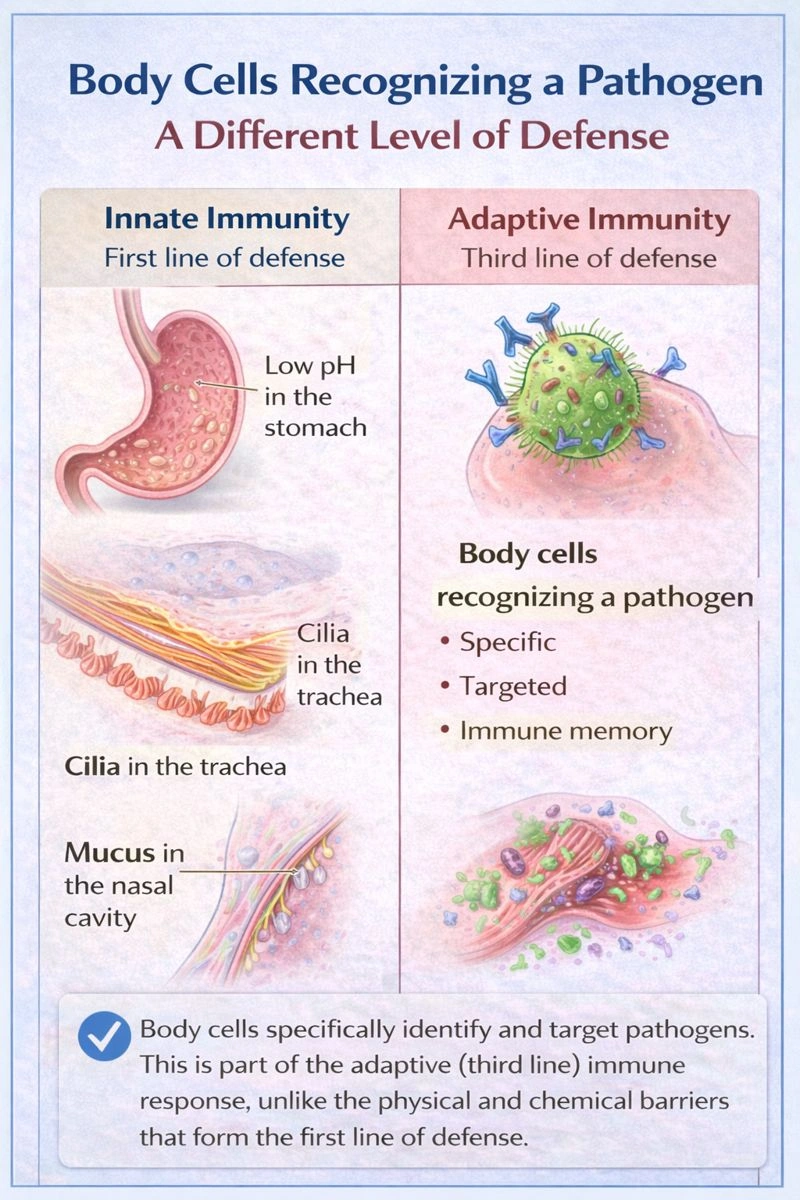
Body cells recognizing a pathogen represents a different level of defense from the others.
This process belongs to the adaptive (third line) immune response, which is specific, targeted, and involves immune memory. The other options are all part of the innate immune system’s first line of defense, which consists of non-specific physical and chemical barriers that prevent pathogens from entering the body.
A) A low pH in the stomach
The acidic environment of the stomach, with a pH typically between 1.5 and 3.5, serves as a powerful chemical barrier against infection.
This low pH denatures proteins and kills or inactivates many microorganisms that enter the body through food and drink. It acts before pathogens can invade body tissues and does not distinguish between different types of microbes.
Because it is a non-specific protective mechanism that prevents entry and survival of pathogens, it is part of the first line of defense of the innate immune system.
B) Cilia present in the trachea
Cilia are tiny hair-like structures lining the respiratory tract that beat rhythmically to move mucus and trapped particles upward toward the throat, where they can be swallowed or expelled.
This mechanism, known as the mucociliary escalator, physically removes bacteria, dust, and other foreign particles from the airways before they reach the lungs.
Like stomach acid, this defense is non-specific and acts as a physical barrier, making it part of the first line of innate immunity.
C) Body cells recognizing a pathogen
This process describes the adaptive, or third line, immune response.
Specialized immune cells such as:
- T lymphocytes, which recognize antigen fragments using T-cell receptors
- B lymphocytes, which recognize antigens and produce specific antibodies
identify unique molecular structures (antigens) on pathogens. This recognition triggers a highly targeted immune response designed to eliminate that specific organism. It also leads to the formation of memory cells, allowing faster and stronger responses upon future exposure.
Because this defense is specific, internal, and dependent on immune cell recognition and memory, it belongs to the third line of defense and is fundamentally different from the non-specific barriers listed in the other options.
D) Mucus present in the nasal cavity
Mucus in the nasal passages traps dust, bacteria, viruses, and other foreign particles as air enters the respiratory system.
It also contains antimicrobial substances such as lysozyme and antibodies that help neutralize pathogens. This barrier prevents microorganisms from reaching deeper tissues.
As a non-specific physical and chemical barrier acting at the point of entry, nasal mucus is part of the first line of innate defense.
Conclusion:
A low stomach pH, tracheal cilia, and nasal mucus are all components of the first line of defense, which consists of non-specific physical and chemical barriers that block pathogens from entering the body.
In contrast, body cells recognizing a pathogen describes the third line of defense, the adaptive immune system, which involves specific immune recognition and memory.
- Therefore, the process that represents a different level of defense is body cells recognizing a pathogen.

Topic Flashcards
Click to FlipWhat are the three general lines of defense in the immune system?
1) First line: Innate barriers (skin, mucous membranes, secretions). 2) Second line: Innate internal defenses (phagocytes, inflammation, fever). 3) Third line: Adaptive immunity (lymphocytes, antibodies).
To which line of defense do physical barriers like mucus and cilia belong?
The first line of defense (innate immunity).
Which type of immunity involves the specific recognition of pathogens by B cells and T cells?
Adaptive (acquired) immunity.
Name two chemical barriers that are part of the first line of defense.
Stomach acid (low pH), lysozyme in tears and saliva, antimicrobial peptides in mucus.
What key feature distinguishes adaptive immunity from innate immunity?
Adaptive immunity is specific, has memory (faster and stronger upon re-exposure), and involves lymphocytes.