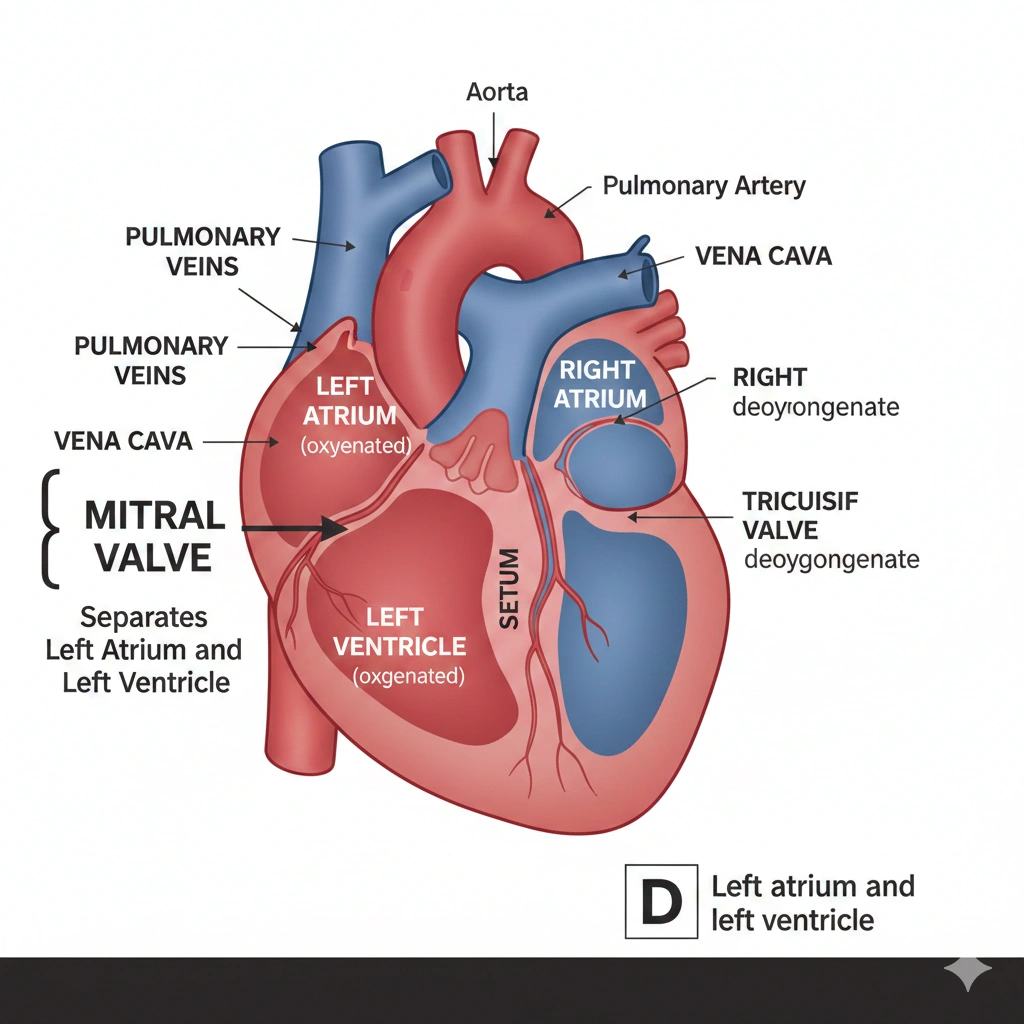
Which parts of the heart are separated by the mitral valve?
-
A
Left atrium and right atrium
-
B
. Right atrium and right ventricle
-
C
. Left ventricle and right ventricle
-
D
. Left atrium and left ventricle
The mitral valve separates the left atrium from the left ventricle.
The mitral valve, also called the bicuspid valve, is one of the four valves of the heart and plays a critical role in maintaining one-way blood flow through the left side of the heart. It allows blood to pass from the left atrium into the left ventricle during ventricular filling and prevents blood from flowing backward into the atrium during ventricular contraction.
A) Left atrium and right atrium
The left and right atria are separated by a thick muscular wall known as the interatrial septum.
There is no valve between the two atria because blood does not normally flow directly from one atrium to the other in the adult heart. Each atrium receives blood from different sources and directs it into its corresponding ventricle.
Therefore, this option is incorrect.
B) Right atrium and right ventricle
The valve between the right atrium and right ventricle is the tricuspid valve, also known as the right atrioventricular valve.
It has three cusps and prevents backflow of blood into the right atrium during contraction of the right ventricle. The mitral valve is located on the opposite side of the heart and does not function here.
This option is incorrect.
C) Left ventricle and right ventricle
The left and right ventricles are separated by the interventricular septum, a thick muscular wall that prevents mixing of oxygenated and deoxygenated blood.
There is no valve between the ventricles, as blood does not normally pass directly from one ventricle to the other.
Therefore, this option is incorrect.
D) Left atrium and left ventricle
The mitral valve is located between the left atrium and the left ventricle.
It is called the bicuspid valve because it has two cusps, and it ensures that blood flows in one direction:
pulmonary veins → left atrium → left ventricle → aorta
During ventricular contraction, the mitral valve closes tightly to prevent blood from regurgitating into the left atrium, helping maintain efficient circulation to the body.
Because this describes the correct anatomical location and function of the mitral valve, this option is correct.
Conclusion:
The mitral (bicuspid) valve is the left atrioventricular valve of the heart. It controls blood flow between the left atrium and left ventricle and prevents backflow during ventricular contraction.
The atria are separated by a septum, the right atrium and ventricle by the tricuspid valve, and the ventricles by another septum. Only the left atrium and left ventricle are separated by the mitral valve.
- Therefore, the correct answer is the left atrium and left ventricle.

Topic Flashcards
Click to FlipWhat is the alternate name for the mitral valve?
The bicuspid valve
Which valve is located between the right atrium and right ventricle?
The tricuspid valve.
During which phase of the cardiac cycle does the mitral valve open?
Ventricular diastole (when the left ventricle relaxes and fills).
What structure anchors the cusps of the mitral valve to the papillary muscles in the left ventricle?
The chordae tendineae.
What condition occurs when the mitral valve does not close properly, allowing blood to leak back into the left atrium?
Mitral valve regurgitation (or insufficiency).