Which is not a function of the liver?
-
A
production of insulin
-
B
storage of glycogen, minerals, and vitamins
-
C
production of bile
-
D
blood detoxification and purification
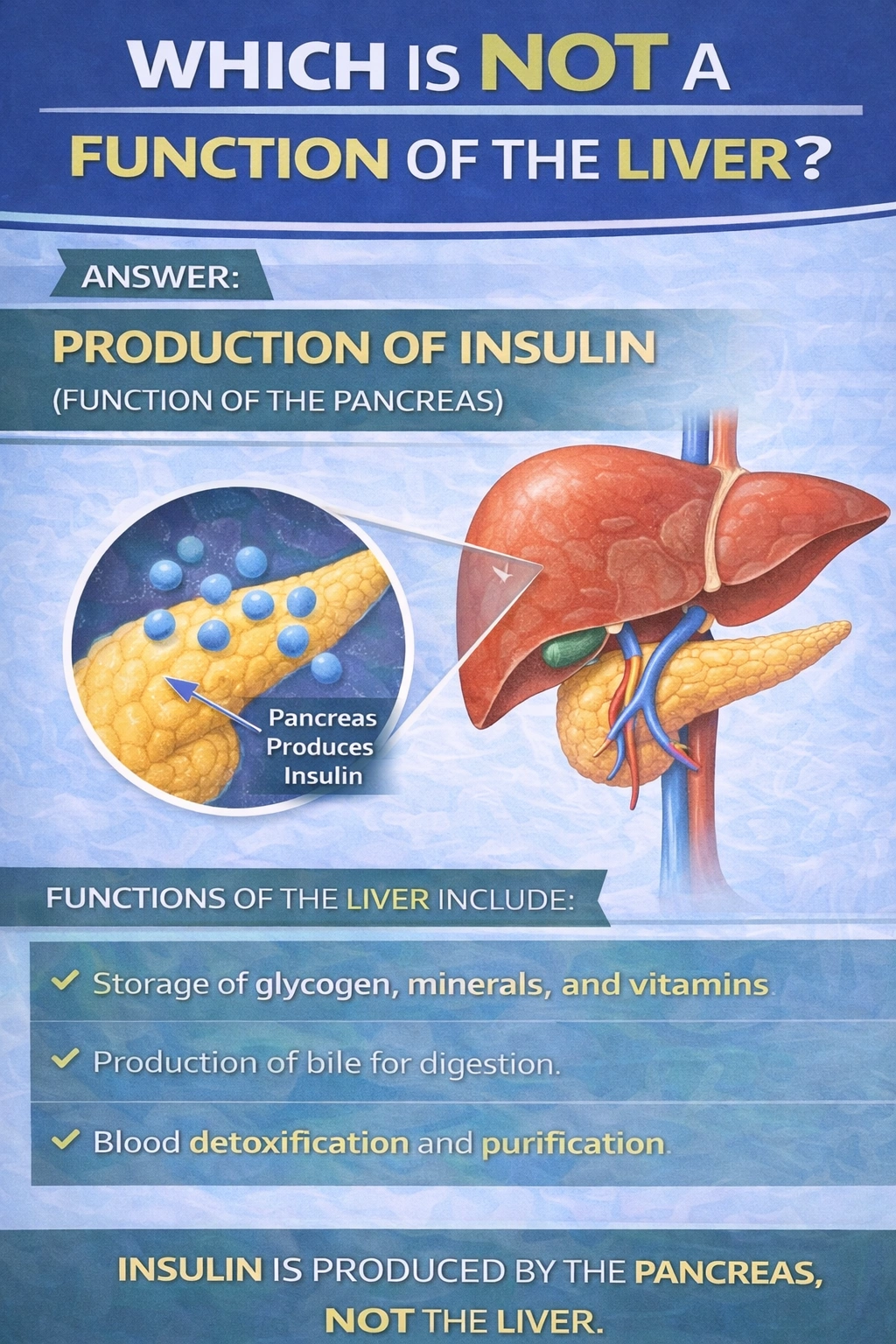
Production of insulin is not a function of the liver.
The liver is a major metabolic organ responsible for detoxification, bile production, nutrient storage, and regulation of blood chemistry. Although it plays a central role in glucose regulation, it does not synthesize the hormone insulin. Insulin is produced exclusively by the pancreas.
A) Production of insulin
Insulin is a hormone produced by the beta cells of the islets of Langerhans in the pancreas, not by the liver.
Its primary role is to lower blood glucose levels by promoting the uptake of glucose into cells and stimulating glycogen formation in the liver and muscles. While the liver responds to insulin and helps regulate blood sugar by storing glucose as glycogen or releasing it when needed, it does not manufacture insulin itself.
Because insulin production is a pancreatic function, not a hepatic one, this option is the correct answer.
B) Storage of glycogen, minerals, and vitamins
This is a true function of the liver.
The liver acts as a major storage site for:
- Glycogen (stored glucose for energy regulation)
- Iron (stored as ferritin)
- Copper
- Fat-soluble vitamins such as A, D, E, and K
- Vitamin B₁₂
These reserves allow the body to maintain stable energy levels and support essential biochemical processes during periods of fasting or increased demand. Therefore, this option is correct and not the answer.
C) Production of bile
This is also a true function of the liver.
Hepatocytes synthesize bile, a greenish-yellow fluid that emulsifies dietary fats in the small intestine, making them easier to digest and absorb. Bile also serves as a route for eliminating bilirubin, excess cholesterol, and certain toxins.
Because bile production is a core digestive function of the liver, this option is not correct.
D) Blood detoxification and purification
This is one of the liver’s most critical roles.
The liver detoxifies harmful substances such as:
- Drugs and alcohol
- Environmental toxins
- Metabolic waste products like ammonia
It converts ammonia into urea for safe excretion by the kidneys and chemically modifies many toxins so they can be eliminated in bile or urine. This detoxification function is essential for maintaining internal chemical balance and protecting other organs.
Therefore, this option is also a true function of the liver.
Conclusion:
The liver is responsible for bile production, detoxification of blood, and storage of glycogen, vitamins, and minerals. It plays a major role in regulating blood glucose but does not produce insulin.
Insulin is synthesized by the pancreas, not the liver.
For this reason, the correct answer is production of insulin.
Topic Flashcards
Click to FlipWhat is the form in which the liver primarily stores excess glucose?
Glycogen.
What are the specialized macrophages in the liver called that help remove old blood cells and pathogens from the bloodstream?
Kupffer cells.
What toxic compound, produced by protein metabolism, does the liver convert into urea for safe excretion?
Ammonia.
Besides bile production and detoxification, the liver also synthesizes most of the body's circulating proteins. Name one major protein it produces.
Albumin, clotting factors (like fibrinogen), or transport proteins.
Which organ, not the liver, produces the hormone insulin?
The pancreas (specifically, the beta cells of the pancreatic islets).