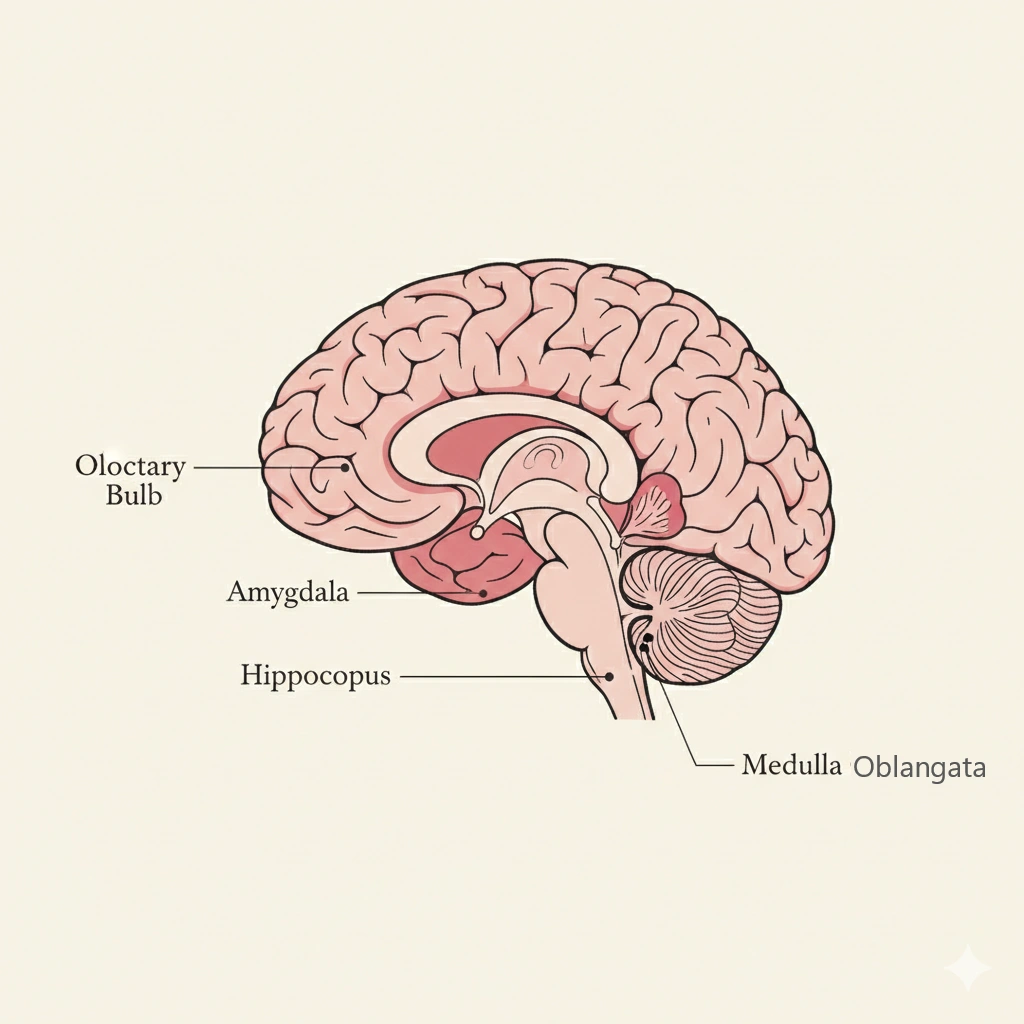
Which is not a part of the limbic system?
-
A
Olfactory bulb
-
B
Medulla oblongata
-
C
Amygdala
-
D
Hippocampus
The medulla oblongata is not a part of the limbic system.
The medulla oblongata is part of the brainstem, and it plays a crucial role in regulating vital functions such as heart rate, breathing, and blood pressure. The limbic system, on the other hand, is primarily involved in emotion, memory, and behavior.
A. Olfactory bulb
The olfactory bulb is part of the limbic system. It is involved in the sense of smell and connects to other structures of the limbic system, including the amygdala and hippocampus, which are related to emotion and memory.
B. Medulla oblongata
This is the correct answer. The medulla oblongata is part of the brainstem and is not part of the limbic system. It is responsible for autonomic functions such as breathing and heart rate regulation, rather than emotional responses or memory processing.
C. Amygdala
The amygdala is a key part of the limbic system. It plays a crucial role in processing emotions, particularly fear and pleasure, and is involved in memory formation.
D. Hippocampus
The hippocampus is also part of the limbic system and is essential for the formation of new memories and spatial navigation.
Conclusion:
The medulla oblongata is not part of the limbic system. The limbic system is involved in emotions, memory, and behavior, while the medulla oblongata is responsible for regulating autonomic functions. Other structures like the olfactory bulb, amygdala, and hippocampus are integral components of the limbic system.

Topic Flashcards
Click to FlipWhat is the primary role of the limbic system in the brain?
Regulates emotion, motivation, memory formation, and olfaction processing. Includes amygdala (fear/emotion), hippocampus (memory), and related structures.
Which brain part regulates vital functions like heartbeat and breathing, outside the limbic system?
Medulla oblongata — located in the brainstem; not involved in emotional or memory limbic functions.
Why is the amygdala considered a key limbic structure?
Processes emotions (especially fear/aggression), social cues, and emotional memory; deeply integrated in limbic circuitry.
How does the limbic system connect to olfaction?
Via olfactory bulb pathways to amygdala/hippocampus. Explains why smells trigger strong emotions/memories; medulla has no such role.
Why is the medulla oblongata excluded from the limbic system?
It handles basic life-sustaining functions (respiration, cardiovascular control) in the brainstem; limbic is telencephalic/diencephalic for emotion/memory.