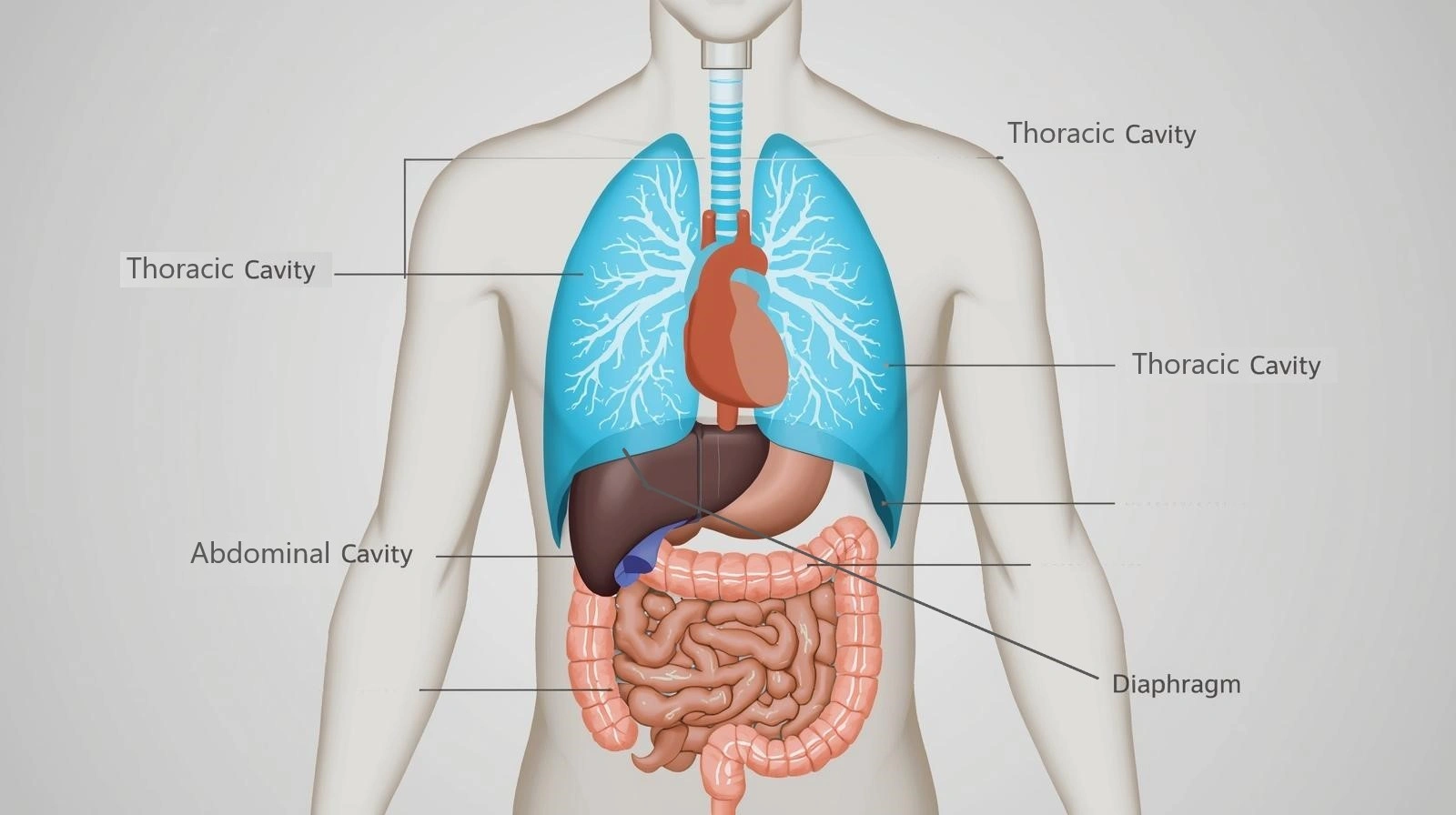
The diaphragm separates the ___________cavities.
-
A
abdominal and thoracic
-
B
cranial and vertebral
-
C
vertebral and pericardial
-
D
pelvic and abdominal
The diaphragm separates the abdominal and thoracic cavities.
The diaphragm is a large, dome-shaped muscle located beneath the lungs, and it plays a key role in breathing. It separates the thoracic cavity, which contains the heart and lungs, from the abdominal cavity, which houses the stomach, liver, intestines, and other digestive organs.
A. Abdominal and thoracic
This is the correct answer. The diaphragm divides the body into two main cavities: the thoracic cavity (above) and the abdominal cavity (below). During respiration, the diaphragm contracts and relaxes to facilitate the expansion and contraction of the lungs.
B. Cranial and vertebral
The cranial and vertebral cavities are part of the central nervous system. The cranial cavity houses the brain, and the vertebral cavity contains the spinal cord. These cavities are not separated by the diaphragm but are instead separated by the vertebral column.
C. Vertebral and pericardial
The vertebral and pericardial cavities do not have a direct separation by the diaphragm. The vertebral cavity holds the spinal cord, while the pericardial cavity contains the heart. These are separate cavities, but they are not divided by the diaphragm.
D. Pelvic and abdominal
The pelvic and abdominal cavities are part of the lower trunk of the body, and while they are adjacent to each other, the diaphragm does not separate them. The boundary between the abdominal and pelvic cavities is defined by the pelvic inlet, not the diaphragm.
Conclusion:
The diaphragm separates the abdominal and thoracic cavities. It serves as a barrier between the chest, which contains the heart and lungs, and the abdominal region, which houses organs involved in digestion and other functions.

Topic Flashcards
Click to FlipWhich two major body cavities does the diaphragm separate?
Thoracic and abdominal. It acts as a muscular partition between the chest (lungs, heart) and abdomen (digestive organs).
What is the primary anatomical role of the diaphragm?
Separates the thoracic cavity (above) from the abdominal cavity (below) allowing independent movement during breathing and organ function.
Why is the diaphragm essential for breathing mechanics?
It separates thoracic and abdominal cavities; contraction flattens it, increasing thoracic volume for inhalation and decreasing for exhalation.
Does the diaphragm separate the cranial cavity from the vertebral cavity?
No. Cranial (skull/brain) and vertebral (spinal column) are separated by the foramen magnum; diaphragm is lower in the trunk.
Why is the pelvic cavity not separated from the abdominal cavity by the diaphragm?
Pelvic and abdominal cavities are continuous (abdominopelvic cavity); diaphragm separates thoracic from abdominopelvic above the pelvis.