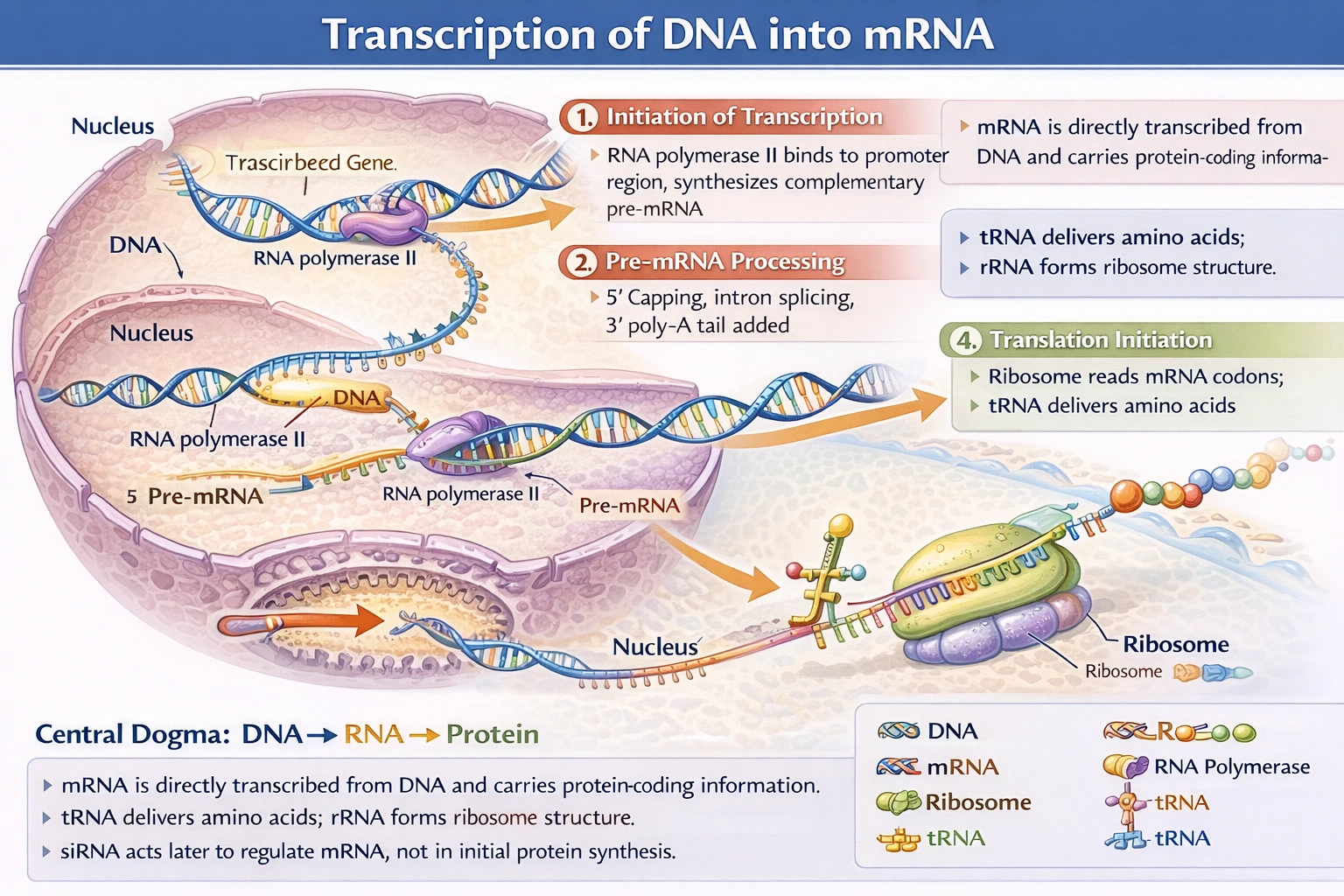
Which of the following is directly transcribed from DNA and represents the first step in protein building?
-
A
siRNA
-
B
rRNA
-
C
mRNA
-
D
tRNA
Messenger RNA (mRNA) is transcribed directly from DNA template strands by RNA polymerase II and carries protein-coding information from the nucleus to cytoplasmic ribosomes where translation occurs.
During transcription, RNA polymerase II synthesizes a complementary mRNA strand using DNA's template strand, incorporating uracil instead of thymine and processing the primary transcript through 5' capping, splicing, and polyadenylation to produce mature mRNA that exits the nucleus serving as the essential informational intermediary between genetic code and polypeptide synthesis.
A) siRNA
Small interfering RNA (siRNA) functions in RNA interference pathways to silence gene expression post-transcriptionally by guiding RISC complex to cleave complementary mRNA molecules. siRNAs derive from exogenous double-stranded RNA processed by Dicer enzyme or from endogenous hairpin precursors—not from direct DNA transcription of protein-coding sequences. siRNA represents a regulatory molecule that inhibits protein production rather than enabling it, operating downstream of mRNA formation in gene expression control.
B) rRNA
Ribosomal RNA (rRNA) forms structural and catalytic components of ribosomes, transcribed by RNA polymerase I (28S, 18S, 5.8S rRNAs) and RNA polymerase III (5S rRNA) from specialized ribosomal DNA repeats—not from protein-coding genes. While essential for translation machinery, rRNA does not carry codon sequences specifying amino acid order; it provides the platform where mRNA codons interact with tRNA anticodons. rRNA transcription supports protein synthesis infrastructure but does not represent the informational first step in building specific proteins.
C) mRNA
Messenger RNA synthesis begins when transcription factors recruit RNA polymerase II to gene promoters, initiating complementary strand synthesis using DNA template strand nucleotides. The resulting pre-mRNA undergoes processing: 7-methylguanosine cap addition at 5' end protects against degradation and facilitates ribosome binding; spliceosome-mediated intron removal joins exons; and poly-A polymerase adds 3' polyadenylate tail enhancing stability and nuclear export. Mature mRNA travels to cytoplasm where its codon sequence (triplets of nucleotides) directs tRNA-delivered amino acid assembly into polypeptides—making mRNA the indispensable informational carrier linking DNA genotype to protein phenotype.
D) tRNA
Transfer RNA (tRNA) molecules, transcribed by RNA polymerase III from tRNA genes, function as adaptor molecules during translation by carrying specific amino acids to ribosomes and recognizing mRNA codons through complementary anticodon sequences. While essential for protein synthesis execution, tRNAs do not carry protein sequence information from DNA—they merely implement the code specified by mRNA. tRNA genes transcribe structural RNA molecules with cloverleaf secondary structure, not informational transcripts specifying polypeptide sequences.
Conclusion:
Protein biosynthesis follows the central dogma: DNA → RNA → protein. mRNA uniquely serves as the direct transcriptional product of protein-coding genes that conveys specific amino acid sequence information to translation machinery. rRNA and tRNA provide essential structural and functional components of the translational apparatus but do not carry protein-coding sequences. siRNA regulates gene expression post-transcriptionally without participating in protein construction. Only mRNA bridges genetic information storage in DNA with polypeptide assembly—making it the indispensable first molecular step in protein building after transcription initiation. Option C correctly identifies mRNA as the informational intermediary fundamental to gene expression.