Which of the following is NOT a major function of the respiratory system in humans?
-
A
It provides a large surface area for gas exchange of oxygen and carbon dioxide.
-
B
It helps regulate the blood's pH.
-
C
It helps cushion the heart against jarring motions.
-
D
It is responsible for vocalization
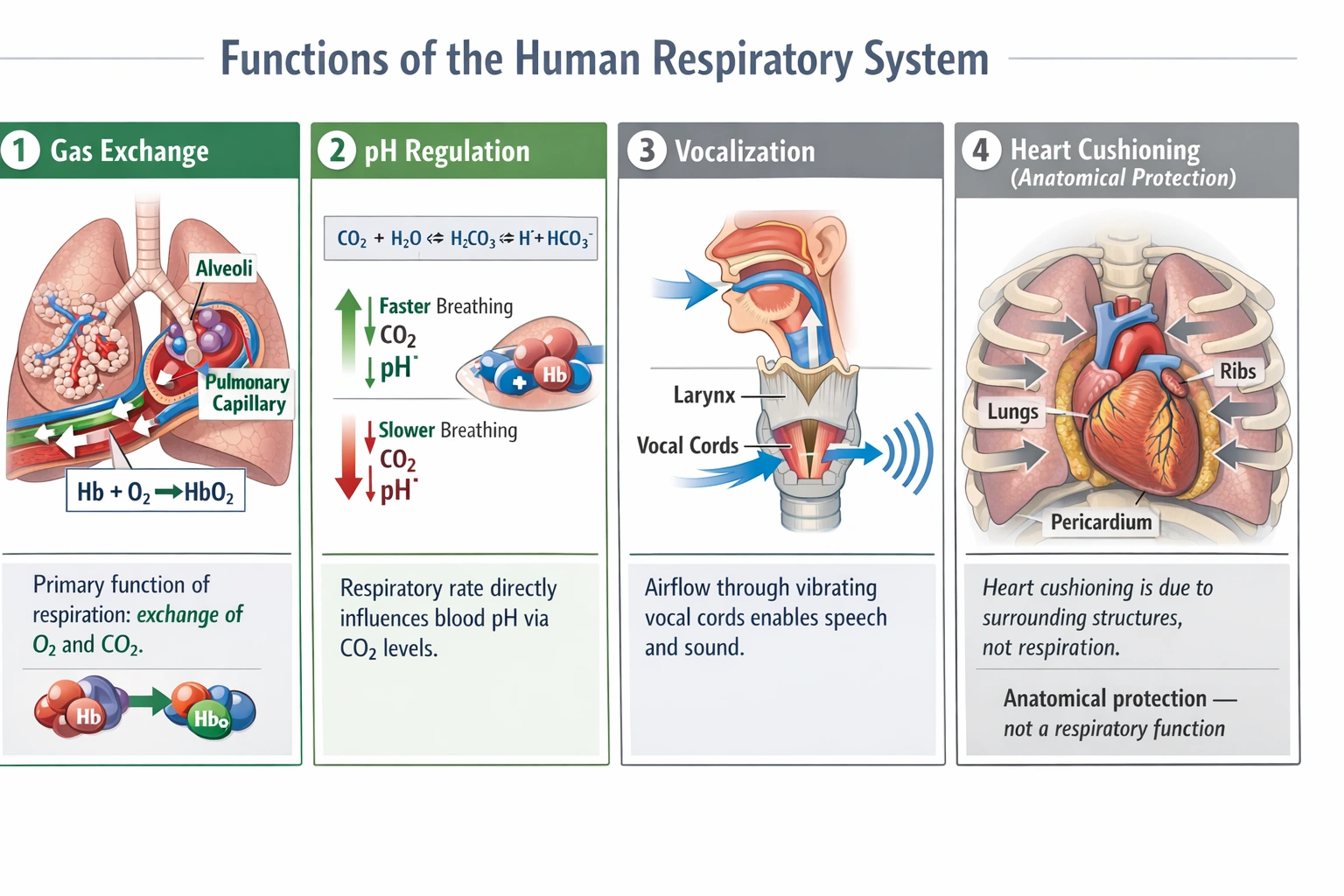
Cushioning the heart against jarring motions is not a function of the respiratory system.
The respiratory system primarily facilitates gas exchange, pH regulation through carbon dioxide elimination, and phonation via the larynx. Cardiac cushioning is provided by the pericardial sac containing serous fluid, adipose tissue surrounding the heart within the mediastinum, and the rib cage—structures anatomically associated with but functionally distinct from respiratory physiology.
A) It provides a large surface area for gas exchange of oxygen and carbon dioxide
The alveoli of the lungs create an extensive respiratory membrane with approximately 70 square meters of surface area in adults, enabling efficient diffusion of oxygen into pulmonary capillaries and carbon dioxide out of the bloodstream. This gas exchange represents the primary physiological purpose of the respiratory system, occurring across the thin alveolar-capillary barrier where oxygen binds to hemoglobin and carbon dioxide is released for exhalation.
B) It helps regulate the blood's pH
Respiratory regulation of acid-base balance occurs through modulation of alveolar ventilation rate. Carbon dioxide dissolved in blood forms carbonic acid (CO₂ + H₂O ⇌ H₂CO₃ ⇌ H⁺ + HCO₃⁻); increased ventilation eliminates CO₂, shifting the equilibrium to reduce hydrogen ion concentration and raise pH during acidosis. Conversely, decreased ventilation retains CO₂ to lower pH during alkalosis. This rapid buffering mechanism complements the slower renal regulation of bicarbonate.
C) It helps cushion the heart against jarring motions
The lungs occupy the pleural cavities lateral to the mediastinum but do not provide mechanical cushioning for the heart. Cardiac protection against physical impact derives from the pericardium (a double-walled sac with lubricating fluid), surrounding mediastinal fat pads, the sternum and rib cage anteriorly, and the vertebral column posteriorly. While the lungs fill thoracic space, their compressible nature during respiration does not constitute a designed cushioning function for the heart; this option confuses anatomical proximity with physiological purpose.
D) It is responsible for vocalization
The larynx, situated at the superior end of the trachea, houses the vocal folds that vibrate when air expelled from the lungs passes through the glottis. Intrinsic laryngeal muscles adjust vocal fold tension and position to modulate pitch and volume, while the pharynx, oral cavity, tongue, and lips shape these sounds into speech. This phonatory function represents a secondary but significant role of the respiratory apparatus beyond gas exchange.
Conclusion:
The respiratory system executes essential physiological roles including gas exchange across alveolar membranes, dynamic pH regulation through CO₂ elimination kinetics, and sound production via laryngeal mechanics. Cardiac cushioning, however, belongs to the protective functions of the pericardial system and skeletal thorax rather than respiratory physiology. Option C identifies the sole non-respiratory function among the choices, highlighting the importance of distinguishing anatomical relationships from functional responsibilities in human physiology.