Extract:
Which of these is considered the primary pacemaker of the heart? A) AV node B) Aorta C) SA node D) left ventricle
-
A
AV node
-
B
Aorta
-
C
SA node
-
D
left ventricle
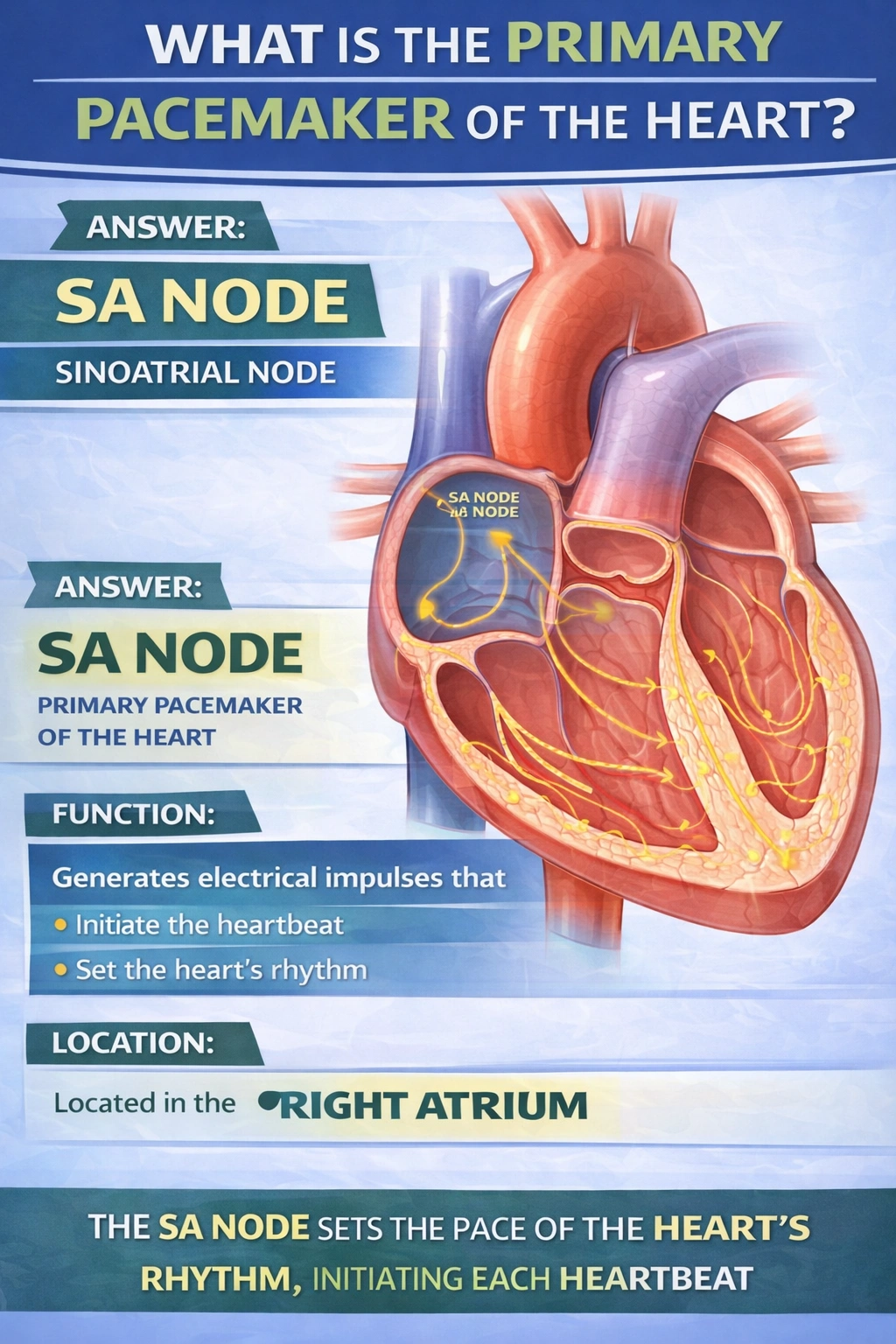
The primary pacemaker of the heart is the sinoatrial (SA) node.
The heart’s rhythmic beating is controlled by a specialized electrical conduction system. At the top of this system is the SA node, a small cluster of specialized cardiac muscle cells that spontaneously generate electrical impulses. These impulses determine the normal heart rate and initiate each heartbeat, setting the pace for the entire heart.
A) AV node
The atrioventricular (AV) node plays an important role in the heart’s conduction system, but it is not the primary pacemaker.
Its main function is to receive the electrical impulse from the SA node and delay it briefly before transmitting it to the ventricles. This delay allows the atria to fully contract and empty blood into the ventricles before ventricular contraction begins.
If the SA node becomes damaged or fails, the AV node can assume pacemaker activity, but it does so at a slower intrinsic rate, usually around 40–60 beats per minute. Because it normally follows the SA node and does not initiate the heartbeat under healthy conditions, the AV node is considered a secondary pacemaker, not the primary one.
B) Aorta
The aorta is the largest artery in the body and carries oxygenated blood from the left ventricle to the systemic circulation.
It has no role in generating or conducting electrical impulses. Its function is purely mechanical and circulatory, serving as the main conduit for blood leaving the heart. Since it does not participate in heart rhythm regulation, it cannot be considered a pacemaker.
C) SA node
The sinoatrial node is located in the wall of the right atrium near the opening of the superior vena cava.
It consists of specialized cardiac cells that automatically depolarize at a regular rate, typically 60–100 times per minute in a healthy adult. Each depolarization spreads through the atria, causing them to contract, and then continues to the AV node and the rest of the conduction system to stimulate ventricular contraction.
Because the SA node initiates each heartbeat and determines the normal heart rate, it is known as the primary pacemaker of the heart. This makes it the correct answer.
D) Left ventricle
The left ventricle is the chamber responsible for pumping oxygenated blood into the aorta and throughout the body.
Although it is vital for circulation and overall cardiovascular function, it does not generate electrical impulses. It contracts only in response to signals conducted to it from the SA node and AV node through the ventricular conduction pathways. Therefore, it is not involved in setting the heart’s rhythm and is not a pacemaker.
Conclusion:
The heart’s rhythm is controlled by its electrical conduction system, which begins with the sinoatrial node. While the AV node can act as a backup pacemaker, and structures like the aorta and ventricles play essential mechanical roles, only the SA node normally initiates and regulates the heartbeat.
For this reason, the primary pacemaker of the heart is the SA node.
Topic Flashcards
Click to FlipWhat is the name of the pathway that conducts the electrical impulse from the SA node to the AV node?
The internodal pathways.
What is the normal intrinsic firing rate (beats per minute) of the SA node in a healthy adult?
60–100 beats per minute.
Which part of the conduction system delays the electrical impulse to allow the atria to contract before the ventricles?
The atrioventricular (AV) node.
What structure branches from the AV bundle (Bundle of His) to carry impulses down the two sides of the interventricular septum?
The right and left bundle branches.
What are the specialized myocardial fibers that rapidly distribute the electrical impulse to the ventricular muscle cells?
Purkinje fibers.