100%
4
Rated
Attempts
127
Which statement is true of a negatively charged particle?
-
A
It has no electrons
-
B
It has the same number of protons and electrons.
-
C
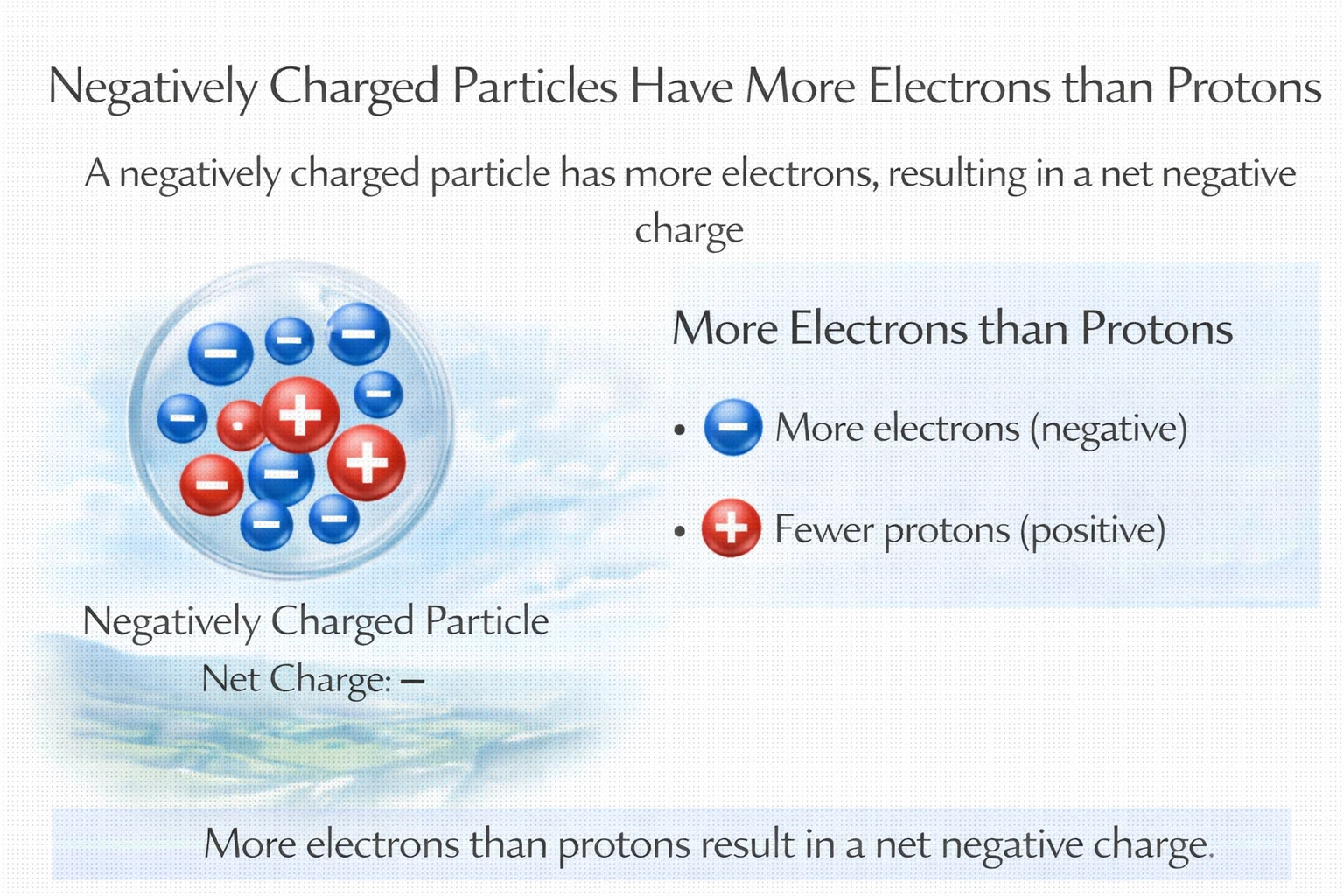
It has more electrons than protons.
-
D
It has more protons than electrons
A
It has no electrons
B
It has the same number of protons and electrons.
C
It has more electrons than protons.
D
It has more protons than electrons
Topic Flashcards
Click to FlipMini Quiz
1 / 3
Does the number of neutrons in an atom affect its overall electric charge?
Related Questions
Top Picks
What is the name of the opposite and equal contact force between a surface and an object standing on it?
What is the acceleration of a 5.00 kg block standing on a frictionless 30.0º inclined plane? m = ?
The electrical force between two point charges is FEº. If the magnitude of both charges is doubled and the distance between them is doubled, what would be the new electrical force between the charges, FE ք ?
If an electric oven has a resistance of 40 Ω when heating, what will be the current flowing through it when it’s connected to a110 V power line?
Which of the following is not a transverse wave?
Available FREE Test
Sets
Available Test
Sets