The hypothalamus is part of the
-
A
cardiovascular system
-
B
endocrine system
-
C
respiratory system
-
D
lymphatic system
The hypothalamus is part of the endocrine system.
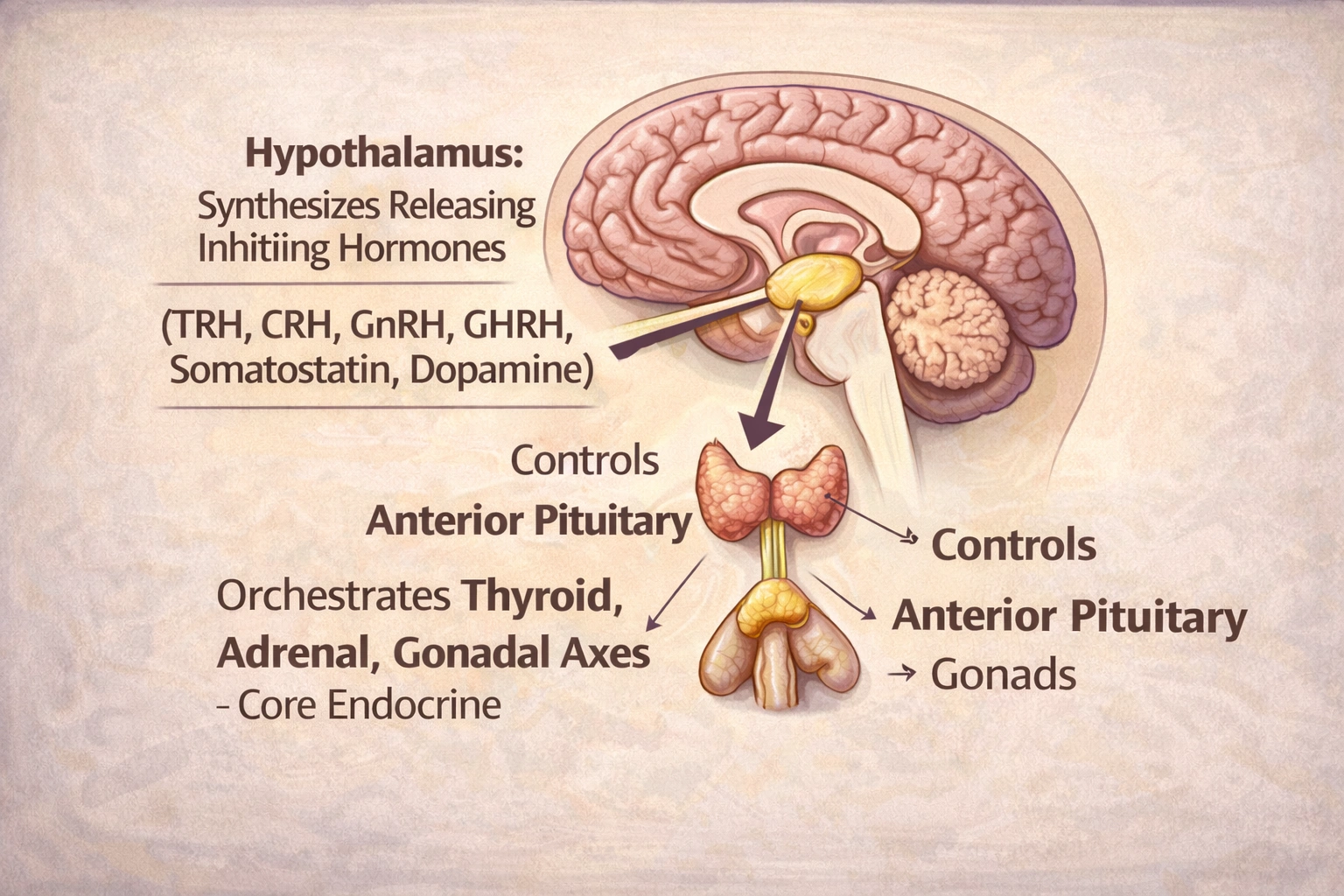
Although the hypothalamus is a structure within the brain and composed of nervous tissue, it plays a central regulatory role in hormonal control. It serves as the primary link between the nervous system and the endocrine system by synthesizing hormones that regulate the pituitary gland, which in turn controls many other endocrine organs. Through this function, the hypothalamus helps maintain homeostasis by coordinating growth, metabolism, stress response, reproduction, and body temperature.
A) Cardiovascular system
The cardiovascular system consists of the heart, blood vessels, and blood, and its primary function is to transport oxygen, nutrients, hormones, and waste products throughout the body.
The hypothalamus does not participate in pumping blood or forming blood vessels, nor does it function as a conduit for circulation. It is neural tissue located in the brain and is anatomically and functionally separate from the cardiovascular system. Therefore, this option is incorrect.
B) Endocrine system
The hypothalamus synthesizes several releasing and inhibiting hormones, including thyrotropin-releasing hormone (TRH), corticotropin-releasing hormone (CRH), gonadotropin-releasing hormone (GnRH), growth hormone–releasing hormone (GHRH), somatostatin, and dopamine.
These hormones are transported through the hypothalamic–hypophyseal portal system to the anterior pituitary gland, where they regulate the secretion of pituitary hormones such as TSH, ACTH, LH, FSH, GH, and prolactin. Through this control, the hypothalamus indirectly governs the activity of the thyroid gland, adrenal glands, and gonads, as well as growth and stress responses.
Because of this direct involvement in hormone production and regulation, the hypothalamus is a key component of the endocrine system, making this option correct.
C) Respiratory system
The respiratory system includes structures such as the nasal cavity, trachea, bronchi, and lungs, which are responsible for ventilation and gas exchange.
The hypothalamus does not contain respiratory epithelium and does not participate directly in breathing or oxygen–carbon dioxide exchange. While it can influence breathing rate indirectly through autonomic regulation, it is not classified as part of the respiratory system. Therefore, this option is incorrect.
D) Lymphatic system
The lymphatic system consists of lymphatic vessels, lymph nodes, the spleen, thymus, and other immune-related tissues that function in fluid balance and immune defense.
The hypothalamus is not involved in lymph transport, immune cell maturation, or filtration of lymphatic fluid. Its functions are regulatory and neuroendocrine rather than immunological. Consequently, this option is incorrect.
Conclusion:
The hypothalamus is a small but critically important brain structure that produces hormones and regulates the pituitary gland, thereby controlling many major endocrine pathways in the body. It is not part of the cardiovascular, respiratory, or lymphatic systems.
Because of its hormone-producing and regulatory functions, the hypothalamus is best classified as part of the endocrine system.

Topic Flashcards
Click to FlipWhat is the name of the circulatory link between the hypothalamus and the anterior pituitary gland?
The hypophyseal portal system (hypothalamic-hypophyseal portal veins).
Name three homeostatic processes regulated by the hypothalamus (besides endocrine control).
Body temperature, hunger/satiety, thirst/water balance, sleep-wake cycles, and autonomic function.
Which two hormones are produced in the hypothalamus but stored and released from the posterior pituitary?
Oxytocin and Antidiuretic Hormone (ADH/Vasopressin).
What is the collective term for the hypothalamic hormones (like TRH, CRH) that stimulate the anterior pituitary?
Releasing hormones (or hypophysiotropic hormones).
Which region of the brain is the hypothalamus immediately inferior to?
The thalamus (forming part of the diencephalon together)