Which mineral helps to maintain fluid balance in the body?
-
A
Potassium
-
B
Cobalt
-
C
Chromium
-
D
Sulfur
The mineral that helps to maintain fluid balance in the body is potassium.
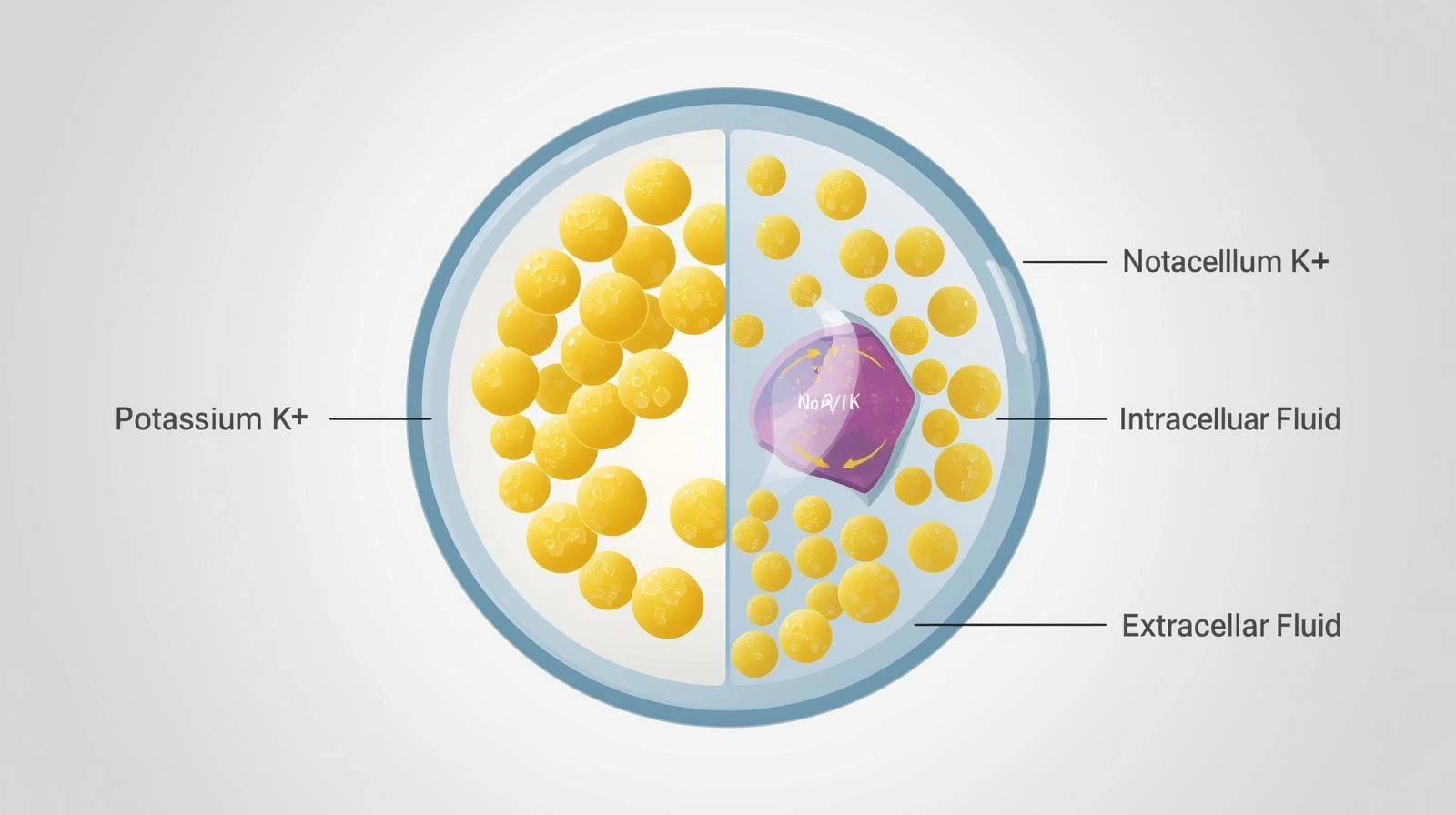
Fluid balance in the human body depends on the controlled distribution of water between the intracellular and extracellular compartments. This distribution is regulated primarily by electrolytes, which create osmotic gradients that determine where water moves. Potassium is a major electrolyte involved in this process and plays a central role in maintaining normal cellular hydration, blood pressure, and overall fluid equilibrium.
A) Potassium
Potassium is the principal intracellular cation, with approximately 98 percent of the body’s potassium located inside cells. Along with sodium, which is the main extracellular cation, potassium establishes osmotic gradients across cell membranes. These gradients control the movement of water into and out of cells, thereby regulating cell volume and tissue hydration.
Potassium balance is tightly regulated by the kidneys and by hormones such as aldosterone, which promotes potassium excretion and sodium retention. The sodium–potassium ATPase pump continuously transports potassium into cells and sodium out of cells, helping to stabilize membrane potential, nerve conduction, muscle contraction, and fluid distribution.
Because of its dominant role in determining intracellular osmolarity and its interaction with sodium in regulating water movement and blood pressure, potassium is a key mineral in maintaining fluid balance.
B) Cobalt
Cobalt is a trace mineral that is a structural component of vitamin B₁₂. It is essential for red blood cell formation, normal neurological function, and DNA synthesis.
However, cobalt does not function as an electrolyte and does not participate in establishing osmotic gradients or regulating water movement between body compartments. It has no direct role in fluid homeostasis. Therefore, this option is incorrect.
C) Chromium
Chromium is a trace mineral believed to enhance the action of insulin and play a minor role in carbohydrate, fat, and protein metabolism.
Although it contributes to metabolic regulation, chromium does not act as a major electrolyte and does not influence the distribution of water between cells and extracellular fluid. It does not participate in osmotic balance or fluid regulation, making this option incorrect.
D) Sulfur
Sulfur is found in certain amino acids such as methionine and cysteine and is a component of many proteins, enzymes, and vitamins. It also contributes to the structure of connective tissue and participates in detoxification reactions in the liver.
Despite these important biochemical roles, sulfur does not function as an electrolyte responsible for water balance and does not regulate osmotic pressure in body fluids. Therefore, it is not involved in maintaining fluid balance and is an incorrect choice.
Conclusion:
Maintaining proper fluid balance requires electrolytes that create osmotic forces to control the movement of water between body compartments. Among the minerals listed, potassium is the major intracellular ion that works with sodium to regulate cellular hydration, blood volume, and blood pressure. Cobalt, chromium, and sulfur serve other metabolic or structural roles but do not influence fluid distribution.
For this reason, potassium is the mineral that helps maintain fluid balance in the body.

Topic Flashcards
Click to FlipWhat is the name of the primary hormone that regulates sodium and potassium balance (and thus fluid balance) by acting on the kidneys?
Aldosterone.
What is the term for the pressure that drives water movement across a membrane due to differences in solute concentration?
Osmotic pressure.
Which organ is primarily responsible for maintaining long-term electrolyte and fluid balance by filtering the blood and adjusting urine composition?
The kidneys.
What condition results from an abnormally low concentration of potassium in the blood?
Hypokalemia.
What is the name of the enzyme (pump) that maintains the high intracellular potassium and high extracellular sodium concentration?
Sodium-Potassium ATPase (Na⁺/K⁺ pump)