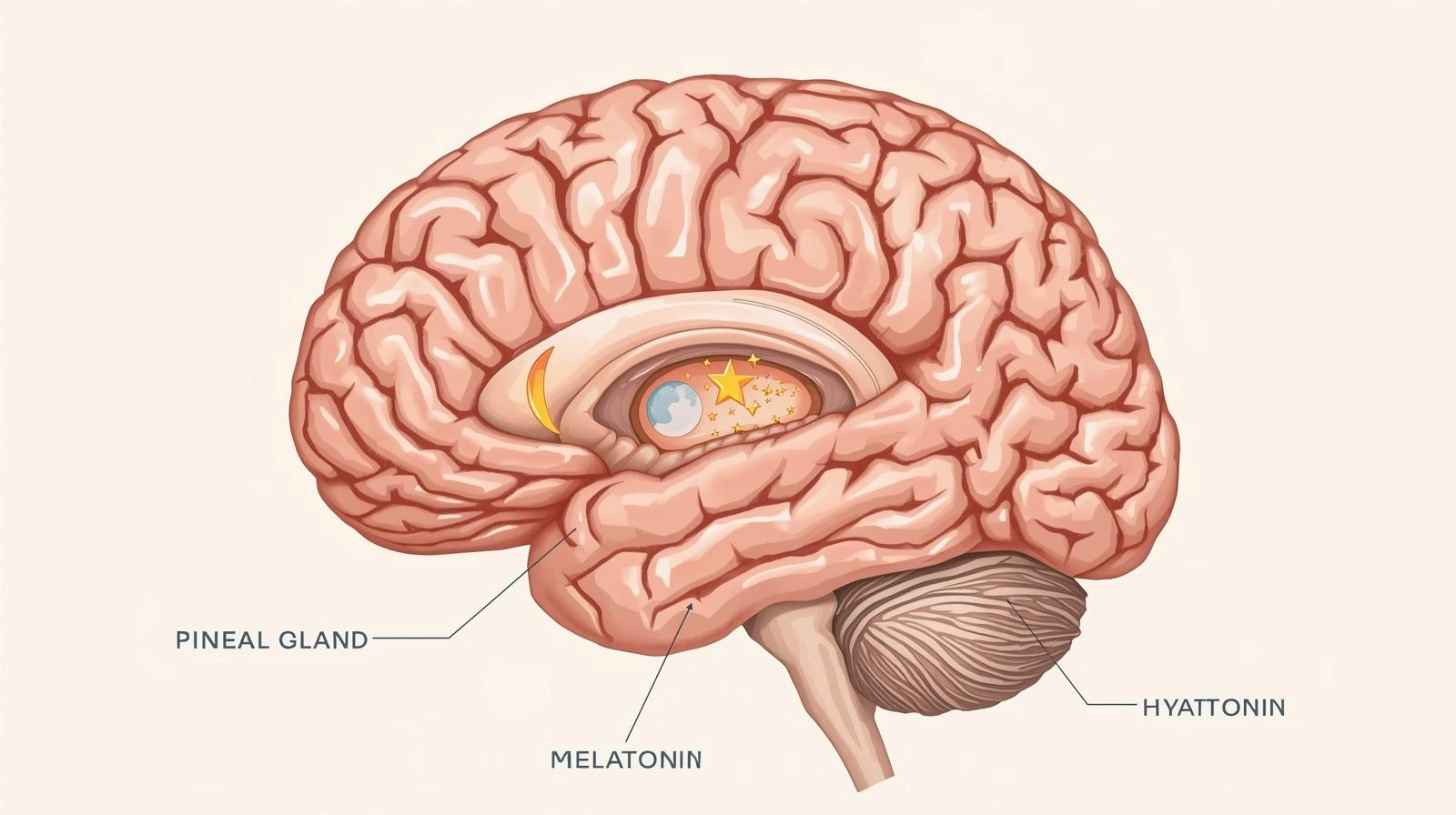
What is one function of the pineal gland?
-
A
Regulation of sleep
-
B
Stimulation of growth
-
C
Production of milk
-
D
Reduction of inflammation
One function of the pineal gland is the regulation of sleep.
The pineal gland is a small endocrine structure located near the center of the brain, between the two hemispheres, in a groove where the two halves of the thalamus join. Its primary role is the synthesis and secretion of the hormone melatonin, which is released in response to darkness and helps regulate the body’s internal biological clock, known as the circadian rhythm. Through this mechanism, the pineal gland influences sleep–wake cycles and seasonal biological patterns.
A) Regulation of sleep
The pineal gland produces melatonin, a hormone that increases in concentration during nighttime and decreases during daylight.
Melatonin acts on the suprachiasmatic nucleus of the hypothalamus, the body’s main circadian pacemaker, helping synchronize physiological processes to the day–night cycle. Rising melatonin levels promote drowsiness, reduce alertness, and signal the body that it is time to sleep. This regulation is essential for maintaining normal sleep patterns, hormonal timing, and seasonal reproductive rhythms in some species.
Because melatonin-mediated control of circadian rhythm and sleep onset is the pineal gland’s most well-established function, this option is correct.
B) Stimulation of growth
Growth is primarily regulated by growth hormone, which is secreted by the anterior pituitary gland under the control of growth hormone–releasing hormone from the hypothalamus.
Growth hormone directly affects bone growth, muscle development, and protein synthesis. The pineal gland does not secrete growth hormone and does not exert a direct trophic effect on skeletal or muscular growth. Therefore, this option is incorrect.
C) Production of milk
Milk production and release are regulated by two pituitary hormones: prolactin, which stimulates milk synthesis in the mammary glands, and oxytocin, which causes milk ejection during breastfeeding.
The pineal gland does not participate in lactation, does not influence mammary gland activity directly, and does not produce either prolactin or oxytocin. Thus, this option is incorrect.
D) Reduction of inflammation
Inflammation is primarily regulated by immune mediators such as cytokines and by hormones such as cortisol, which is produced by the adrenal cortex.
While melatonin has mild antioxidant and immune-modulating properties, reducing inflammation is not a primary or defining function of the pineal gland in human physiology. Its major recognized role remains circadian rhythm regulation. Therefore, this option is incorrect.
Conclusion:
The pineal gland is an endocrine organ whose main function is to secrete melatonin in response to darkness. This hormone regulates circadian rhythms, promotes sleep onset, and helps coordinate the body’s internal timing systems.
It does not control growth, milk production, or inflammation as its primary role. Therefore, the correct answer is regulation of sleep.

Topic Flashcards
Click to FlipWhat hormone, sensitive to light, is produced by the pineal gland to regulate circadian rhythms?
Melatonin.
Where in the brain is the pineal gland anatomically located?
In the epithalamus, near the center of the brain, posterior to the thalamus.
What is the name of the brain's "master clock" in the hypothalamus that regulates the pineal gland's melatonin release?
The suprachiasmatic nucleus (SCN).
Besides sleep, what other physiological process in some animals is regulated by the pineal gland's melatonin in response to seasonal changes in daylight?
Seasonal reproduction (breeding cycles).
On which receptors in the brain does melatonin primarily act to promote drowsiness and sleep?
MT1 and MT2 melatonin receptors.