Which enzyme functions to break down a specific sugar?
-
A
Catalase
-
B
Lipase
-
C
Protease
-
D
Lactase
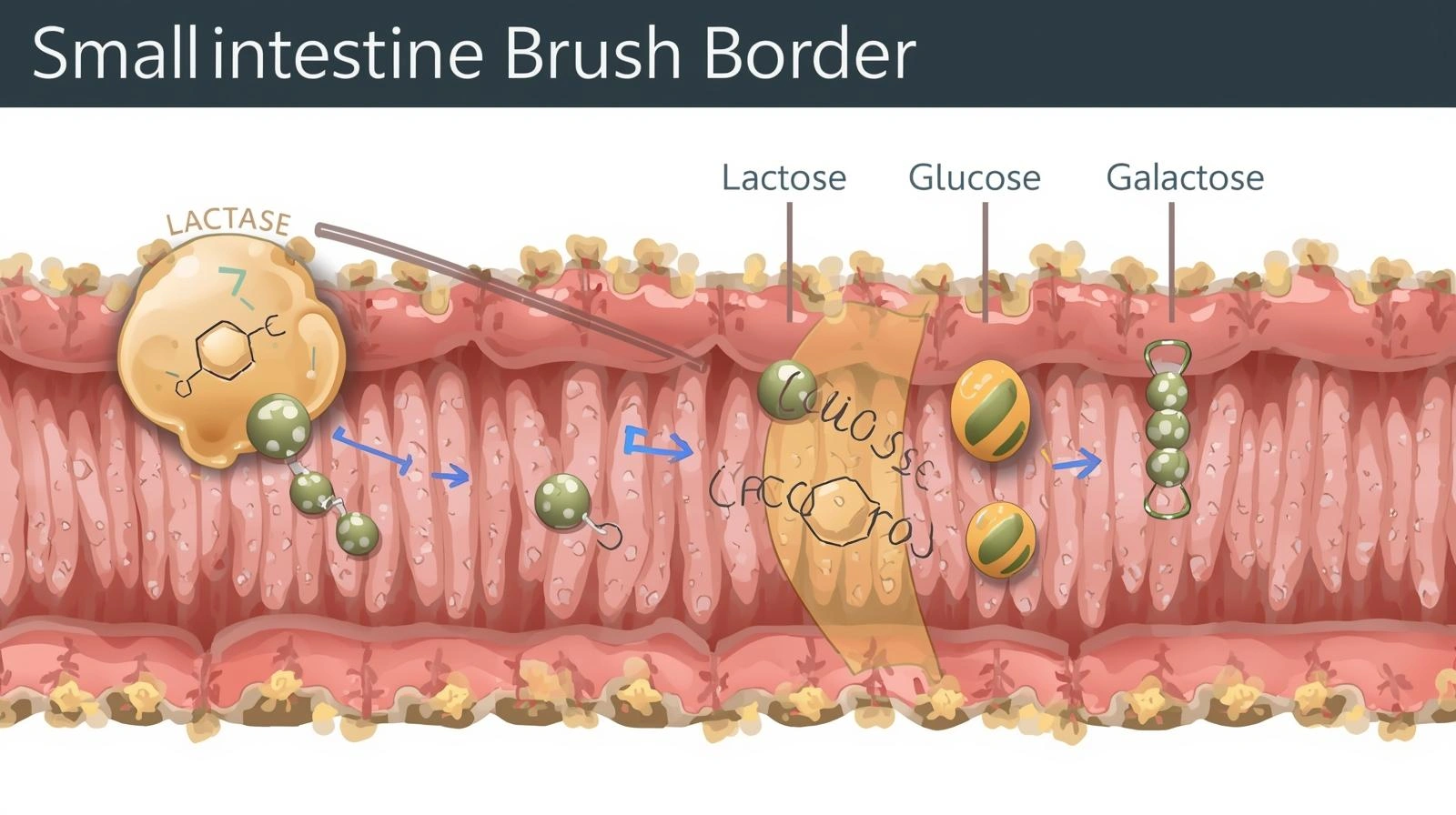
The enzyme that functions to break down a specific sugar is lactase.
Digestive enzymes are highly specific, meaning each one acts on a particular type of molecule or chemical bond. Some enzymes target proteins, others fats, and others carbohydrates. Lactase is a specialized enzyme that acts on a single sugar, lactose, the primary carbohydrate found in milk. By breaking lactose into smaller, absorbable sugars, lactase enables proper digestion and nutrient uptake.
A) Catalase
Catalase is an enzyme found in nearly all living cells and plays a protective role in cellular metabolism. Its function is to decompose hydrogen peroxide, a toxic byproduct of metabolic reactions, into water and oxygen.
This reaction helps prevent oxidative damage to cells but has no role in digestion or carbohydrate metabolism. Catalase does not act on sugars and does not participate in breaking down food molecules. Therefore, this option is incorrect.
B) Lipase
Lipase is a digestive enzyme that breaks down triglycerides into fatty acids and glycerol. It is secreted primarily by the pancreas and acts in the small intestine to aid in fat digestion and absorption.
Because lipase targets lipids rather than carbohydrates, it does not break down sugars of any kind. Its substrate specificity is limited to fats, making this option incorrect.
C) Protease
Proteases are enzymes that digest proteins by cleaving peptide bonds between amino acids. Examples include pepsin in the stomach and trypsin and chymotrypsin in the small intestine.
These enzymes are essential for protein digestion but have no activity on carbohydrates or sugars. They cannot hydrolyze glycosidic bonds, which are the chemical bonds that hold sugar molecules together. Therefore, this option is incorrect.
D) Lactase
Lactase is a carbohydrate-digesting enzyme, specifically a beta-galactosidase, located in the brush border of the small intestine. Its function is to hydrolyze lactose, a disaccharide composed of glucose and galactose, into its two monosaccharide components.
Once lactose is broken down, glucose and galactose can be absorbed across the intestinal lining and used by the body for energy. If lactase is absent or deficient, lactose remains undigested in the intestine, leading to lactose intolerance, which causes symptoms such as bloating, diarrhea, and abdominal pain.
Because lactase acts on a specific sugar and enables its digestion and absorption, it is the correct answer.
Conclusion:
Different digestive enzymes target different types of nutrients. Catalase detoxifies harmful substances, lipase digests fats, and proteases digest proteins. Only lactase is specialized to break down a particular sugar, lactose.
For this reason, lactase is the enzyme that functions to break down a specific sugar.

Topic Flashcards
Click to FlipWhat is the general term for the molecule that an enzyme acts upon?
A substrate.
On which specific part of the small intestine cell is lactase located?
The brush border (microvilli) of the intestinal lining.
What are the two simple sugars (monosaccharides) produced when lactase breaks down lactose?
Glucose and Galactose.
What is the term for the inability to digest lactose due to insufficient lactase production?
Lactose intolerance
Name another brush border enzyme that breaks down a specific disaccharide (other than lactose).
Sucrase (breaks down sucrose into glucose & fructose) or Maltase (breaks down maltose into two glucose molecules).